Private Day Trip from Tokyo to Chiba: Nami no Ihachi's Wave Carvings and Kasamori Kannon atop a Rock
A private tour for 2–5 people, departing by private vehicle from selected Tokyo hotels. At Iizunadera and Gyoganji temples, you'll see up close the work of Nami no Ihachi ("Ihachi of the Waves"), a woodcarver said to have influenced Katsushika Hokusai. Along the way, stop at Tamasaki Shrine and the old castle town of Otaki, then take in sweeping views over the forests of the Boso Peninsula from the wooden hall of Kasamori Kannon, perched on a giant rock.
Published:
Content verified by the operatorPhotos courtesy of 株式会社ビュート
This page contains affiliate links.
Prices and ratings are as of 2026.11.13. Please check the booking page for the latest details.
BEFORE YOU BOOK
4 Things to Know Before Booking
- 01See Nami no Ihachi's "Ushiwakamaru and the Great Tengu" up close at Iizunadera.
- 02Compare the carved waves at Gyoganji with Hokusai's famous Great Wave.
- 03Take in panoramic views of Boso's forests from Kasamori Kannon Hall, perched on a rock.
- 04Tour the Boso Peninsula by private car from selected Tokyo hotels.
BEST FOR
Who This Experience Is Best For
- 01
Fans of Nami no Ihachi or Hokusai
See Ihachi's carvings, said to have influenced Hokusai, up close at two sites: Iizunadera and Gyoganji.
- 02
Travellers seeking Japanese temples and shrines off the tourist trail
Visit local historic temples and shrines that are hard to reach by public transport, efficiently and by private car.
- 03
Small groups wanting a relaxed day trip
Travel as a private group of 2–5 with hotel pickup, keeping the hassle of getting around to a minimum.
From Your Tokyo Hotel to the Ancient Temples of Boso by Private Car
Meet your driver-guide at your hotel in Tokyo and head for Chiba in a private vehicle reserved just for your group. As the view out the window shifts from city blocks to open farmland, you'll start to feel that you've truly arrived on the Boso Peninsula.
The day takes you to temples and shrines long cherished by local communities, as well as Otaki, a town that still carries traces of its castle-town past. Linking these spots by public transport would take a lot of time, but here you can explore without worrying about connections. The listed itinerary runs from 8:30 to 18:10, for a total of roughly 9 hours and 40 minutes.

First Stop: Tamasaki Shrine and Its Tranquil Approach
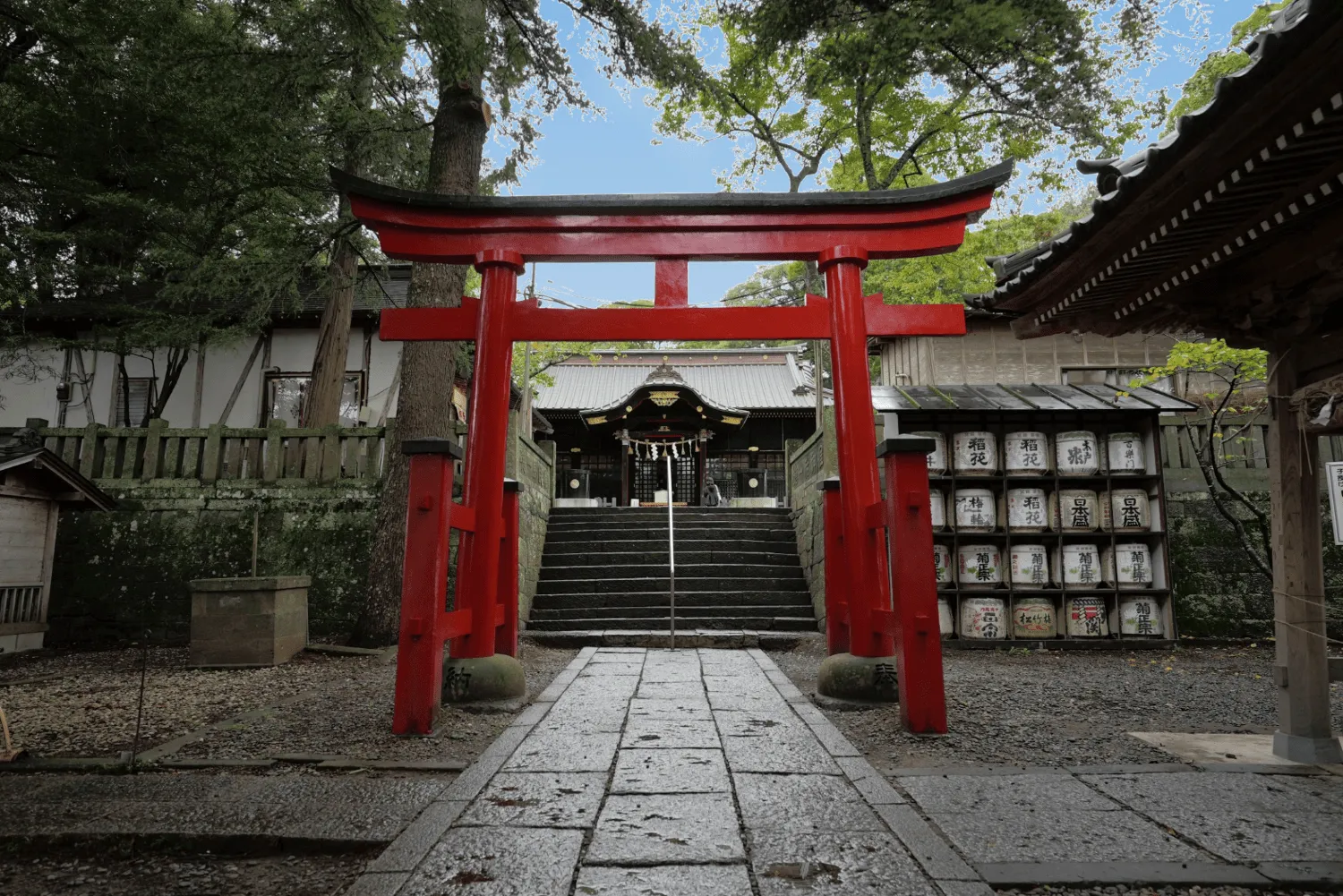
Your first visit in Boso is Tamasaki Shrine (Tamasaki Jinja), the most prestigious shrine of the old Kazusa Province. Beyond the torii gate you'll see stone steps and a black-lacquered shrine hall, and as you walk the approach, a quiet settles over you that feels worlds away from the drive.
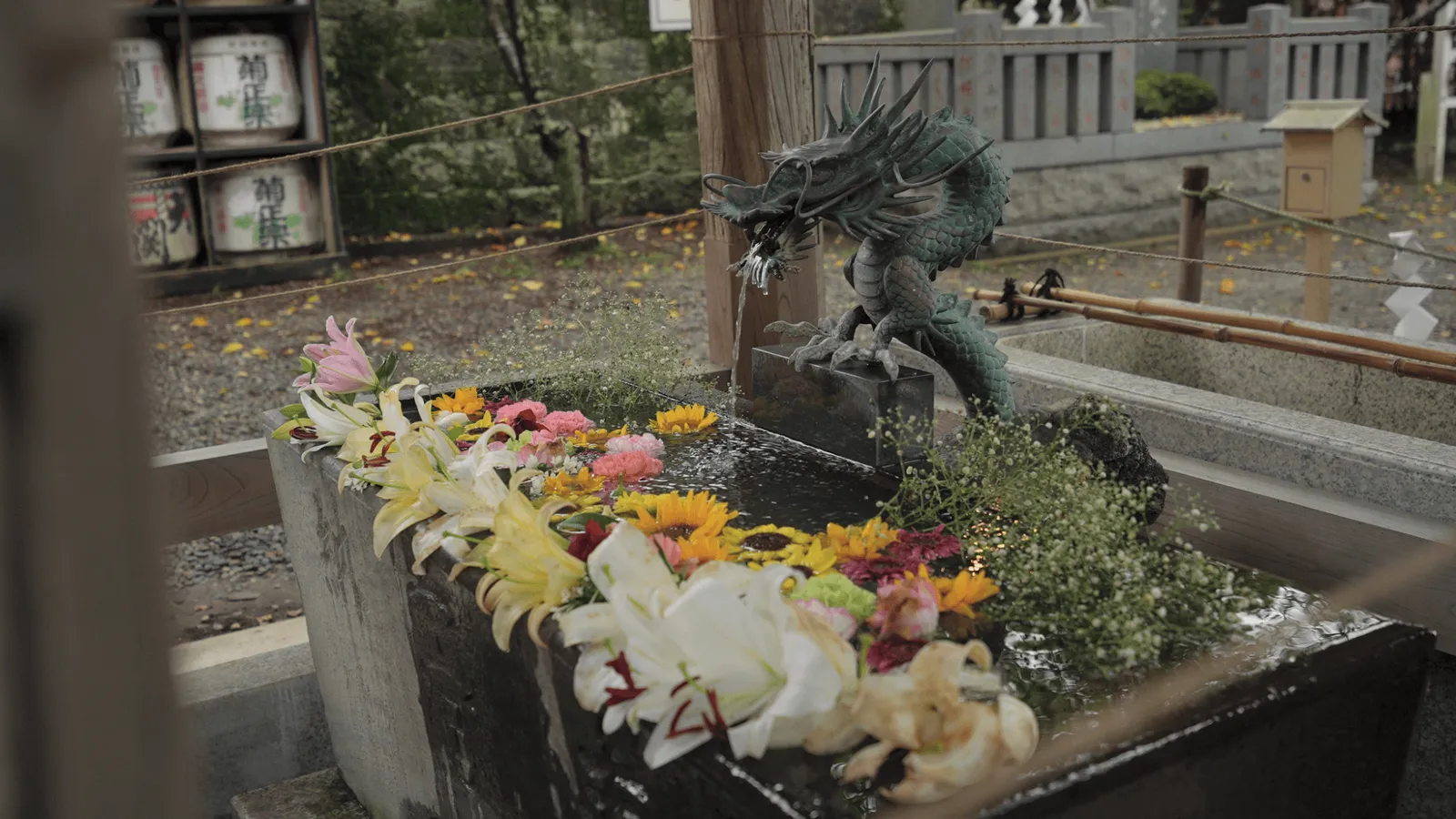
Tamasaki Shrine is also known as the starting point of the "Path of the Sunrise" (Goraiko no Michi), a ley line said to connect sacred sites across Japan along the direction of the rising sun. Take your time with this first step of the journey, pausing to notice the sake barrels lining the approach and the purification basin where water pours from a dragon's mouth.
Gazing Up at Ihachi's "Ushiwakamaru and the Great Tengu" at Iizunadera
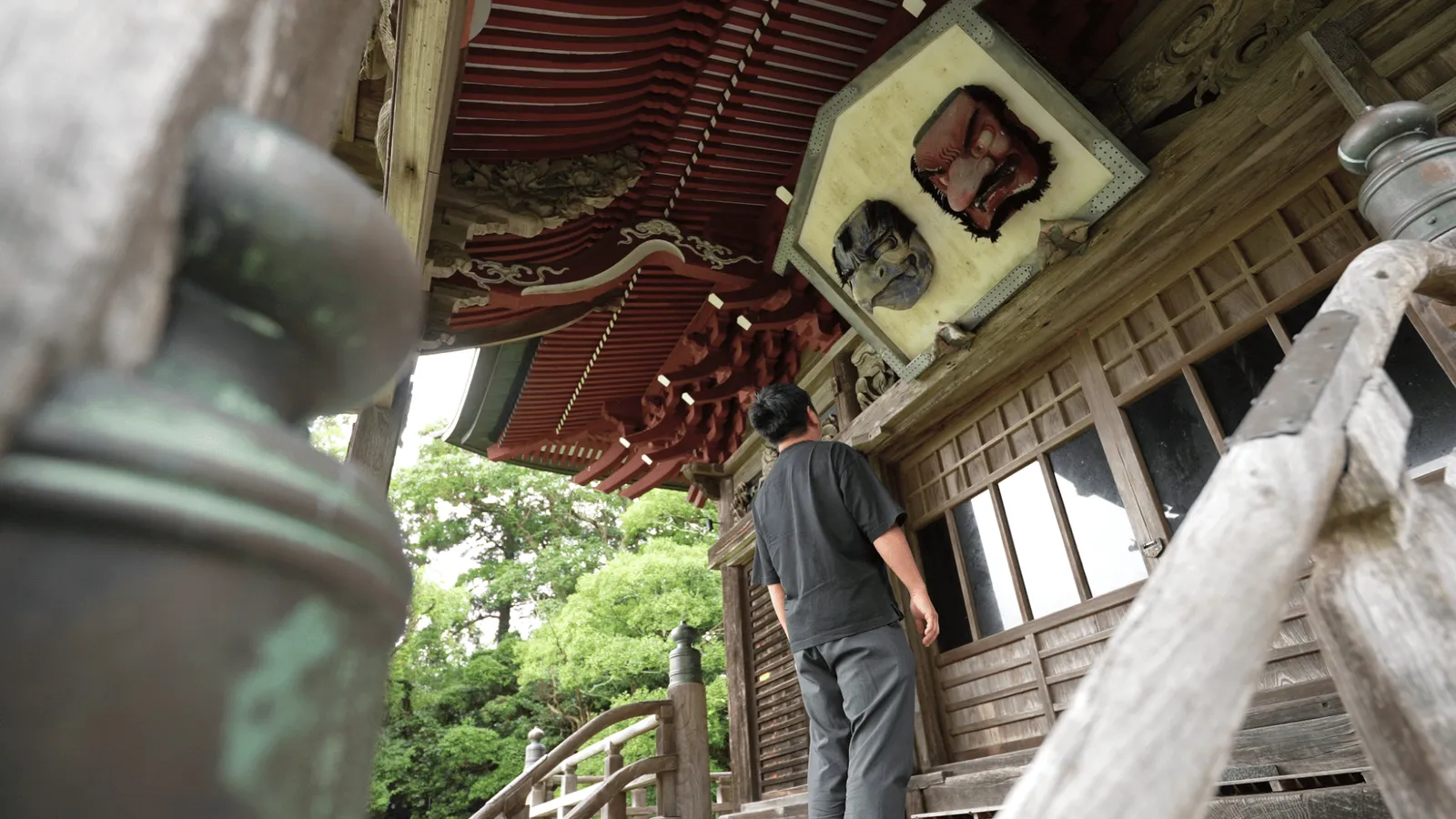
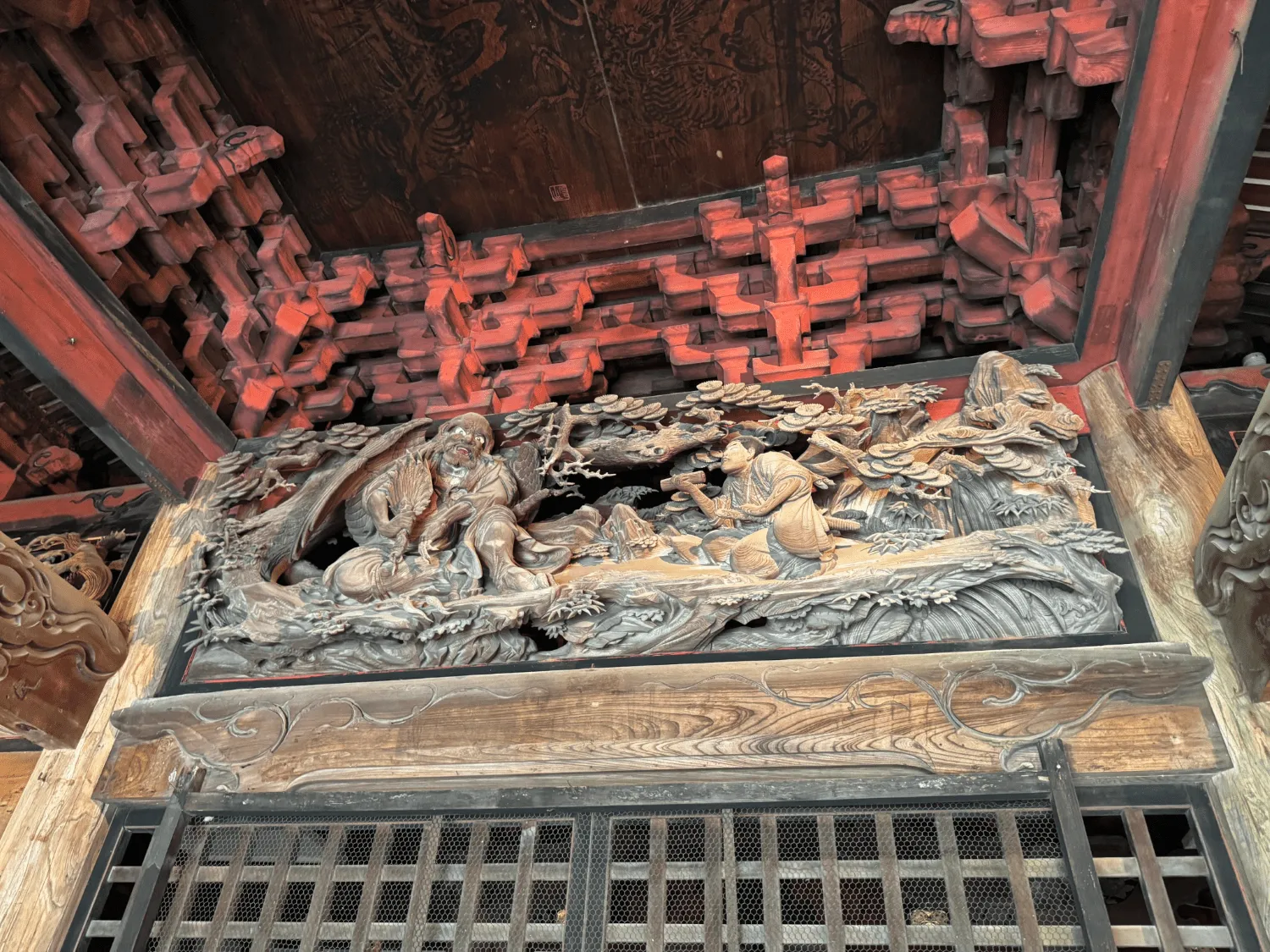
At Iizunadera Temple, two tengu masks greet you from beneath the eaves. Step inside the main hall and you'll find a large ranma (carved transom panel) by Nami no Ihachi: "Ushiwakamaru and the Great Tengu."
As you follow the figures of the Great Tengu and the young warrior Ushiwakamaru, your eye is drawn to the pine branches, rocks and flowing water around them. Up close, the depth of the carving casts shadows, revealing layer upon layer of depth within the wood.
Strolling Otaki's Castle Town, Lined with White-Walled Merchant Houses
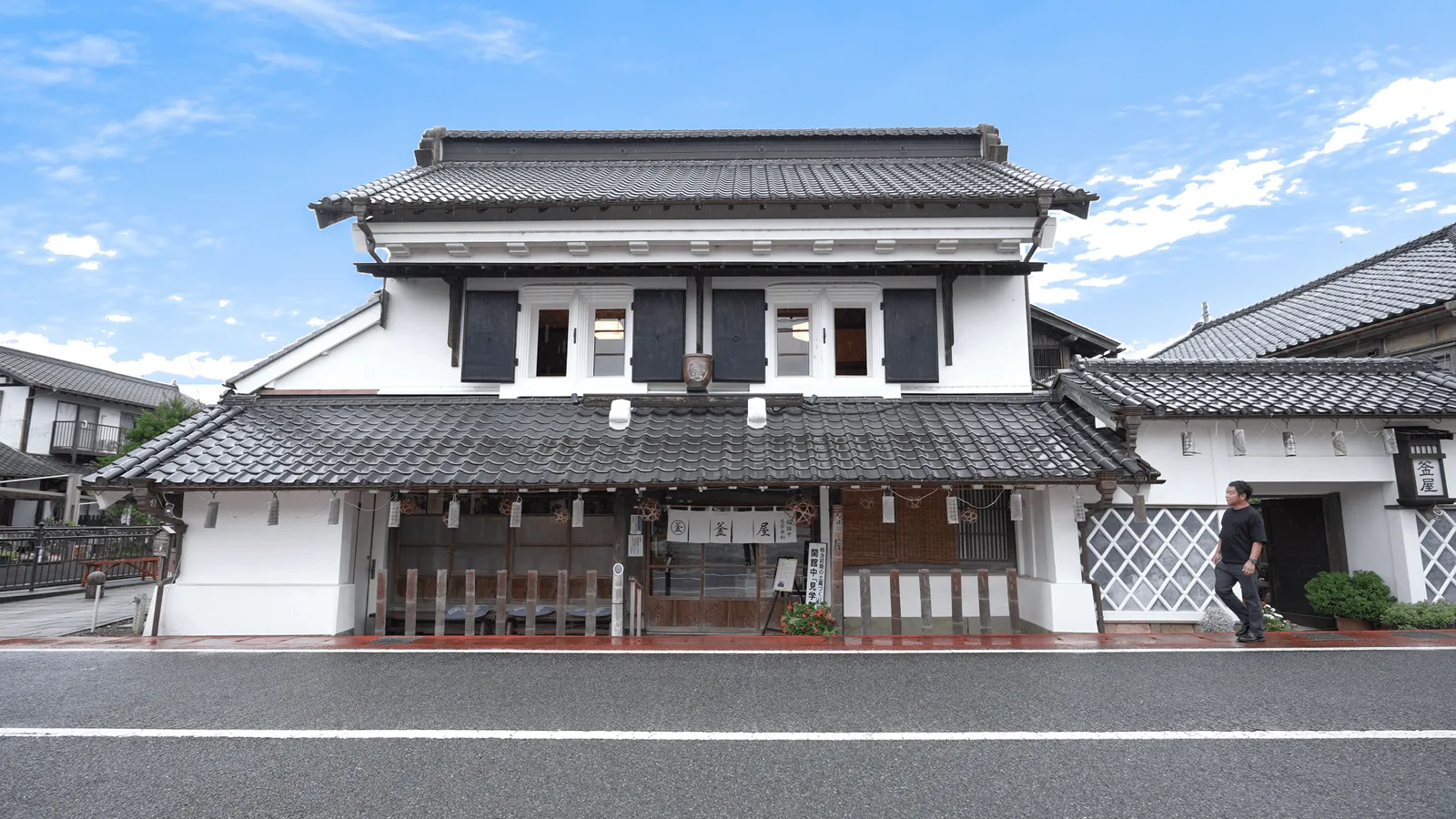
Between temple visits, you'll stop in the castle town of Otaki. Along the street stands the former Kamaya, a merchant house that catches the eye with its white walls and black tiled roof. Look at the height of the eaves and the design of the windows as you stroll, and you'll sense what the town was like when trade flourished here.
After craning your neck at temple carvings, it's a welcome change to wander the town streets. Even within a day of private-car touring, you'll get a feel for the history of everyday life in Boso.
At Gyoganji, "Waves and Sacred Jewel" Recalls Hokusai's Great Wave
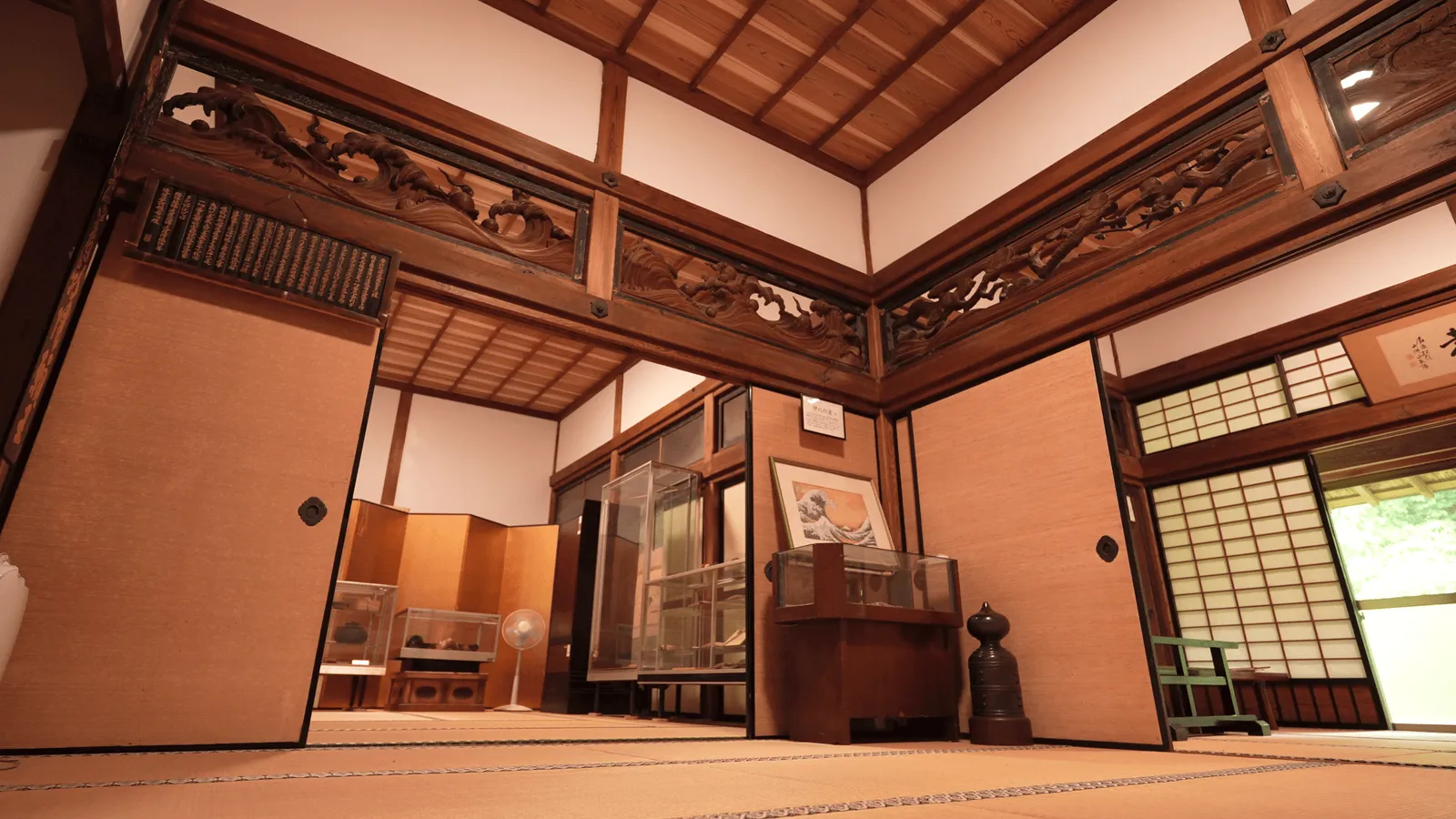
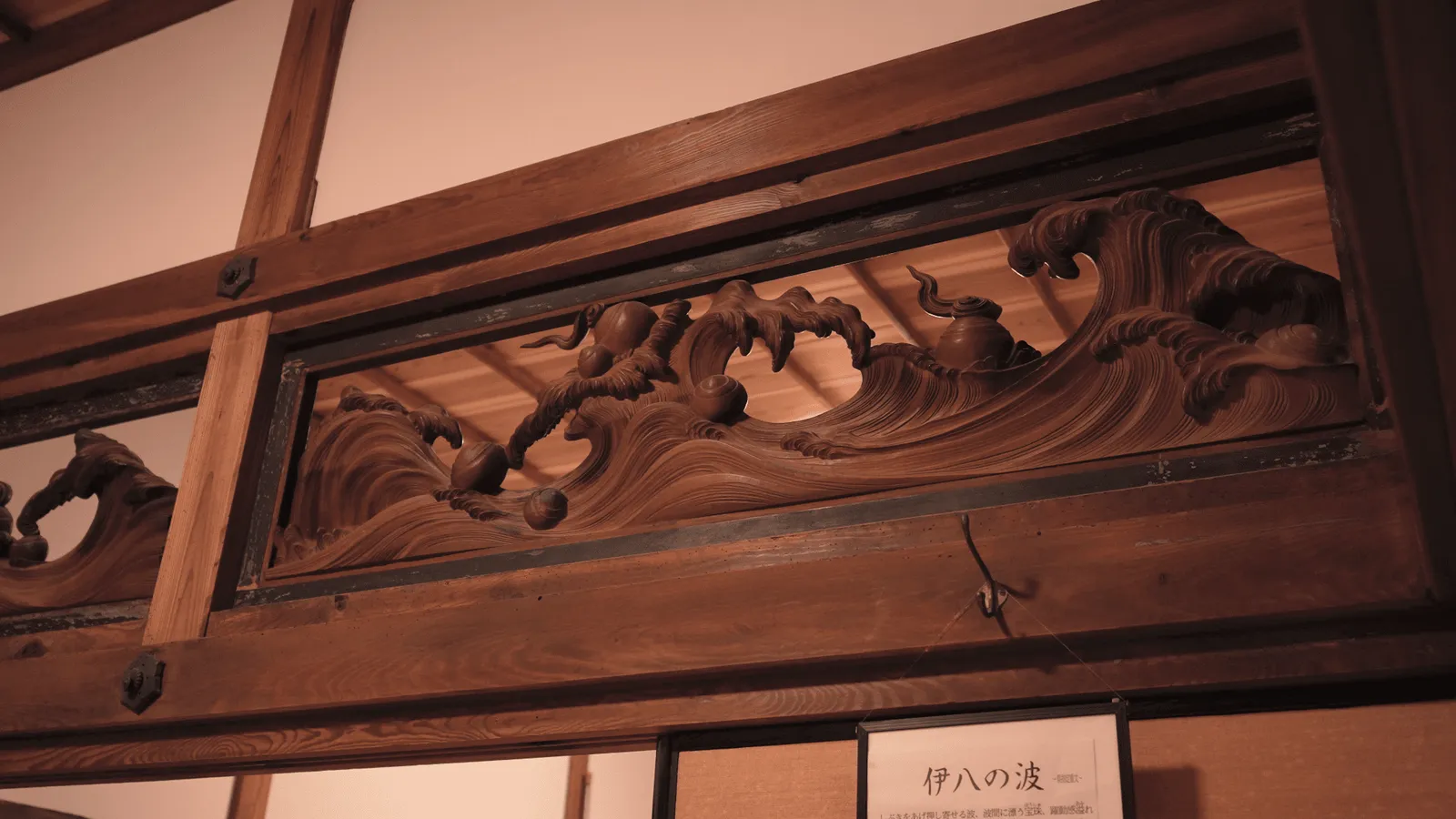
In the old shoin (study hall) of Gyoganji Temple, look up at Ihachi's transom carving "Waves and Sacred Jewel" (Nami to Hoju). The crests of the waves curl over, and their breaking spray seems frozen in the wood. As you search for the sacred jewel among the waves, your gaze naturally follows their movement.
This depiction of waves is said to have influenced Katsushika Hokusai's "The Great Wave off Kanagawa." Picture that famous woodblock print as you gaze up at the transom, and you'll be struck by the play of light and shadow unique to wood carving, and by the way the waves rise up.
Finally, Kasamori Kannon: Views over the Forest from a Rocktop Veranda
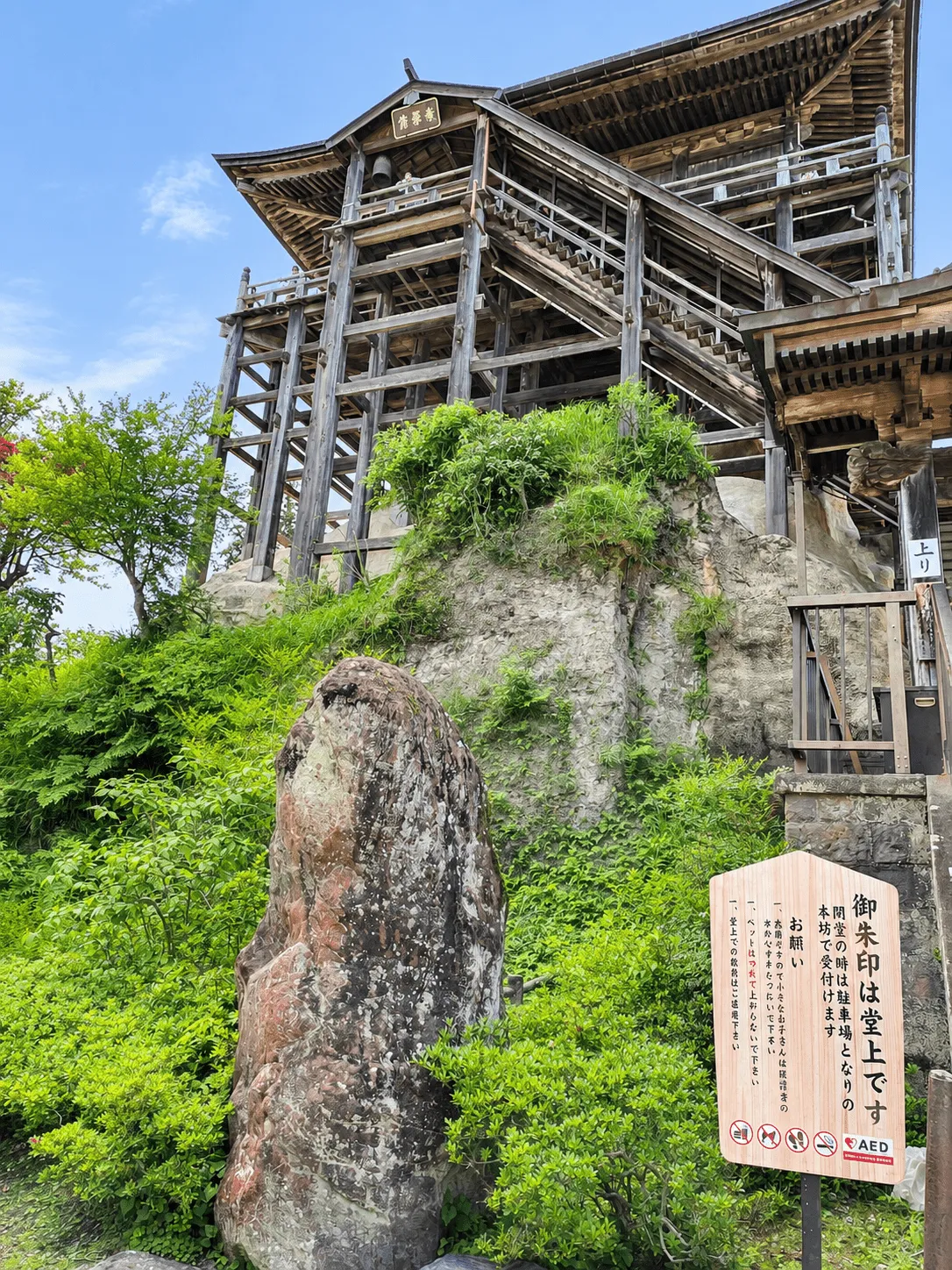
Emerging from the trees, you'll see Kasamoriji Kannon Hall rising atop a massive rock. Long pillars line the rock face, supporting the hall from all four sides in a rare style called shiho-kakezukuri. Look up, and you'll feel the sheer presence of this wooden structure, designated an Important Cultural Property of Japan.
On days when the hall is open, climb the wooden stairs to the veranda. Your view, once fixed on pillars and rock, suddenly opens up, and the forests of Boso spread out beyond the railing. After a day spent studying the fine details of wood carvings, this is a place to let your eyes wander all the way to the distant hills.
*The order of visits listed is a guide only. The itinerary may change depending on traffic and visiting conditions on the day.
FAQ
■ How many people can join? Bookings are for 2–5 people. It's a private tour in a dedicated vehicle, just for your group.
■ Can children take part? Participants must be aged 6 to 78. Child seats are not available.
■ Can I be picked up from any hotel? Pickup is available from hotels within the designated Tokyo area. Enter your hotel name and address when booking, and check the pickup time you'll be sent in advance. Please discuss your drop-off location at the end of the tour with your driver.
■ Is the tour available in Japanese? The tour is guided in English. The operator states that Japanese is also available. If you'd like a Japanese-speaking guide, please check with the operator before booking.
■ Are meals included? Meals are not included. If you'd like to know where and when lunch will be, please check with the operator along with the day's itinerary.
■ Are there stairs to reach Kasamori Kannon Hall? Yes. The approach to the Kannon Hall includes stone steps, so please wear comfortable walking shoes. The hall may close depending on the weather, so follow your guide's advice on the day.
■ Can I take photos inside the temples? Please follow each temple's rules on where and what you can photograph. If you'd like to photograph the transom carvings, check with your guide first.
Before You Book
- Confirm your group has 2–5 people, all aged 6 to 78.
- Check that your accommodation is within the pickup area.
- Check the pickup time and the roughly 9-hour-40-minute itinerary.
- If you'd like guidance in Japanese, confirm with the operator.
- Budget separately for meals, and check what admission fees are included when booking.
- Bring shoes suitable for walking temple approaches and stairs.
- Check the latest cancellation policy and what happens if you're late.
Prices, times and destinations may change, so please check the latest information before booking.

Summary
Gaze up at the Great Tengu and Ushiwakamaru at Iizunadera, then pause before Gyoganji's carved waves, which look ready to crash at any moment. The white-walled streets of Otaki and the forest view from Kasamori Kannon's veranda are sights you'll only discover by spending a full day exploring Boso.
If you have a spare day during your stay in Tokyo, why not head out to Boso by private car to see Ihachi's carvings in local historic temples and a Kannon hall that seems to float above the forest?


Cultural Experiences in Japan
Iizunamaji Private Day Tour: Ley Line Sites
Check the booking page for the latest schedules, prices, and plan details.