Comparing 5 Japanese Swordsmithing & Bladesmithing Experiences | Kyoto & Hyogo
Compare five metalworking experiences available in Kyoto and Hyogo — swordsmithing, knife forging, ninja weapon making, traditional knife sharpening, and tin casting — by technique, duration, finished piece, and who each is best suited for.
Published:
This page contains affiliate links.
Prices and ratings are as of 2026.07.17. Please check the booking page for the latest details.
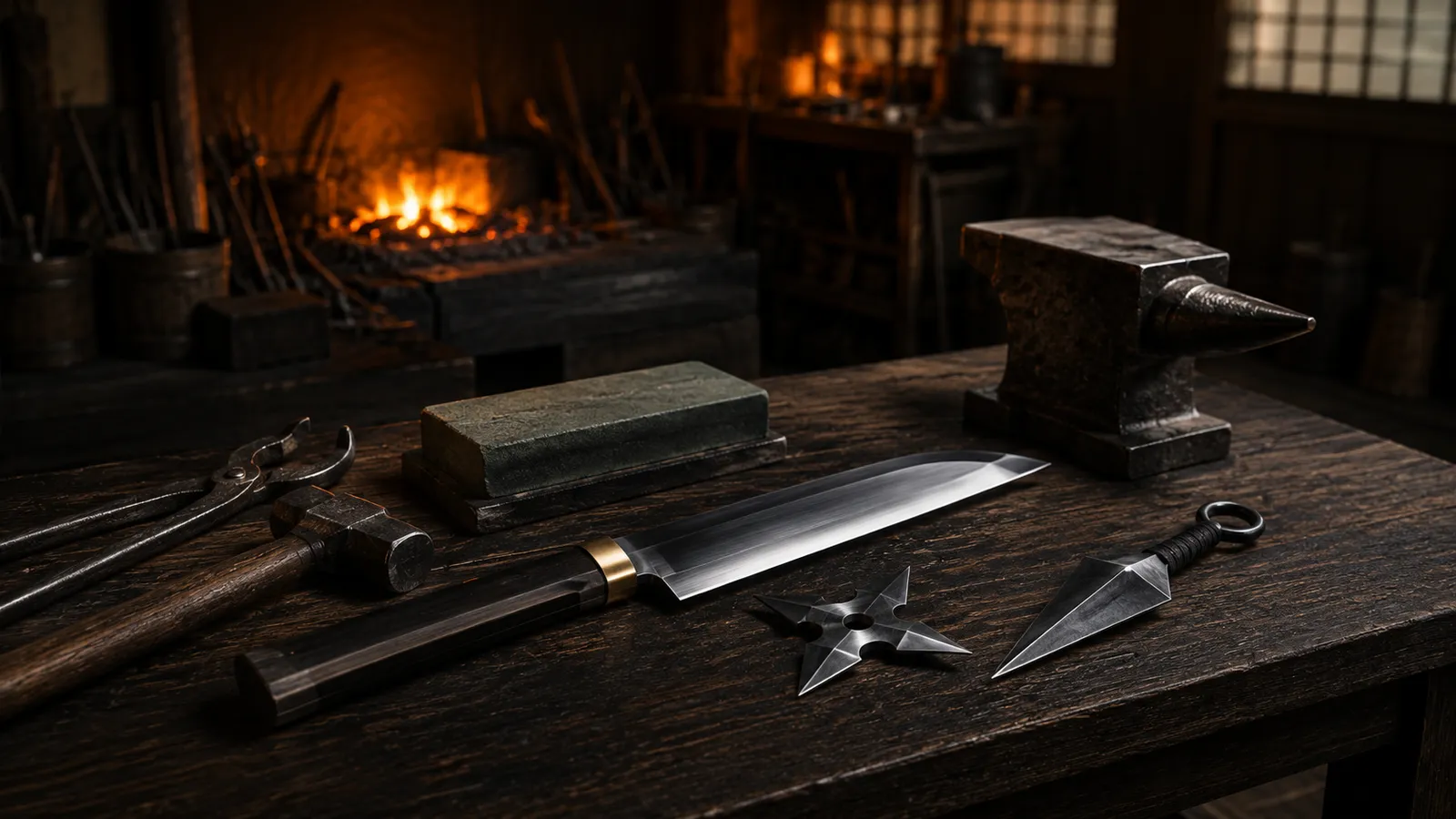
How to Choose a Swordsmithing or Bladesmithing Experience in Japan
Swordsmithing and bladesmithing experiences in Japan range from watching a swordsmith work inside a traditional forge to hammering red-hot steel, finishing a Japanese kitchen knife on a whetstone, and pouring molten tin into a mold.
This guide compares one swordsmithing experience in Aioi, Hyogo, with four metalworking workshops in Kyoto.
Although they all involve blades or metalworking, the right experience depends on whether you want to watch a swordsmith at work, forge steel yourself, make a practical knife, create a ninja-inspired piece, or explore sharpening and casting techniques.
We compare five experiences by technique, approximate duration, finished piece, and who each experience is best suited for.
The order is not a ranking. Prices, availability, start times, and workshop details may change, so check the latest information on each booking page before reserving.
Find a Swordsmithing or Bladesmithing Experience by Purpose and Style
Quick Comparison: 5 Swordsmithing & Bladesmithing Experiences
| Experience | Area / Duration | Main Style | Best For | Details |
|---|---|---|---|---|
| Swordsmith Tour & Samurai Knife Making | Aioi, Hyogo / approx. 5 hours | Swordsmith demonstration + knife making | Travelers who want an in-depth experience including a traditional sword forge | Learn more |
| Authentic Knife Forging Experience | Kyoto / approx. 3 hours | Steel forging + knife making | Travelers who want to heat and hammer steel into a practical knife | Learn more |
| Ninja Weapon Forging Experience | Kyoto / approx. 2 hours 30 minutes | Steel forging + ninja weapon | Travelers who want to forge their own shuriken or kunai from steel | Learn more |
| Traditional Japanese Knife Making Experience | Kyoto / approx. 1 hour | Sharpening + finishing | Travelers who want a short introduction to Japanese knives and whetstones | Learn more |
| Tin Casting & Ninja Item Making | Kyoto / approx. 2 hours | Tin casting | Travelers who want to try metalworking beyond hammer forging | Learn more |
Experience
Swordsmith Tour & Samurai Knife Making
- Area / Duration
- Aioi, Hyogo / approx. 5 hours
- BEST FOR
- Travelers who want an in-depth experience including a traditional sword forge
- Details
- Learn more
- Main Style
- Swordsmith demonstration + knife making
Experience
Authentic Knife Forging Experience
- Area / Duration
- Kyoto / approx. 3 hours
- BEST FOR
- Travelers who want to heat and hammer steel into a practical knife
- Details
- Learn more
- Main Style
- Steel forging + knife making
Experience
Ninja Weapon Forging Experience
- Area / Duration
- Kyoto / approx. 2 hours 30 minutes
- BEST FOR
- Travelers who want to forge their own shuriken or kunai from steel
- Details
- Learn more
- Main Style
- Steel forging + ninja weapon
Experience
Traditional Japanese Knife Making Experience
- Area / Duration
- Kyoto / approx. 1 hour
- BEST FOR
- Travelers who want a short introduction to Japanese knives and whetstones
- Details
- Learn more
- Main Style
- Sharpening + finishing
Experience
Tin Casting & Ninja Item Making
- Area / Duration
- Kyoto / approx. 2 hours
- BEST FOR
- Travelers who want to try metalworking beyond hammer forging
- Details
- Learn more
- Main Style
- Tin casting
The order above is not a ranking.
Choosing first by the metalworking process you most want to experience and the kind of piece you want to take home makes it easier to compare the five options.
Forging, Sharpening & Finishing, and Casting
Forging with a Forge and Hammer
If you want to work with heated steel and a hammer, compare the Swordsmith Tour & Samurai Knife Making in Aioi, Hyogo, the Authentic Knife Forging Experience in Kyoto, and the Ninja Weapon Forging Experience in Kyoto.
Aioi is the longest and includes a swordsmith demonstration, the Kyoto knife workshop focuses on making a practical knife, and the ninja workshop focuses on creating a shuriken or kunai.
Sharpening and Finishing with a Whetstone
If you are more interested in the delicate process that brings a blade to completion than in forging steel from raw material, consider the Traditional Japanese Knife Making Experience in Kyoto.
With guidance from a craftsman, you sharpen a blade on a whetstone. At about one hour, it is also easier to fit into a day of Kyoto sightseeing.
Casting Molten Metal into a Mold
For a metalworking process completely different from hammer forging, consider Tin Casting & Ninja Item Making in Kyoto.
You melt tin, pour it into a mold, allow it to cool, then shape and polish it. The experience shows how a piece can be created from liquid metal rather than forged or sharpened steel.
Choose a Swordsmithing or Bladesmithing Experience by Purpose and Style
Watch a swordsmith and make a knife
The Swordsmith Tour & Samurai Knife Making in Aioi, Hyogo is an approximately five-hour experience where you watch a swordsmith work inside a traditional Japanese sword forge before making your own samurai knife.
BEST FOR
Travelers who want to spend more time experiencing a swordsmith's craft, the atmosphere of a traditional forge, and knife making together.
what sets it apart
Unlike the four Kyoto workshops, this experience includes a live swordsmith demonstration inside a Japanese sword forge.
Forge a practical knife from steel
In the Authentic Knife Forging Experience in Kyoto, you heat and hammer steel before grinding and sharpening it into a practical knife.
BEST FOR
Travelers who want to feel the heat of the forge, use a hammer, and create a knife they can actually use.
what sets it apart
The focus is a practical knife rather than a ninja-inspired object, and you take part more deeply in forging than in the knife-finishing workshop.
Forge a ninja weapon from steel
In the Ninja Weapon Forging Experience in Kyoto, you hammer heated steel into the shape of a shuriken or kunai.
BEST FOR
Travelers interested in ninja culture who want to create a piece themselves from steel rather than simply buy one.
what sets it apart
Unlike the tin-casting workshop, this experience centers on the physical process of heating and hammering steel into shape.
Finish a Japanese kitchen knife in a short time
In the Traditional Japanese Knife Making Experience in Kyoto, you learn about Japanese kitchen-knife tools and processes and sharpen a blade on a whetstone with guidance from a craftsman.
BEST FOR
Travelers who want a shorter workshop during Kyoto sightseeing and are interested in the delicate techniques used with Japanese knives and whetstones.
what sets it apart
Instead of forging steel from raw material, the experience focuses on sharpening and finishing a knife.
Try metalworking through tin casting
In Tin Casting & Ninja Item Making in Kyoto, you melt tin, pour it into a mold, then shape and polish the piece after it cools.
BEST FOR
Travelers who are more interested in seeing liquid metal become a finished object inside a mold than in hammering steel.
what sets it apart
While the other workshops center on steel forging or blade finishing, this one introduces metalworking through tin and mold casting.
5 Points to Check Before Booking
Which Parts of the Process You Will Do Yourself
A workshop described as “knife making” may involve forging from steel, sharpening and finishing a blade, or watching a craftsman's demonstration.
Check which stages you will personally take part in before booking.
Duration and Access
The experiences range from an approximately one-hour workshop in Kyoto to an approximately five-hour experience in Aioi, Hyogo.
When planning your itinerary, consider not only the workshop duration but also travel time to the meeting point and the expected finish time.
Finished Pieces and Take-Home Conditions
The type of item you make, how it is handed over, and the conditions for taking it away may differ by experience.
If your finished piece is a knife or another bladed item, check the workshop guidance as well as the latest rules of your transportation provider and destination before traveling with it.
Clothing and Safety Equipment
Workshops involving a forge, heated metal, hammers, whetstones, or blades may have clothing and safety requirements.
Check the latest booking information for suitable clothing, footwear, and any other preparations required on the day.
Age, Language, and Participation Requirements
Age limits, participation requirements, and available languages may vary between workshops.
Families with children and travelers who require guidance in a particular language should confirm age requirements, language support, and anything they need to bring before booking.
Frequently Asked Questions
Can beginners join a swordsmithing or bladesmithing experience?
Yes, some workshops are designed for travelers and allow beginners to participate with guidance from a craftsman.
For deeper hands-on forging, compare the Authentic Knife Forging Experience in Kyoto. For a shorter introduction to blade finishing, consider the Traditional Japanese Knife Making Experience in Kyoto.
What is the difference between forging and sharpening or finishing?
The Authentic Knife Forging Experience in Kyoto includes heating and hammering steel.
The Traditional Japanese Knife Making Experience in Kyoto, by contrast, focuses on using a whetstone to sharpen and finish a blade.
Which experience should I choose if I want to watch a swordsmith at work?
If you are especially interested in a swordsmith's craft and the atmosphere of a Japanese sword forge, the Swordsmith Tour & Samurai Knife Making in Aioi, Hyogo is the clearest option.
Because it is longer and outside central Kyoto, plan enough time for travel as well as the experience itself.
What is the difference between ninja weapon forging and tin casting?
The Ninja Weapon Forging Experience in Kyoto involves heating and hammering steel to form a shuriken or kunai.
Tin Casting & Ninja Item Making in Kyoto centers on melting tin and pouring it into a mold.
The theme may be similar, but the metalworking techniques are very different.
Can I take the finished piece home?
Take-home conditions depend on the workshop and the item produced.
For knives or other bladed pieces, check the latest workshop information as well as transportation and destination rules before carrying the item during your trip or taking it home.
In Summary
Japanese swordsmithing and bladesmithing experiences offer very different processes, including watching a swordsmith demonstrate traditional techniques, forging steel, sharpening a kitchen knife, and casting tin.
The right choice depends on whether you most want to watch a swordsmith, hammer steel yourself, work with a whetstone in a shorter session, or pour molten metal into a mold.
Rather than choosing by ranking, start with the process that excites you most and the kind of piece you want to take home.