Coral Dyeing at Shuri Ryusen in Okinawa | A 1-Hour Craft Experience Found Only Near Shuri Castle
Just steps from Shuri Castle, Shuri Ryusen offers Japan's only coral dyeing experience. In about an hour, you'll press dye onto precious coral fossils to layer coral motifs onto a T-shirt or tote bag in this traditional craft workshop.
Published: Updated:
Content verified by the operatorPhotos courtesy of ㈱ジャパンホリデートラベル
This page contains affiliate links.
Prices and ratings are as of 2026.09.14. Please check the booking page for the latest details.

BEFORE YOU BOOK
4 Things to Know Before Booking
- 01日本でここだけのサンゴ染め
- 02貴重なサンゴ化石で模様付けが出来る
- 03Tシャツやトートを持ち帰りが出来る
- 04所要約1時間・首里城近くで開催
BEST FOR
Who This Experience Is Best For
- 01
Travelers looking for something you can only do in Okinawa
Coral dyeing is a technique exclusive to Shuri Ryusen in all of Japan. It's a chance to experience a craft made from Okinawa's own natural materials, unique to this land.
- 02
Anyone wanting a souvenir they've made with their own hands
Your dyed T-shirt or tote bag is yours to take home right away. Unlike a store-bought souvenir, it's a one-of-a-kind piece you created yourself.
- 03
Families looking to enjoy something across three generations
Since the tapping process is so simple, everyone from young children to grandparents can join in at the same table.
When to Compare Other Options
This traditional craft experience fits neatly into about an hour, making it easy to combine with a visit to Shuri Castle. With English and Japanese support available, it's easy to join even if you're traveling with companions from abroad.
Discover Japan's Only Coral Dyeing, Right Next to Shuri Castle
At Shuri Ryusen in Naha, Okinawa, you can try "coral dyeing" (sango-zome), a technique found nowhere else in Japan. This roughly one-hour group experience meets on-site, is available in both English and Japanese, and starts from ¥4,550. It holds a 4.9 rating on booking sites (311 reviews).
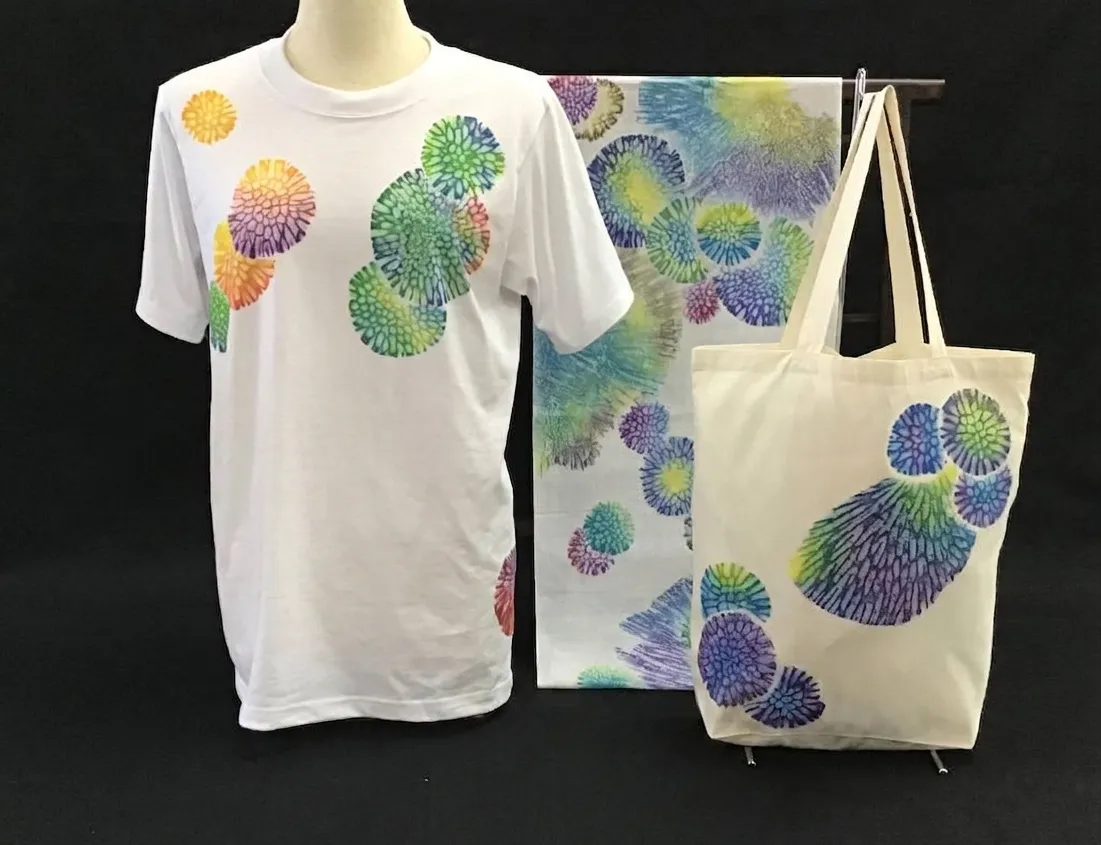
Coral dyeing uses actual coral fossils as stamps, transferring their fine, intricate textures onto fabric. The radiating, fan-like patterns and the honeycomb-like networks you see are all shapes that nature has crafted over long spans of time.
You can dye items such as tenugui (hand towels), tote bags, and T-shirts. Even using the same piece of coral, the color combinations and placement mean every finished piece turns out completely different. You can check availability via this booking page.
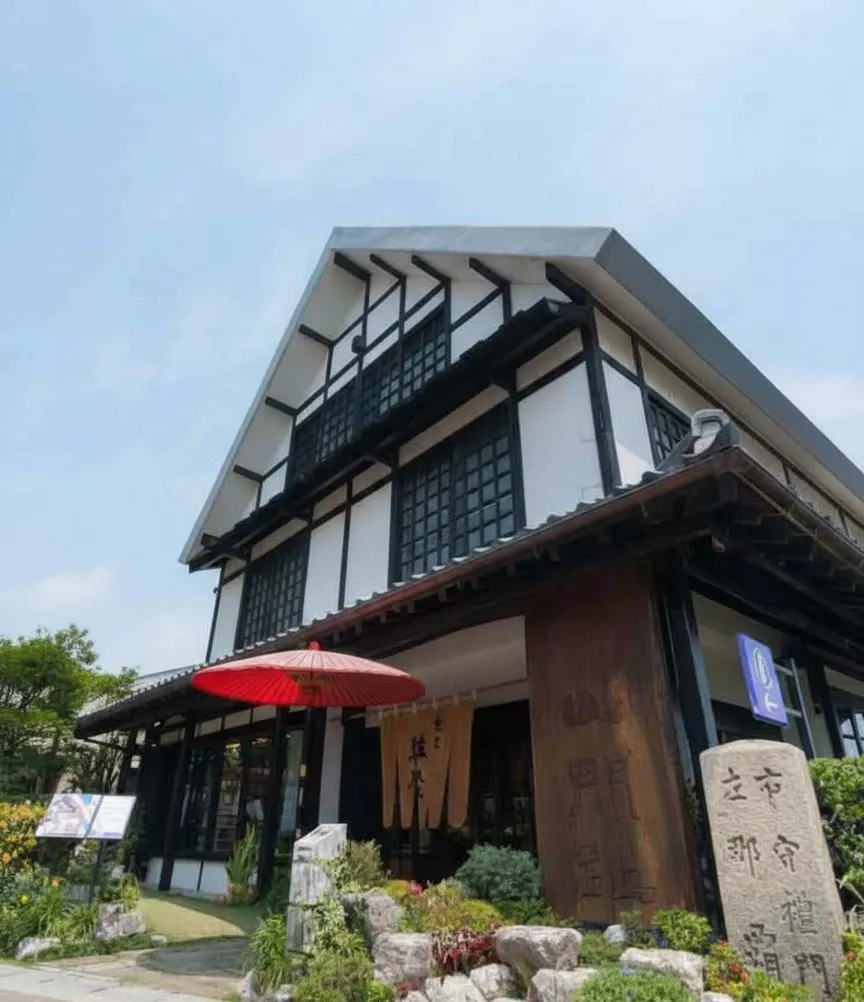
Arriving at the Workshop with White Walls and Black Wooden Frames
The experience takes place at the Shuri Ryusen shop, located just a short walk from Shuri Castle. The building, with its striking white walls and black wood trim, is easy to spot thanks to the red Japanese umbrella and noren curtain hanging at the entrance.
Inside, you'll find a calm space surrounded by shoji screens and plaster walls, with work done around a large wooden table. Shelves display finished dyed pieces alongside plain white items ready to be dyed, giving you a sense of what's possible before you even begin.
Your first task here is choosing which item to dye—a chance to think about what kind of piece you want to create before you start working with your hands.
Choosing Your Coral Fossil: The Step That Shapes Your Design
The first big decision in the experience is selecting your coral fossil. The table is lined with cross-sections of coral in all shapes and sizes—some with lines radiating outward, others with honeycomb-like networks, still others densely packed with tiny granular textures.
These are precious corals owned by Shuri Ryusen, and their surfaces bear faint traces of color from past dyeing sessions. These well-used tools, with their long history, are truly the stars of this experience.
Whether you place one large coral boldly at the center or scatter several smaller pieces, your choice of coral will largely determine the final impression of your piece.

Applying Color with a Tampo Dauber
Once you've chosen your coral, it's time to dye. Place your fabric over the coral, load a round dyeing tool called a tampo with dye, and gently tap it onto the fabric to transfer the color.
The table is set with bottles of yellow, red, blue, purple, and other dyes, along with color samples for reference. By varying the colors within a single coral pattern, you can even create gradients—yellow at the center fading to blue at the edges, for example.
Staff members watch closely and offer tips along the way, so even first-timers won't get stuck. The process is simple enough that people of all ages, from young children to seniors, can enjoy it together at the same table.


Watching the Coral Pattern Emerge with Every Tap
As you tap the tampo again and again, the coral's fine lines and networks gradually emerge on the fabric. This is the true highlight of coral dyeing.
Fan-shaped lines spreading outward, cell-like patterns arranged with perfect regularity—these are precise, natural forms no hand-drawn design could replicate, appearing alongside subtle shifts in color depth. Even a gradual transition from blue to yellow-green will shift in character depending on how much pressure you apply.
Whether to layer on more color or leave some blank space—these small decisions, made one after another, become your own one-of-a-kind piece.

Unfolding Your Finished Piece for a Keepsake Photo
After about 50 minutes of dyeing, your one-of-a-kind coral pattern is complete. You can take your piece home the same day—once you're back, simply iron it to set the colors, and it's ready to be washed and used.
The shop displays large dyed cloths on its walls, and many visitors like to unfold their finished pieces in front of them for a photo. A shot with colorful coral patterns on display makes for a memorable record of your trip.
After the experience, you can head out to explore the area around Shuri Castle—this workshop fits neatly before or after a stroll through the historic old capital of Shuri.
What to Check Before Booking
- Your booked start time, and arrival at least 15 minutes beforehand
- The meeting point is Shuri Ryusen (Naha City)
- The coral dyeing experience takes about 50 minutes
- Materials available on the day include tenugui hand towels, tote bags, and T-shirts, in various sizes
- Since dye is involved, wear clothing you don't mind getting stained
- For smaller groups, English guidance mainly covers the dyeing steps themselves
- You can take your finished piece home the same day, but you'll need to iron it afterward to set the colors
- Cancellation and change policies, along with the latest pricing and availability
Pricing, start times, and available materials are subject to change. Please check the latest details before booking.
In Summary
At Shuri Ryusen, just a short walk from Shuri Castle, you can transfer the patterns of precious coral fossils onto fabric through "coral dyeing"—a dyeing experience unique to Shuri Ryusen and found nowhere else in Japan.
Start by choosing your favorite coral pattern from a variety of shapes and sizes, then gradually build up your design with the tampo dauber as you consider color combinations and placement. Each tap reveals more of nature's intricate patterns on the fabric, until you're left with a truly one-of-a-kind piece.
Since you take your work home the same day, you can carry the memory of your visit to Shuri with you as a self-dyed T-shirt, tote bag, or tenugui long after your trip ends. It's a wonderful recommendation for anyone who wants to do more than just walk through Shuri Castle—and experience Okinawa's dyeing culture with their own hands.

Cultural Experiences in Okinawa
Okinawa Coral Dyeing Experience | Near Shuri Castle
Check the booking page for the latest schedules, prices, and plan details.