Make an Omi Ikkanbari Chopstick Rest by Hachiman Canal, Omihachiman | Weave, Paste and Coat with a Craftsman in One Hour
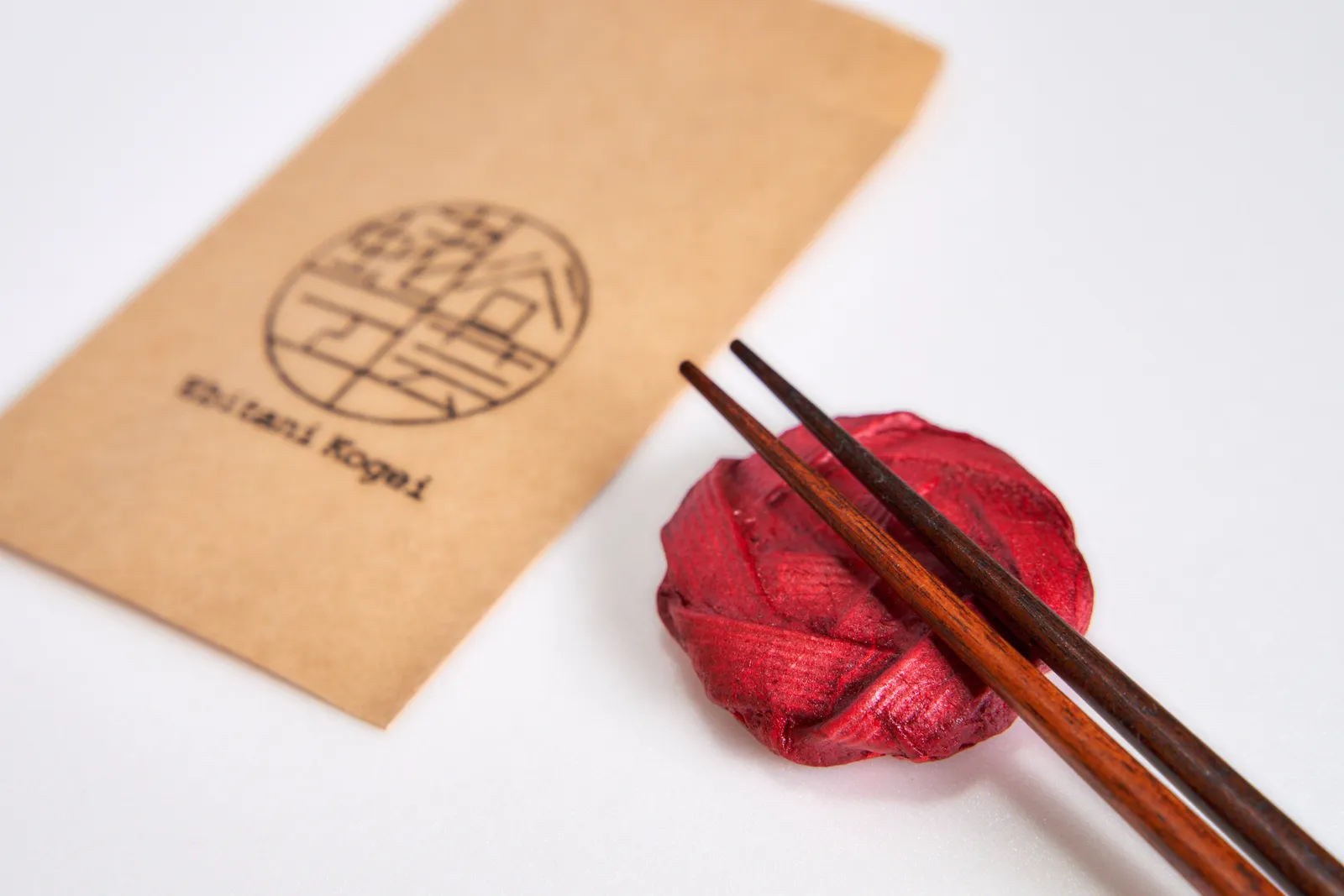
Paper cord takes shape as a tiny form, is wrapped in the washi paper you chose, and changes character under a coat of kakishibu (fermented persimmon tannin). At Omi Ikkanbari KURA, a converted storehouse along Hachiman Canal in Omihachiman, you can make a chopstick rest side by side with a craftsman. Working with the same materials the artisans use every day, you'll go through the weaving, pasting and coating steps in about an hour. Even with identical materials, every piece turns out different in shape and colour, so the little creation that fits in your palm becomes a souvenir that is truly yours.
Published:
Content verified by the operatorPhotos courtesy of 蛯谷工芸
This page contains affiliate links.
Prices and ratings are as of 2026.11.26. Please check the booking page for the latest details.
BEFORE YOU BOOK
4 Things to Know Before Booking
- 01Learn directly from an Omi Ikkanbari craftsman.
- 02Weave, paste and coat using the same materials as the craftsmen.
- 03Create a one-of-a-kind chopstick rest with its own shape and colour.
- 04Enjoy a stroll along Hachiman Canal and handcraft in a historic storehouse.
BEST FOR
Who This Experience Is Best For
- 01
Travellers who want to try traditional Japanese crafts hands-on
Under a craftsman's guidance, you'll go through every stage of ikkanbari, weaving, pasting and coating, in about an hour.
- 02
Those looking to add an activity to their Omihachiman stroll
The venue is a storehouse along Hachiman Canal, so it fits easily into a walk around town.
- 03
Anyone wanting to make a one-of-a-kind souvenir
The washi colour, kakishibu tone and shape all bring out individuality, so even with the same materials, your chopstick rest will be truly your own.
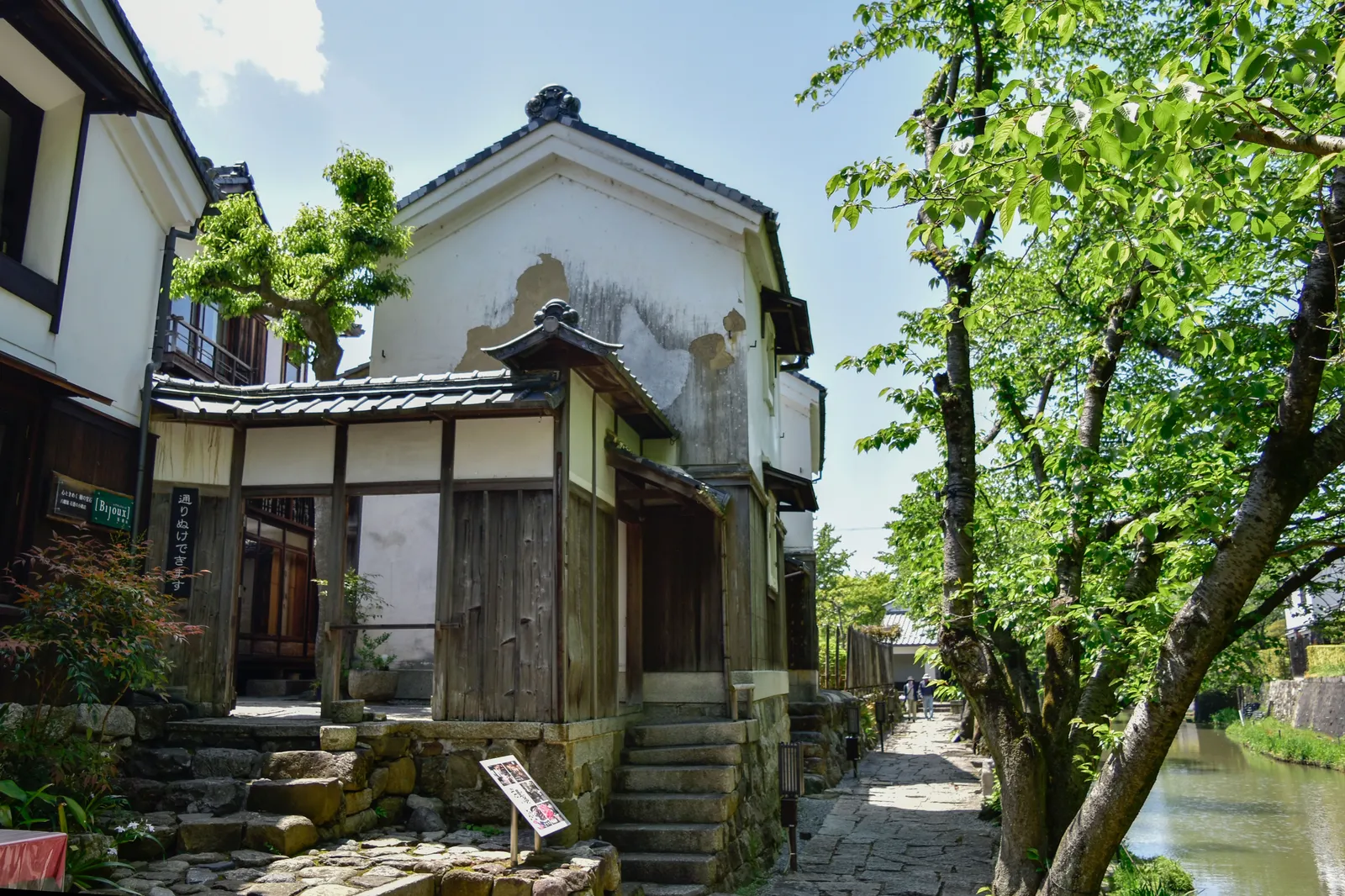
Stroll the Stone Paths of Hachiman Canal to a White-Walled Storehouse
Wander along the stone-paved lane, gazing out over the waters of Hachiman Canal, and a white-walled storehouse comes into view. The venue is Omi Ikkanbari KURA, a shop set inside a renovated kura (traditional storehouse). Here, the pleasure of exploring the old town flows naturally into an encounter with Japanese handcraft.
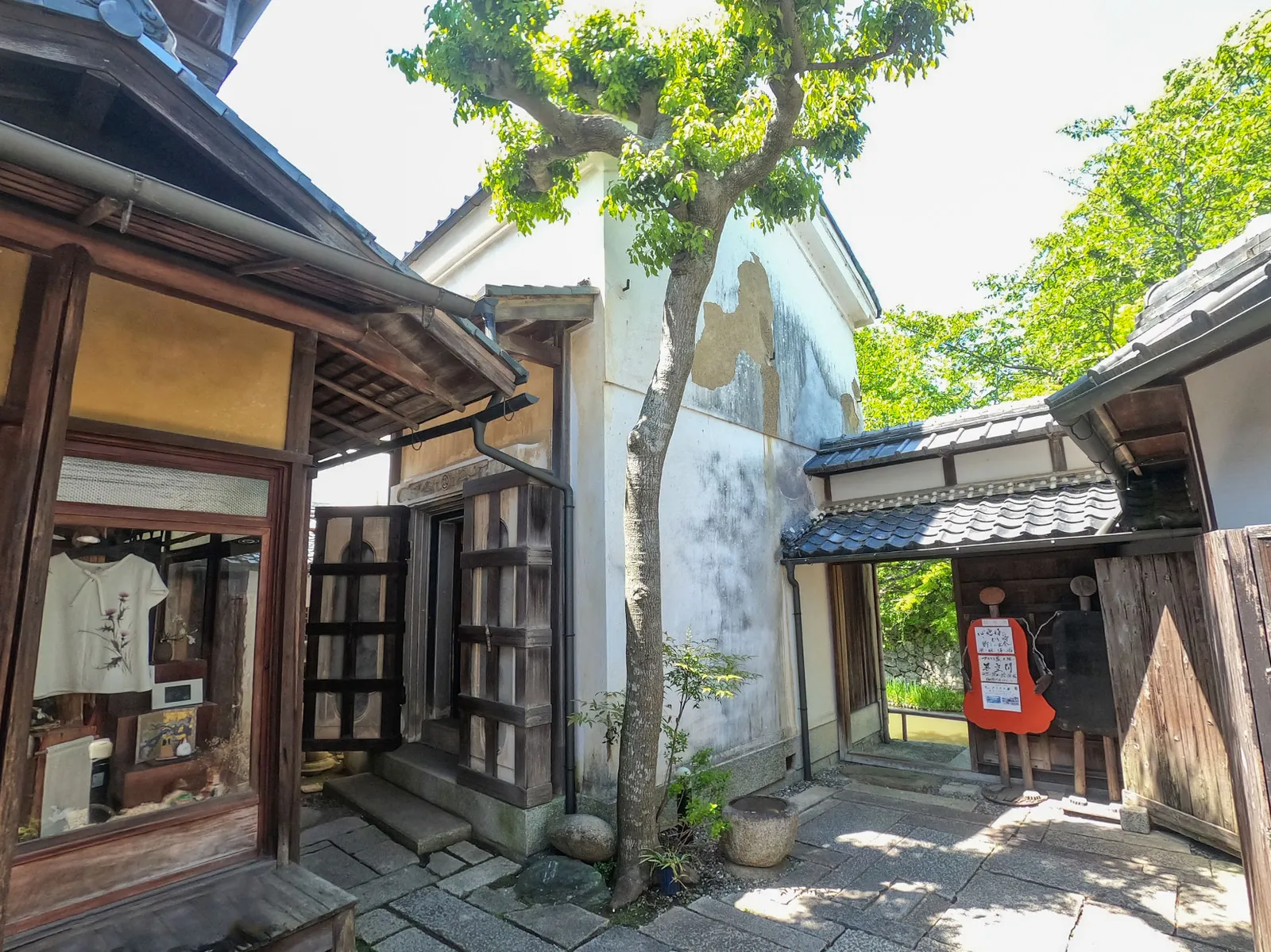
Beyond the gate lies a small courtyard enclosed by tile-roofed buildings. Step through an entrance that blends seamlessly into the historic streetscape, and your anticipation for the craft session ahead will only grow.
From JR Omi-Hachiman Station, take a bus bound for Chomeiji and get off at Osugicho; the venue is about a 1-minute walk from the stop. Please meet at the venue. The experience lasts about an hour, and you should arrive at least 5 minutes before your booked start time.

Discover Ikkanbari Among the Craftsmen's Works Inside the Storehouse
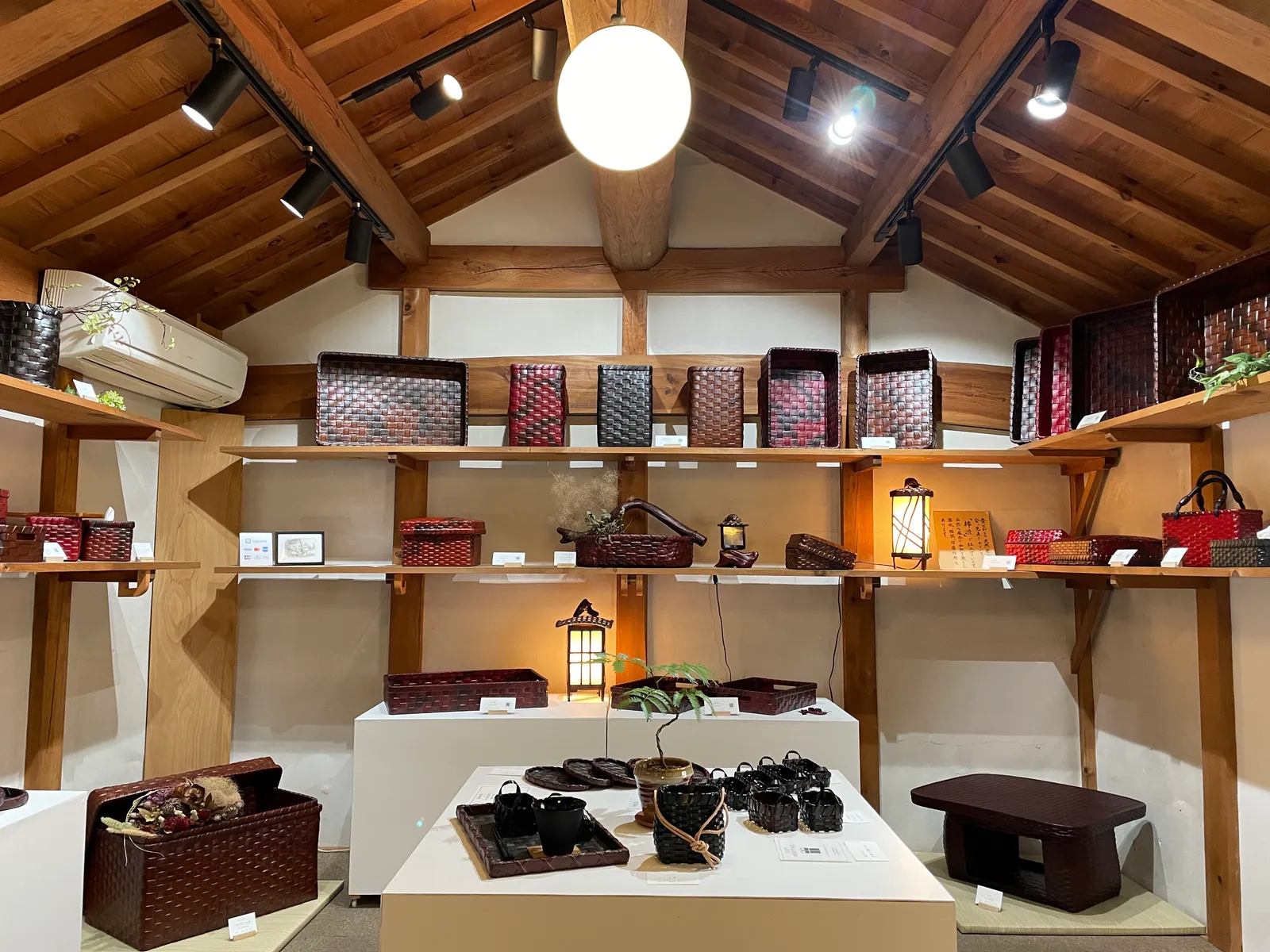
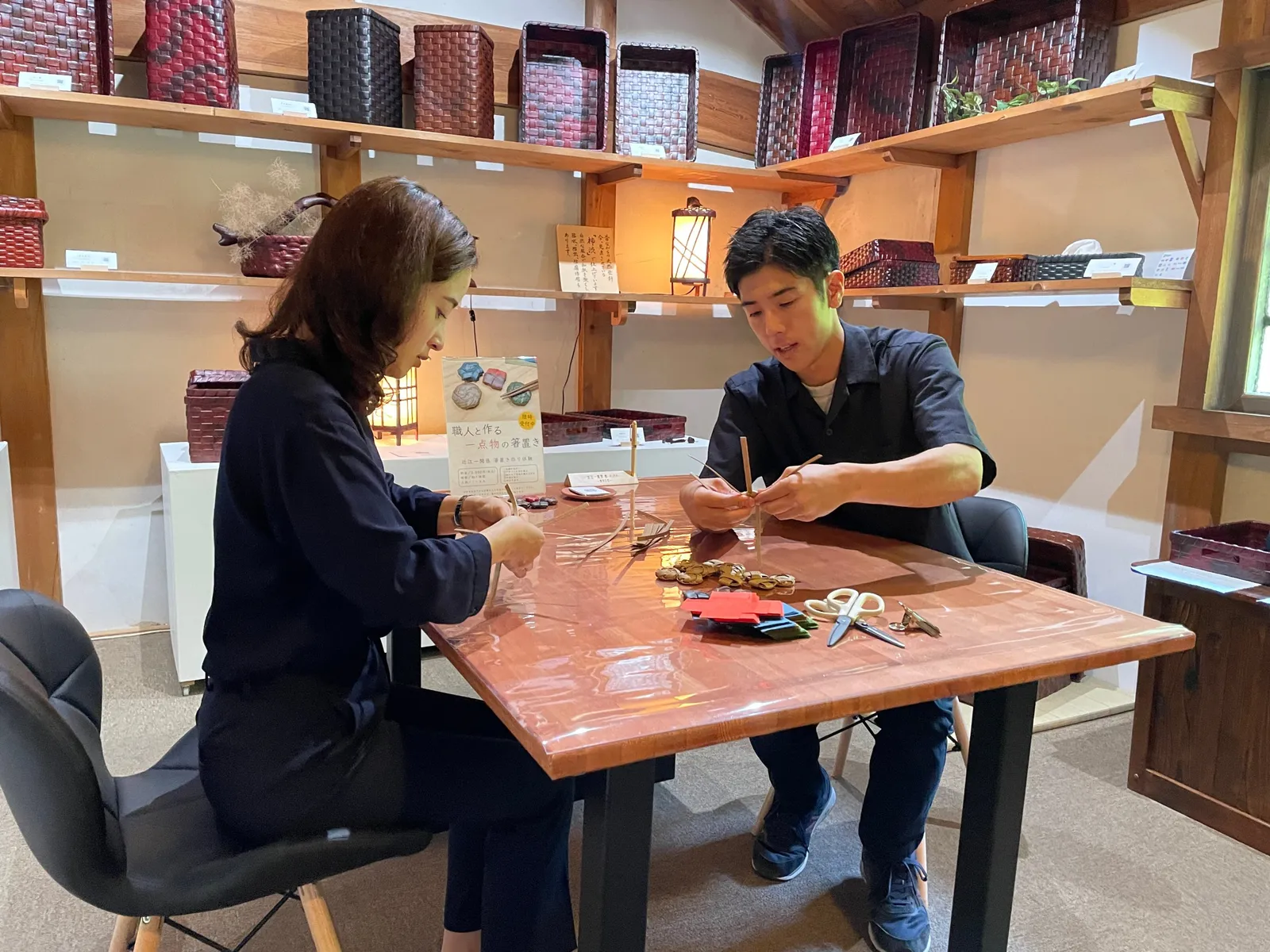
Inside the storehouse, baskets, boxes and trays in deep, rich tones line the shelves, all made by the craftsmen. As you take in the patterns formed by the weave and the texture of the washi, it's hard to believe these pieces began life as paper.
Omi Ikkanbari is a technique unique to Ebitani Kogei: paper cord is woven into shape, covered completely with washi paper, and finished with coatings such as kakishibu.
In this session, you'll make a small chopstick rest. It's a different experience from making the baskets and boxes you see in the shop, but you'll still trace the full sequence of weaving, pasting and coating with your own hands, learning directly from a craftsman.
First, Choose Your Colour and Shape, Then Weave Paper Cord with a Craftsman
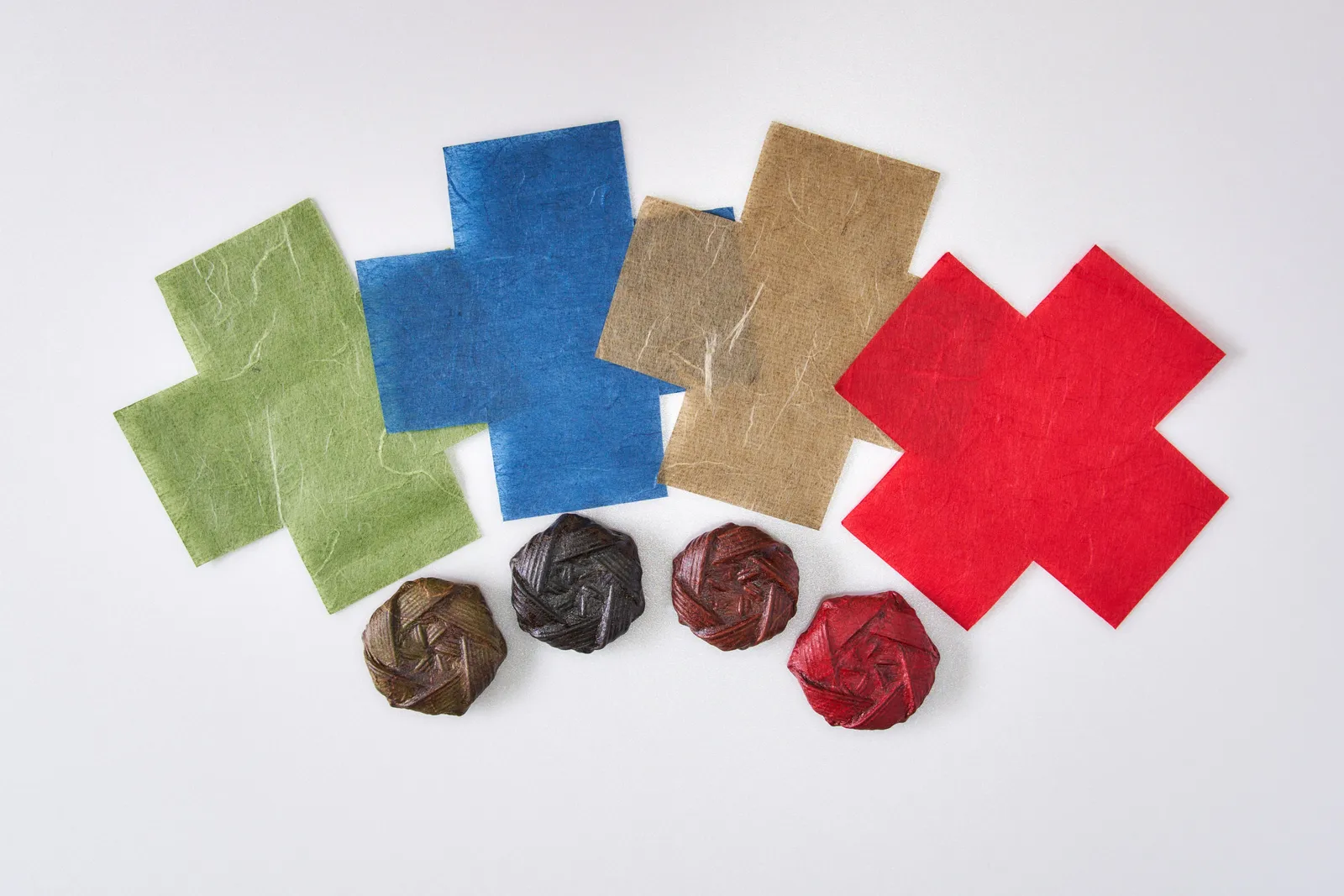
Browse the samples and pick the design of your chopstick rest and the colour of your washi. Will you go for a shade that suits your dining table, or something bright and cheerful as a travel keepsake? Even a tiny chopstick rest is a chance to express your personal style.
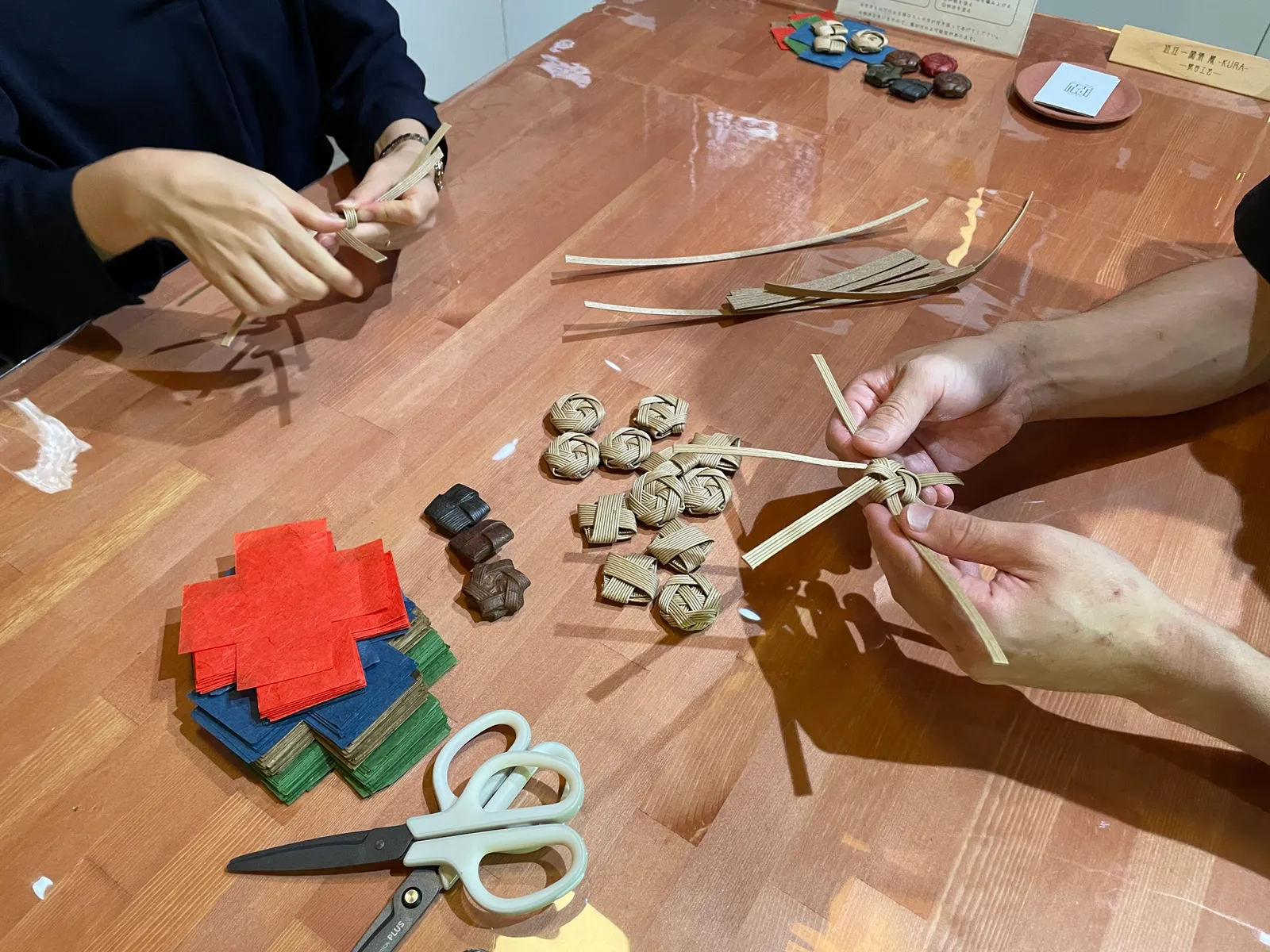
Once you've settled on a design, follow the craftsman's hands as you weave the paper-cord base. The materials are the very same ones the craftsmen use in their everyday work. As you cross the cords and gradually shape them, this unfamiliar material slowly transforms into a chopstick rest.
First-timers and those who don't consider themselves good with their hands are welcome. The craftsman will help with anything you're unsure about, so simply enjoy the fun of watching a shape emerge from your own fingertips.
Next, Paste Your Chosen Washi to Wrap the Tiny Weave
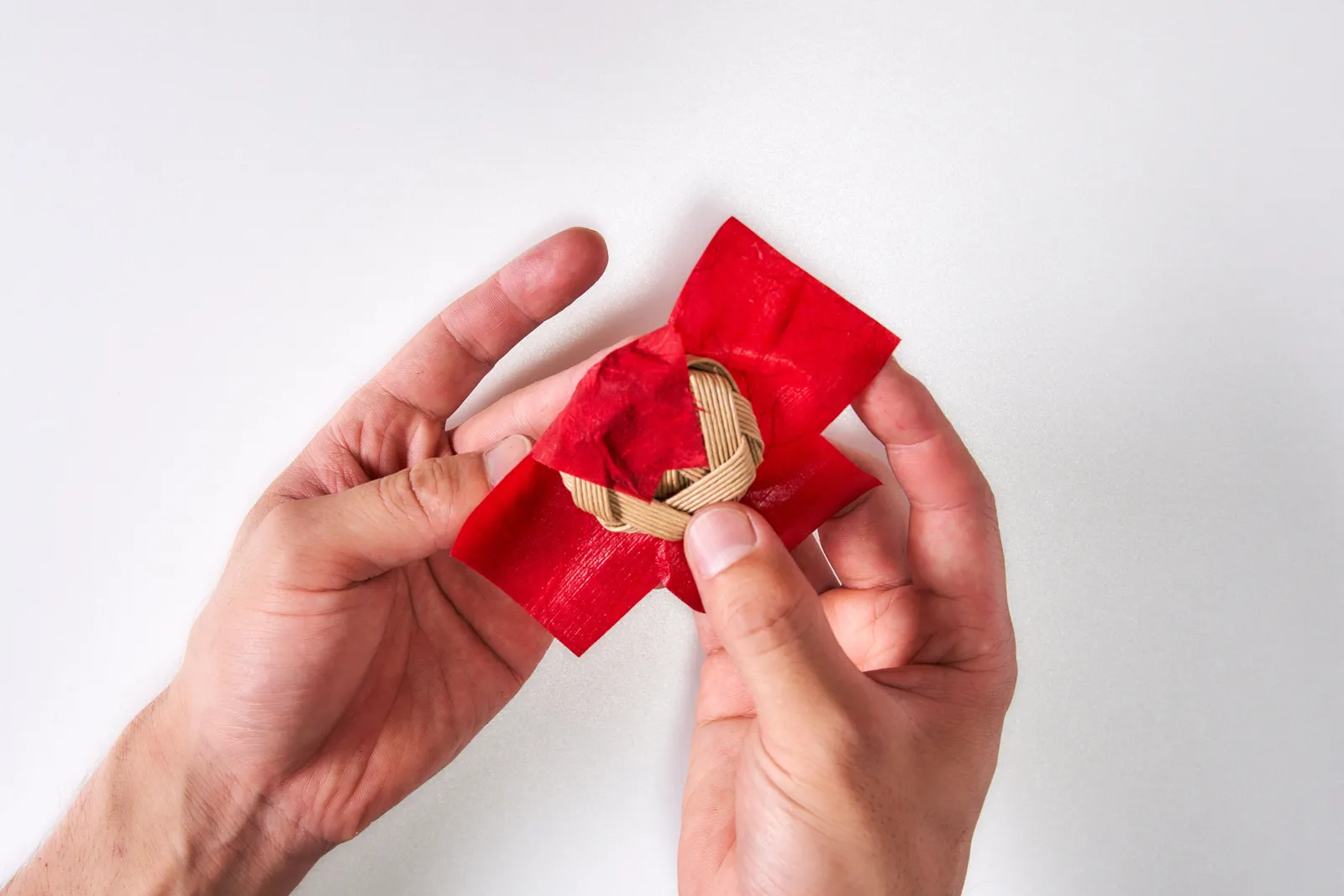
With the base woven, it's time for the washi you picked earlier. Carefully paste it along the small form, making sure no gaps are left.
Once the paper cord is wrapped in washi, the piece looks completely different. The texture of the weave shows through the surface, adding a handmade character to the colour you chose.
When the washi is in place, you're nearly at the finish line. Imagine how kakishibu might change this colour as you move on to the final step.
Finally, Coat It with Kakishibu for a Colour All Your Own
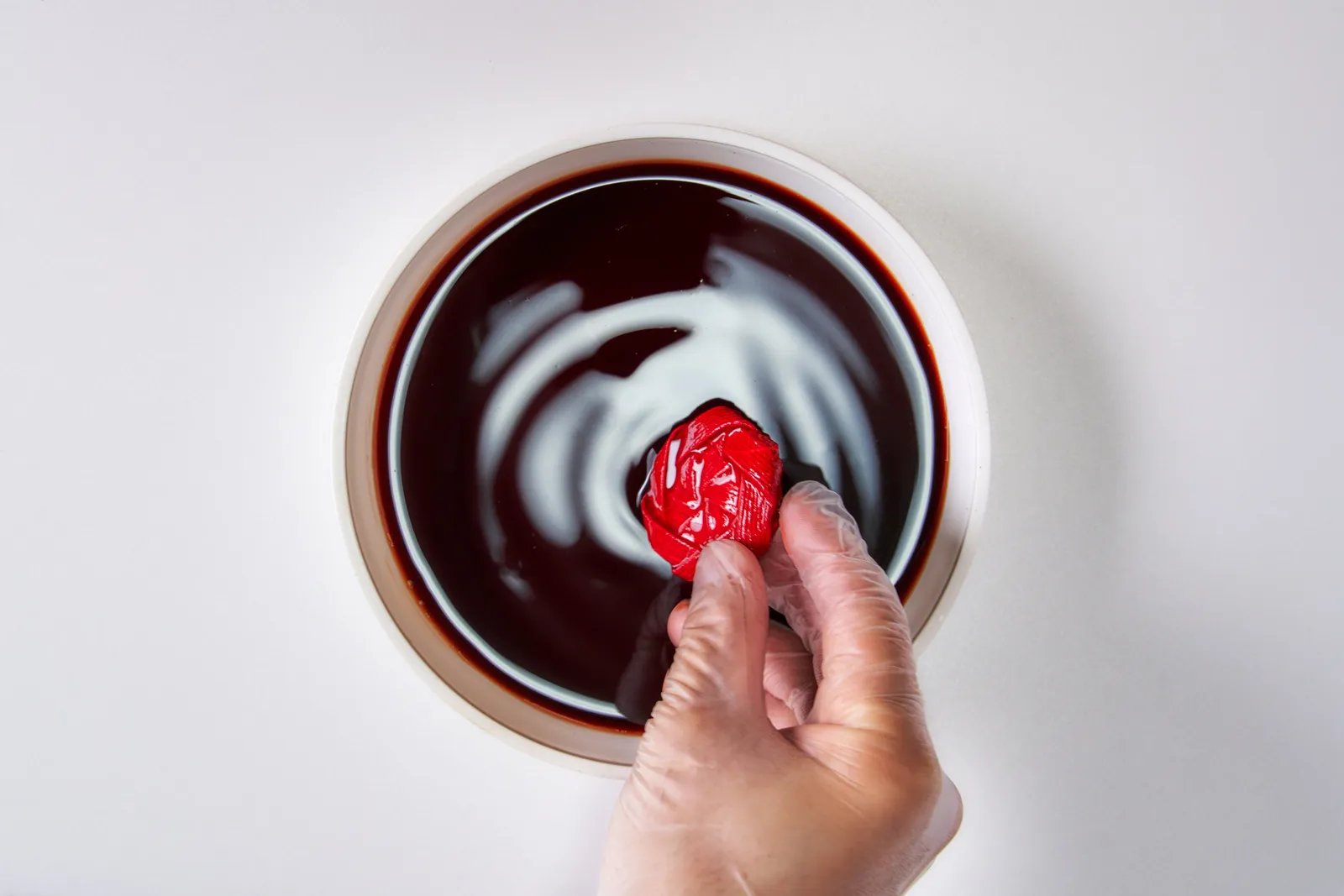
The last step is finishing with kakishibu. Once the washi-covered chopstick rest is coated, its bright colours gain depth and its whole character shifts.
Even with the same washi, the woven shape and the tone of the kakishibu make every finished piece unique. If you join with family or friends, line up your creations side by side. Realising "we used the same materials, yet they're so different!" is one of the joys of this experience.
A small chopstick rest you've woven, pasted and coated with your own hands. Each time you set it on your table back home, memories of your time in the storehouse by Hachiman Canal are sure to come flooding back.
FAQ
■ Can beginners take part? Yes. First-timers and those who aren't confident with their hands are welcome. An ikkanbari craftsman teaches you directly as you weave paper cord, paste washi and finish with kakishibu.
■ What's the minimum age for children? The booking page lists the experience for ages 6 and up. If you're joining with children, please check the participation requirements of the plan you're booking.
■ How long does it take? About one hour. It pairs nicely with a stroll around Omihachiman and Hachiman Canal.
■ Where do we meet? Please meet at the venue, Omi Ikkanbari KURA. The address is 12 Osugicho, Omihachiman, Shiga, on the stone-paved lane along Hachiman Canal. Please arrive at least 5 minutes before your booked start time.
■ Can I take my chopstick rest home the same day? Yes. You can take your finished chopstick rest home on the day. Please ask the craftsman during the finishing step about how to care for it and when you can start using it.
■ Is there a dress code or anything I need to bring? All the tools you need are included in the plan. Kakishibu can stain clothing, so we recommend wearing clothes you don't mind getting dirty. If you're concerned, feel free to bring an apron.
■ Are there stairs at the venue? The workshop is on the second floor of the storehouse, with steps and stairs. If you have mobility concerns, please contact the operator before booking.
Things to Check Before Booking
- Check availability and start times for your preferred date.
- Allow about one hour for the experience.
- Arrive at Omi Ikkanbari KURA at least 5 minutes before the start.
- Children should generally be 6 or older; check the booking requirements.
- Confirm in advance whether guidance is available in your preferred language.
- Wear clothes you don't mind getting dirty, and bring an apron if needed.
- If you need assistance with stairs or steps, ask in advance.
- Check the booking page for the latest prices and cancellation policy.
Prices, times and content are subject to change. Please check the booking page for the latest information before booking.

Summary
What starts as paper cord becomes a small form, is wrapped in washi, then deepens in colour with kakishibu. With each step, you'll find yourself more and more eager to see the finished chopstick rest. Working with the same materials as the craftsman and learning right in front of them makes for a memory unique to Omi Ikkanbari.
Line up the finished pieces, and the individuality born from identical materials is sure to spark conversation. On your next visit to Omihachiman, why not drop by the storehouse along Hachiman Canal and make a chopstick rest of your own to brighten your everyday table?


Cultural Experiences in Japan
Omi Isshinbari Chopstick Rest Workshop
Check the booking page for the latest schedules, prices, and plan details.