Kumiko Woodworking Workshop in Sapporo: Make a Wooden Coaster and Discover a Traditional Craft in About 1 Hour
At Wa-Modern N6 in Kita-Maruyama, Sapporo, try kumiko, the traditional Japanese woodworking technique that uses no nails. Using a kit, you'll assemble a coaster in the asanoha (hemp leaf) pattern, then glue and finish it. Afterward, browse the kumiko pieces and traditional crafts on display in the shop. The whole experience, including time in the shop, takes about 1 hour.
Published:
Content verified by the operatorPhotos courtesy of 和モダンN6北円山
This page contains affiliate links.
Prices and ratings are as of 2026.09.30. Please check the booking page for the latest details.
BEFORE YOU BOOK
4 Things to Know Before Booking
- 01Watch loose pieces of wood turn into an asanoha pattern in your own hands
- 02Discover kumiko, the Japanese technique that shapes wood without a single nail
- 03After making your own, you'll truly appreciate the mastery of the craftsmen's kumiko
- 04Take your finished coaster home and relax with Japanese tea and traditional sweets
BEST FOR
Who This Experience Is Best For
- 01
Anyone who wants to make a traditional Japanese craft with their own hands
Rather than just looking at kumiko, the nail-free technique, you can take part from assembly through finishing. An explanation of the history and the meaning of the patterns is included.
- 02
First-time woodworkers
With a pre-cut kit and staff support throughout every step, you can complete a piece even if you're unfamiliar with tools.
- 03
Anyone who wants a practical souvenir to take home
You can take your finished asanoha coaster with you on the spot. It's a keepsake you can keep using in daily life after you return home.
When to Compare Other Options
This experience is ideal for anyone who wants to enjoy making kumiko and seeing traditional crafts in the shop, all in about 1 hour between Sapporo sightseeing stops.
Step Through the Noren Curtain at Wa-Modern N6 in Kita-Maruyama, Sapporo
The workshop takes place at Wa-Modern N6 in the Kita-Maruyama area of Sapporo. It lasts 1 hour, starts from ¥6,000, and is offered in both English and Japanese.
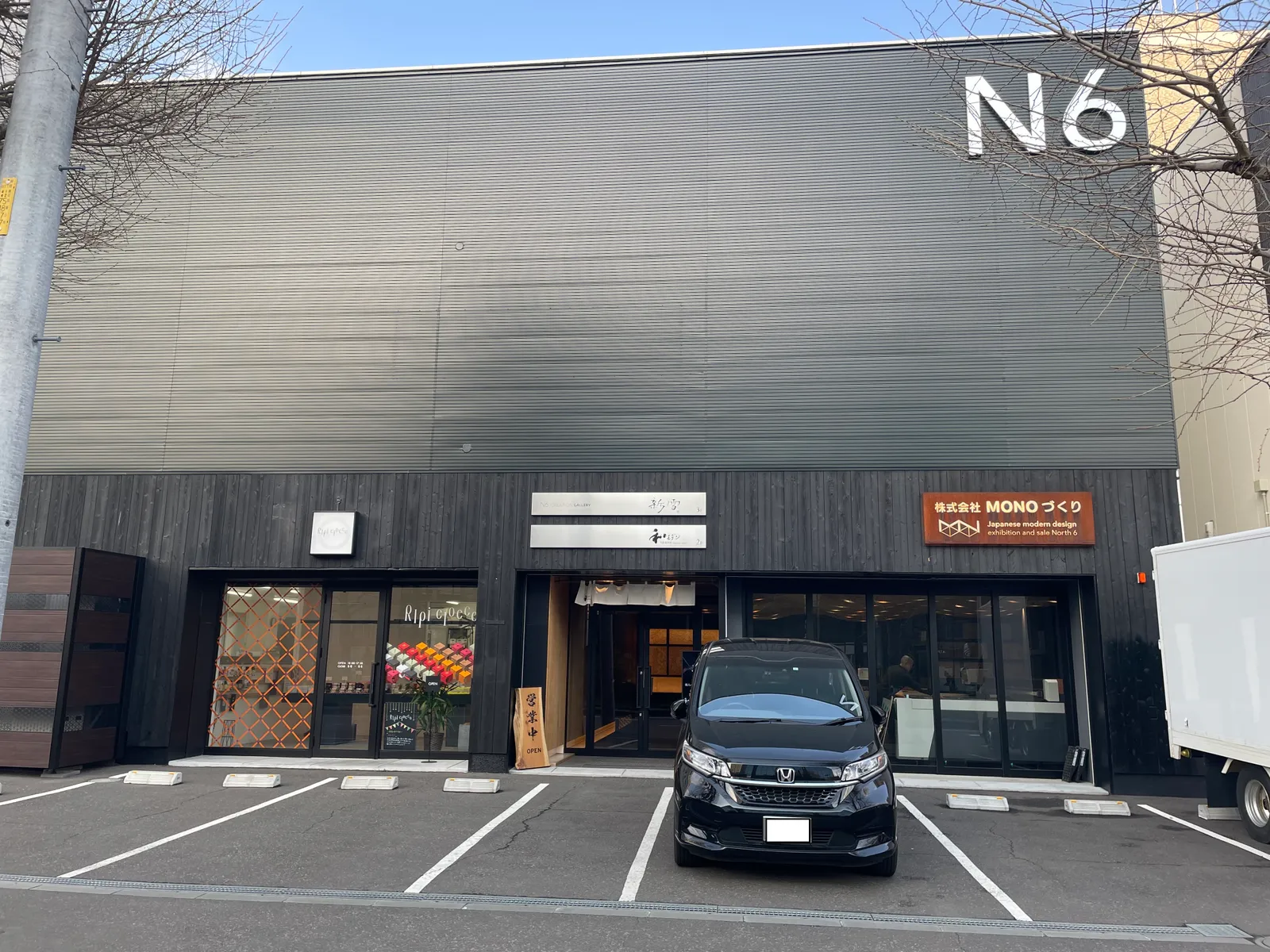
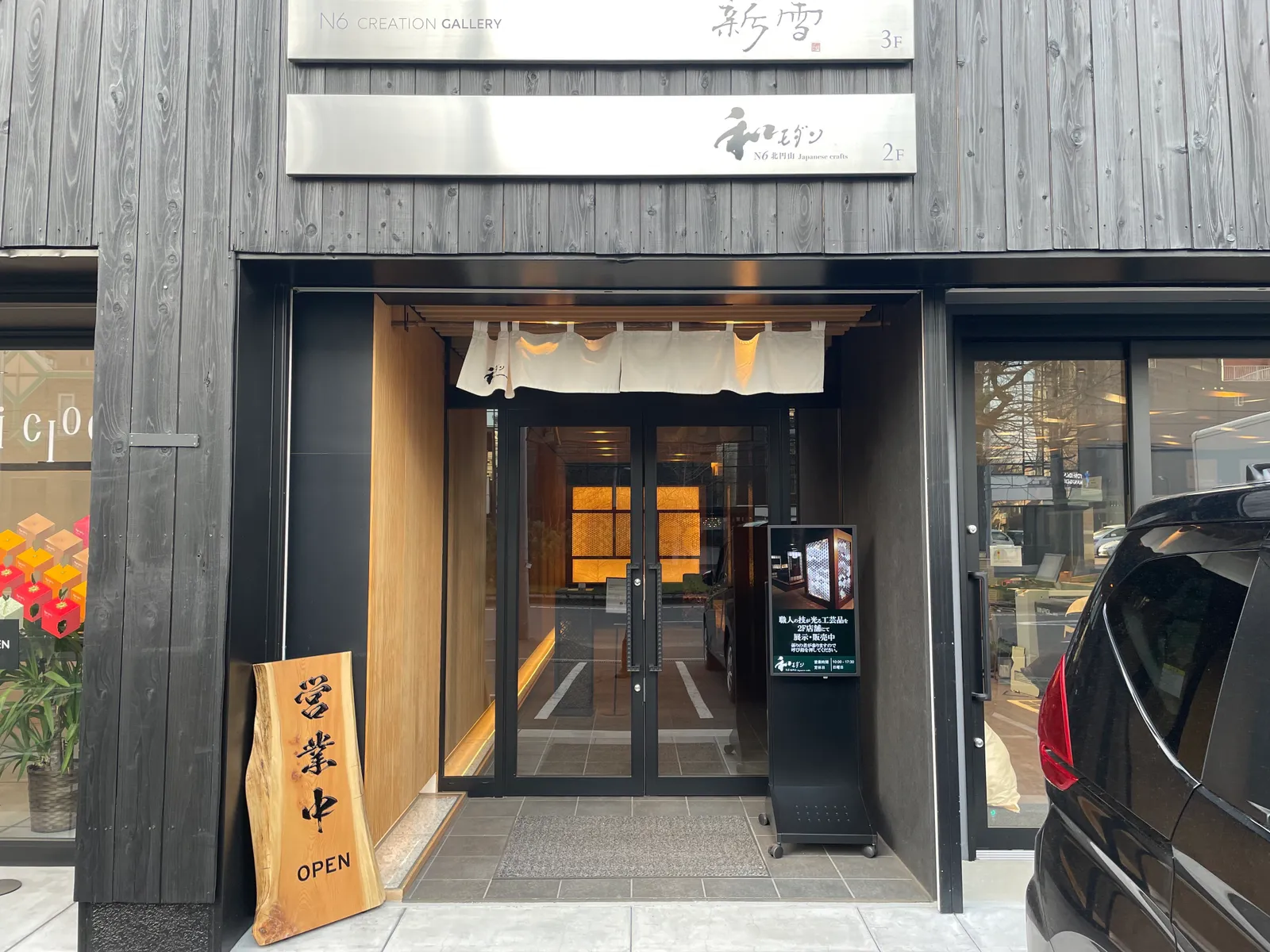
Look for the building with its black wooden siding and silver walls, with a large "N6" logo near the top. The front of the building is a parking area, so it's easy to spot from the street. A white noren curtain hangs at the entrance, next to a wooden sign that reads "営業中" (Open).
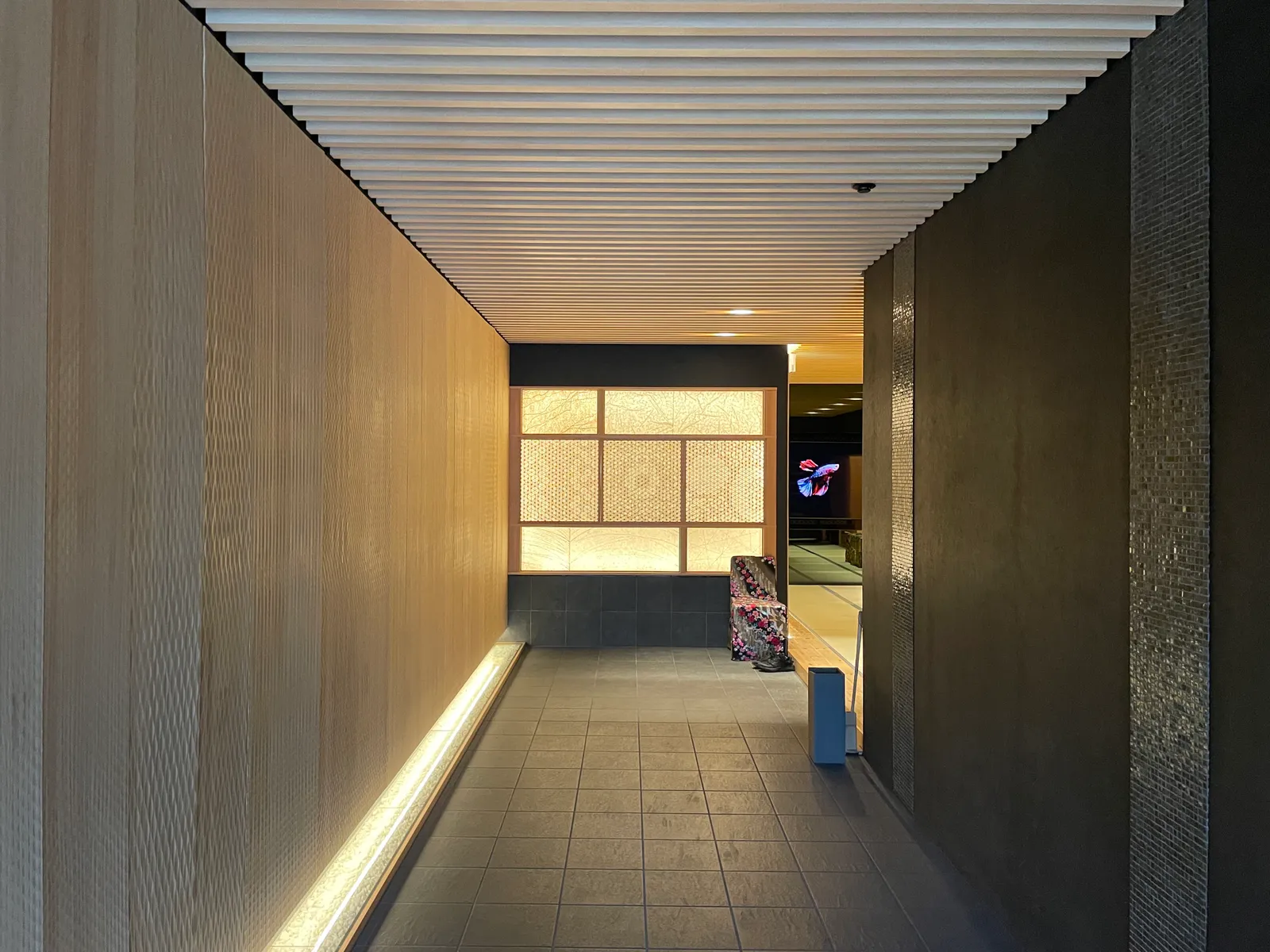
Beyond the door, a quiet corridor unfolds beneath a slatted lattice ceiling, with soft indirect lighting along the floor. Light spills through the shoji screen at the far end, and this is where your time with kumiko and Japanese craftsmanship begins.

First, Learn About Kumiko: The Nail-Free Art of Wood Joinery
The experience begins with an introduction to what kumiko actually is. Kumiko is a traditional Japanese woodworking technique in which finely cut pieces of wood are fitted together using only notches, with no nails at all.
Along with the history of kumiko, the staff explain the meanings behind traditional patterns, including the asanoha (hemp leaf) pattern you'll make today. Once you know the story behind a pattern, the pieces of wood in front of you stop being simple shapes and start to look meaningful.
You'll use a kit of pre-cut pieces, so no woodworking experience is needed. The workshop is designed so you can focus on the fun of fitting the pieces together, not on handling tools.
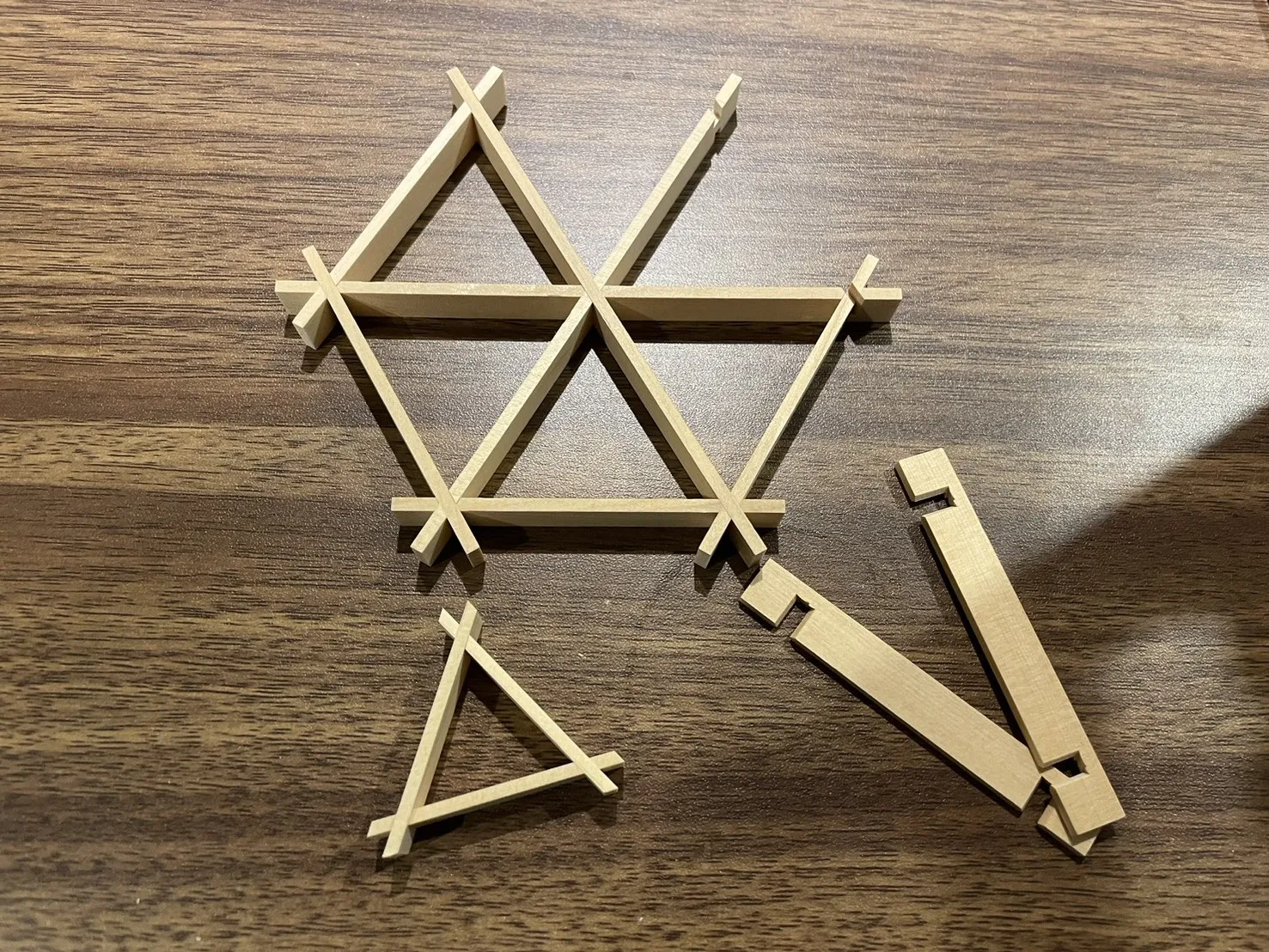
Time to Assemble: Watch Wooden Pieces Become a Geometric Pattern
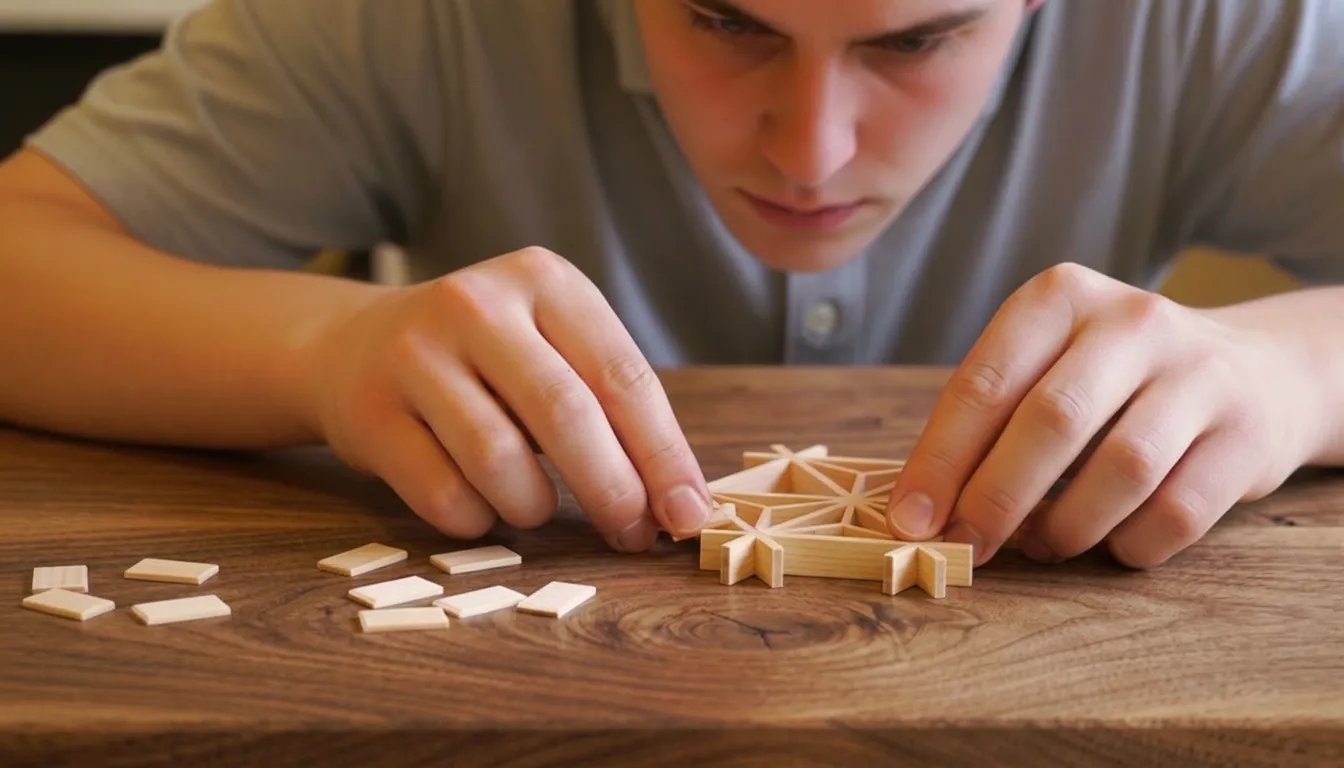
Next, you'll put the kit's wooden pieces together one by one. You'll match up the notches on the thin strips to form triangles, then join those triangles into a six-pointed star.
At this stage comes the moment when the loose pieces suddenly transform into the geometric asanoha pattern. It's a moment that surprises many participants. With help from the staff, you'll check each piece as you go and build step by step.
Once assembled, you'll glue the coaster and smooth the surface with sandpaper. As the edges become smooth to the touch, it starts to look like a coaster you can really use.
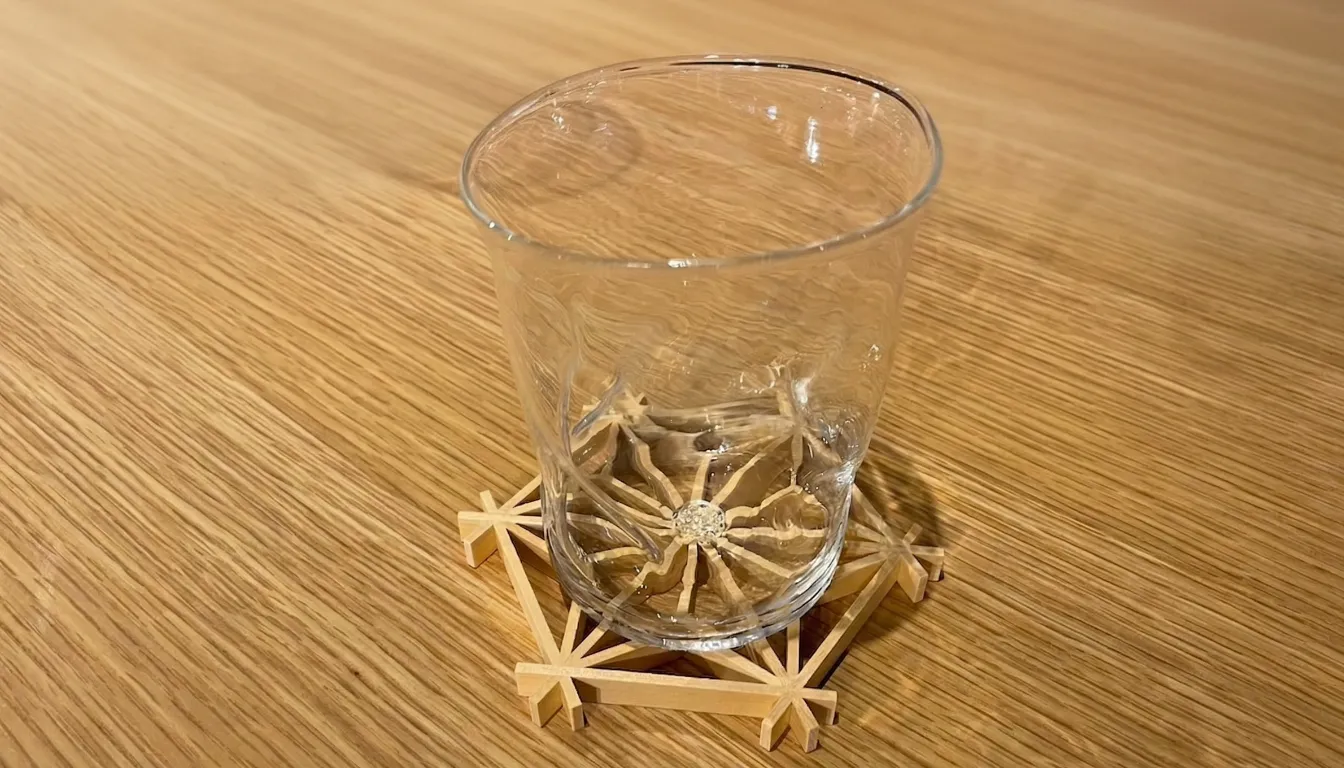
Set Your Finished Asanoha Coaster Under a Glass
When the finishing is done, your asanoha wooden coaster is complete. Thin strips of wood radiate and cross, giving it a light look that lets light pass through.
Place a glass on top and you can see the pattern through the glass. Because you take it home as something to actually use, your souvenir won't end up as just a decoration, and that's one of the best things about this workshop.
Your finished coaster is a one-of-a-kind souvenir. Since you built it yourself, every time you use it back home, you'll be reminded of your time in Sapporo.
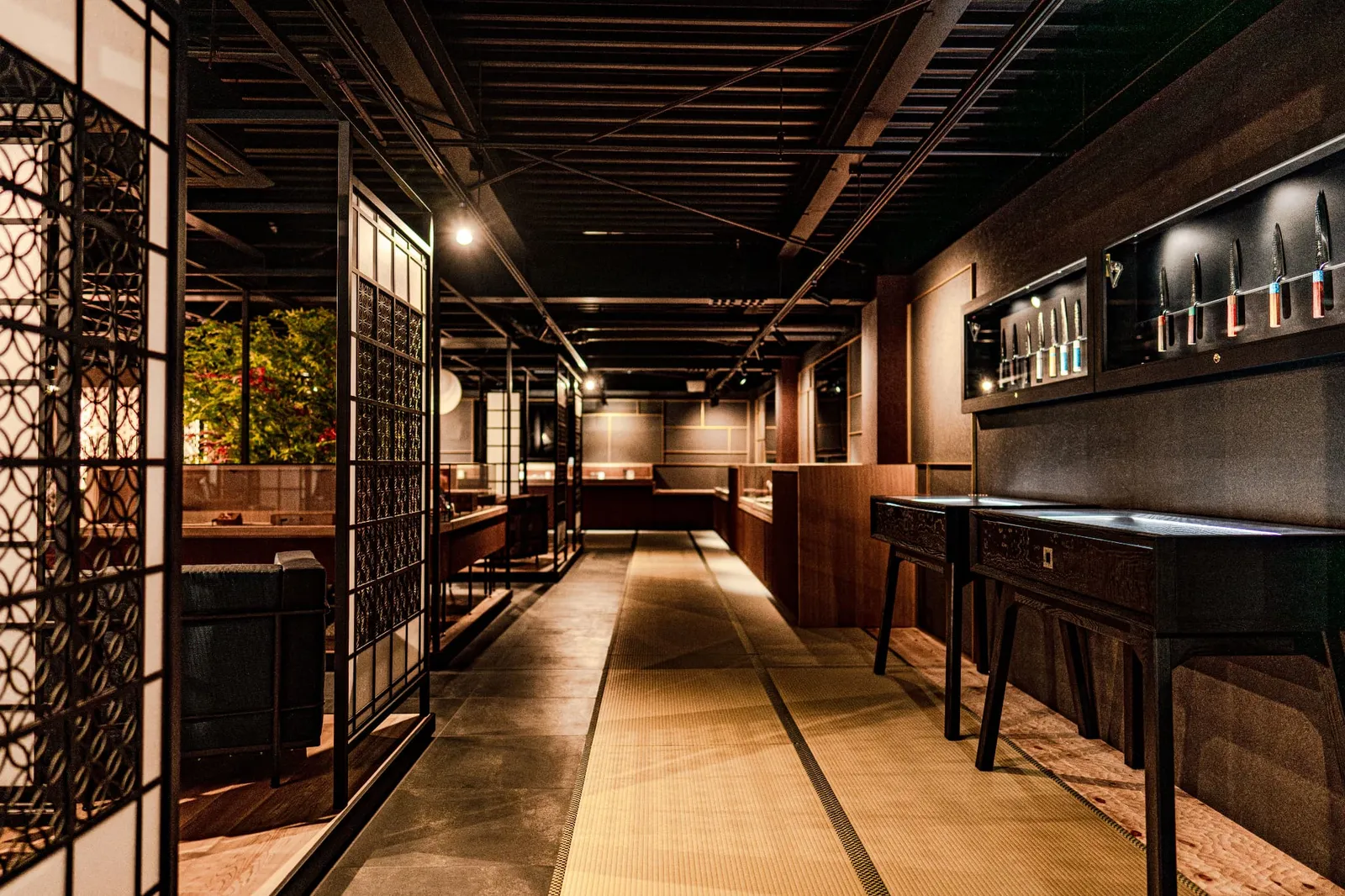
After the Workshop: Admire Master Craftsmen's Kumiko and Relax with Japanese Tea and Sweets
After making your coaster, you can view authentic kumiko works by skilled craftsmen displayed in the shop. Having just assembled a piece yourself, you'll naturally notice the skill it takes to build complex forms and the beauty of the fine joinery.
Display cases line the tatami-floored walkway, and crafts from across Japan, including kitchen knives and glassware, are arranged under soft lighting. Kumiko partitions and shoji screens are also part of the space itself.
To finish, take a break with Japanese tea and a sweet treat, and enjoy the lingering atmosphere of the quiet space. The attached shop also sells kumiko kits, so if you enjoy the workshop, you can continue the craft at home.
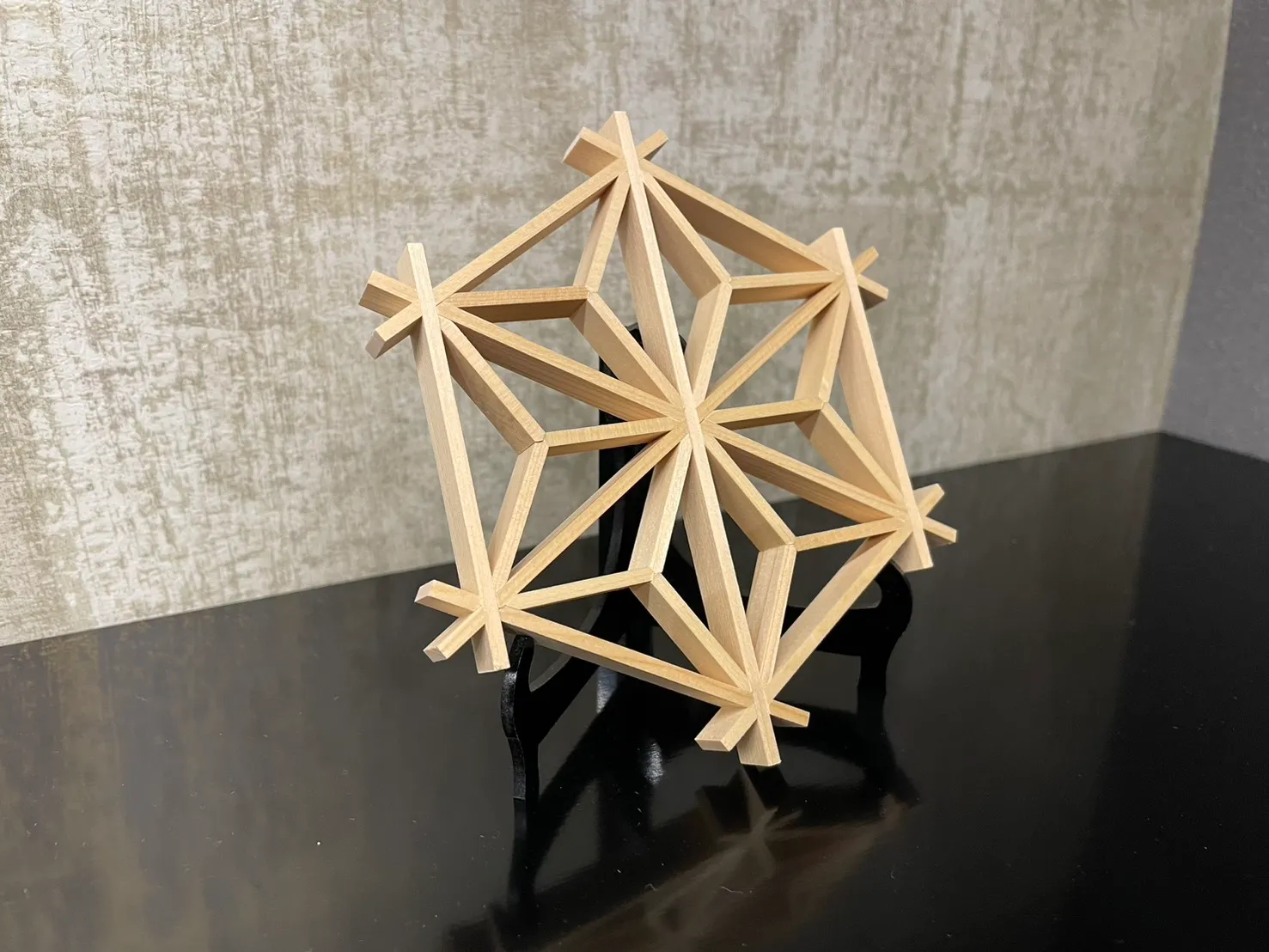
Things to Check Before You Book
- The whole experience, including making kumiko and browsing the shop's products and crafts afterward, takes about 1 hour
- The venue is Wa-Modern N6 in Kita-Maruyama, Sapporo
- Guidance is available in English and Japanese
- Your finished coaster can be taken home on the same day
- Please check the start time, cancellation policy and latest details before booking
Prices, hours and plan details may change. Please check the latest information before booking.
Summary
At Wa-Modern N6 in Kita-Maruyama, Sapporo, this roughly 1-hour experience lets you make a kumiko coaster and discover traditional Japanese crafts.
You'll start by learning about the history of kumiko and traditional patterns such as asanoha, then fit the pre-cut pieces together one by one. Loose pieces of wood turn into a geometric pattern, and after gluing and sanding, you'll have a wooden coaster that's all your own.
Afterward, you can admire the kumiko works by master craftsmen on display in the shop and relax with Japanese tea and traditional sweets. Having built one yourself, you'll appreciate the fine detail and beauty of the complex joinery that craftsmen create, and that's part of what makes this experience so rewarding.
You can take your finished coaster home, so this workshop is ideal for anyone who wants to do more than look at Japanese traditional crafts: make one with your own hands and feel the depth of the technique.
Book here: Kumiko Woodworking Workshop (Traditional Wooden Coaster Making)
Cultural Experiences in Japan
Kumiko Woodcraft Workshop - Traditional Wooden Coaster Making
Check the booking page for the latest schedules, prices, and plan details.