Manga Drawing Experience in Nakano, Tokyo | A 2-Hour Lesson with a Professional Manga Artist
At Manga School Nakano in Tokyo, spend about two hours learning from a professional manga artist as you create your own artwork. You'll use dip pens, ink, screen tones and more. All materials are provided, and you can take your finished piece home as a travel keepsake.
Published:
Content verified by the operatorPhotos courtesy of マンガスクール中野
This page contains affiliate links.
Prices and ratings are as of 2026.10.26. Please check the booking page for the latest details.
BEFORE YOU BOOK
4 Things to Know Before Booking
- 01Small-group lessons taught directly by a professional manga artist
- 02Use materials such as dip pens, ink and screen tones
- 03Learn at your own level, whether you're a beginner or experienced
- 04Create your own artwork in about two hours and take it home
BEST FOR
Who This Experience Is Best For
- 01
Anyone who wants to draw their favourite manga themselves
Learn from a professional manga artist and try creating with paper and pen.
- 02
Anyone who wants tips on how to draw, right on the spot
In a small-group lesson, you'll get advice while the instructor looks at your drawing.
- 03
Anyone who wants to make something themselves as a travel memento
You can take home the artwork you draw in the lesson. The experience of learning how to draw manga in Japan makes a souvenir in itself.
Two Hours in Nakano Learning from a Professional Manga Artist
If you love reading manga, why not try drawing it yourself? At Manga School Nakano in Tokyo, you can join a manga drawing experience of about two hours, taught directly by a professional manga artist.
The school teaches how to draw manga and illustration, using materials such as dip pens, ink and screen tones. Everything you need is provided, so it's easy to join even while you're travelling.
Classes are small, and the lesson is tailored to each person's level, from complete beginners to experienced artists. You can take your artwork home, so you'll have a piece you made in Japan as a souvenir of your trip.

First, Talk Through What You'd Like to Draw
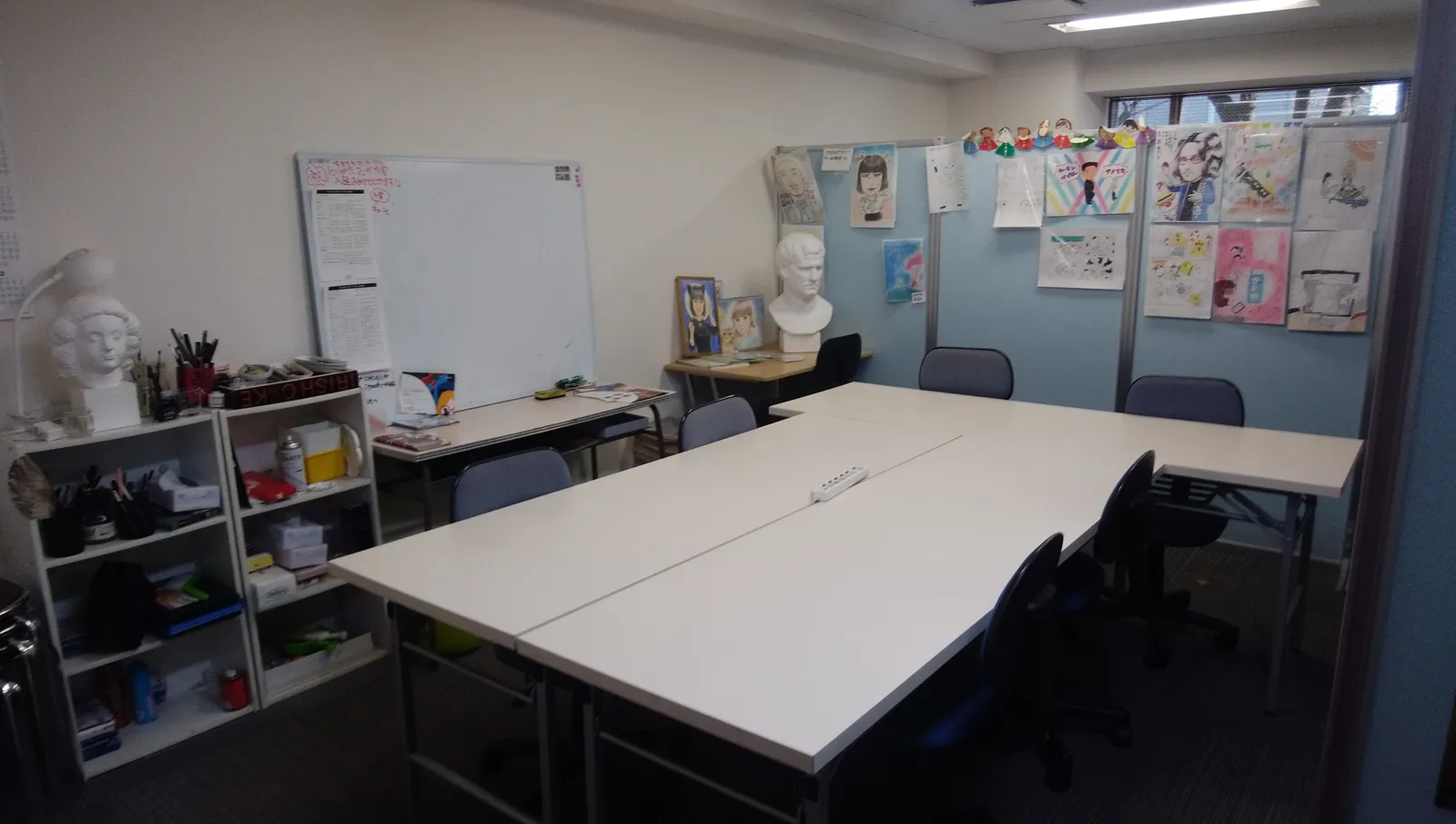
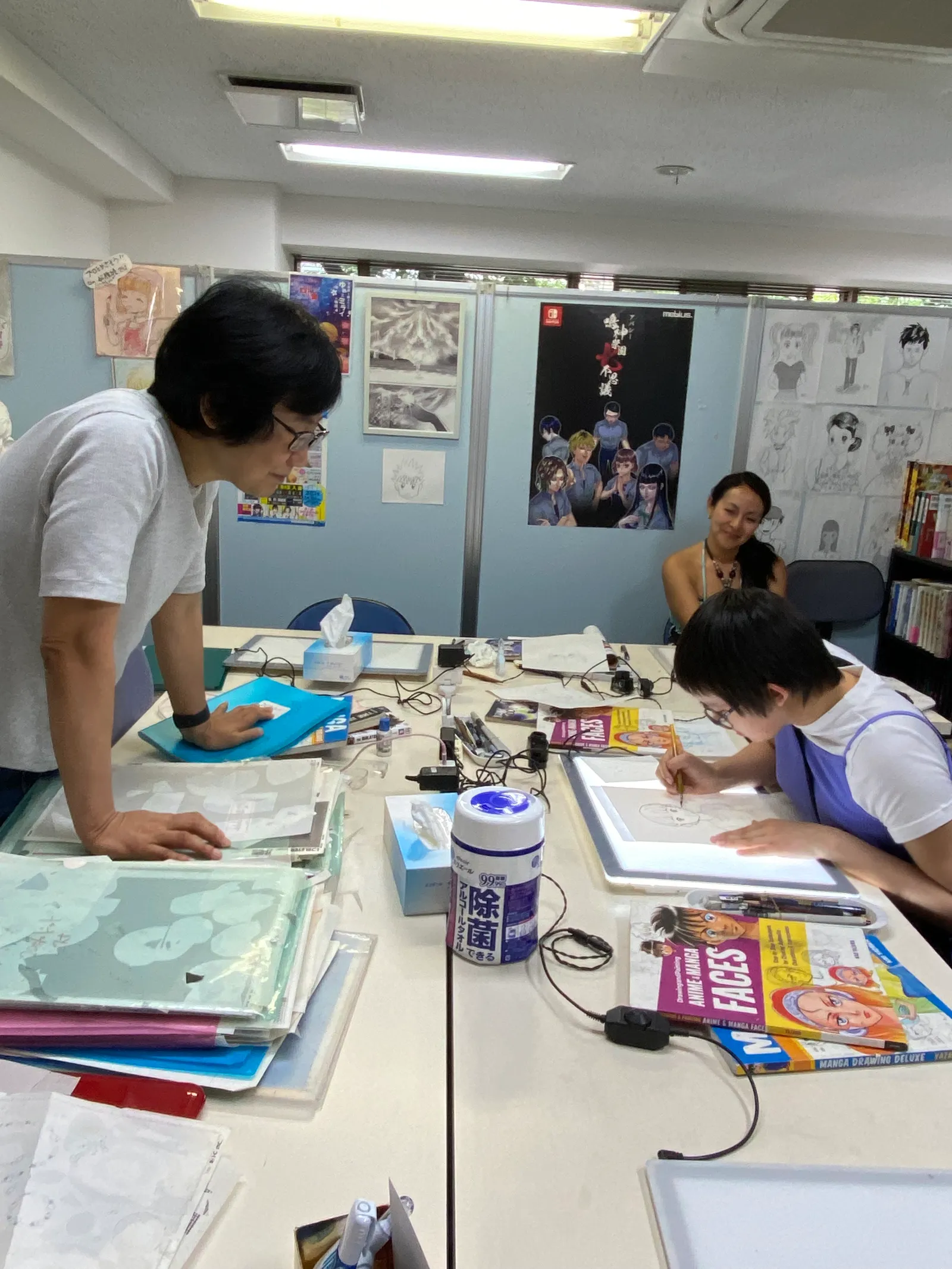
The lesson takes place in a classroom on the 2nd floor of the Nangoku Building, about a 10-minute walk from the North Exit of Nakano Station. When you arrive at your reserved time, you'll talk with your instructor and confirm what you'll work on.
Try telling them what interests you, such as "I'd like to draw a character's face" or "I want to try using pens and screen tones." What you draw and how the lesson proceeds will depend on your experience and the plan you book.
Draw a Character with Your Instructor's Guidance
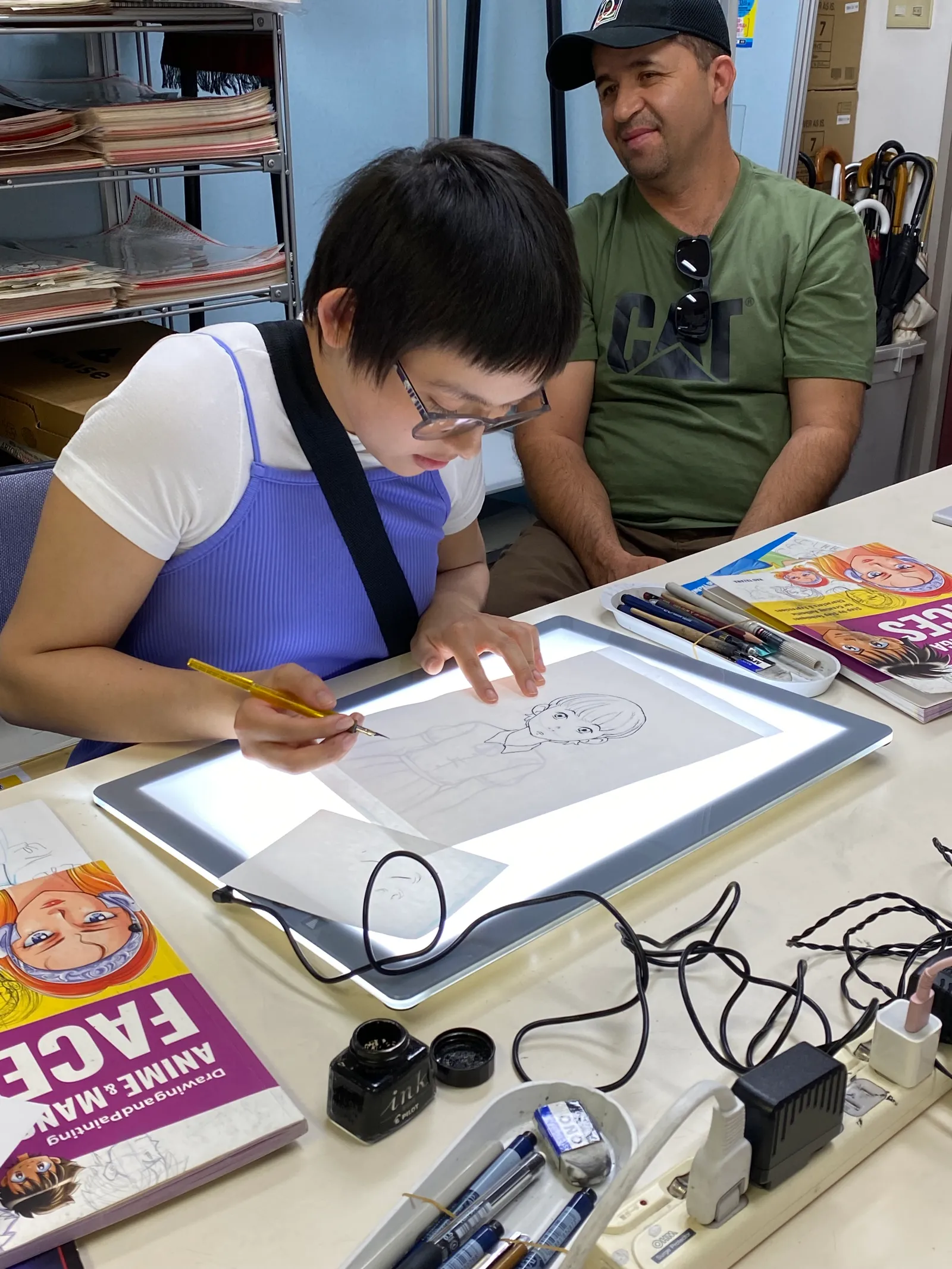
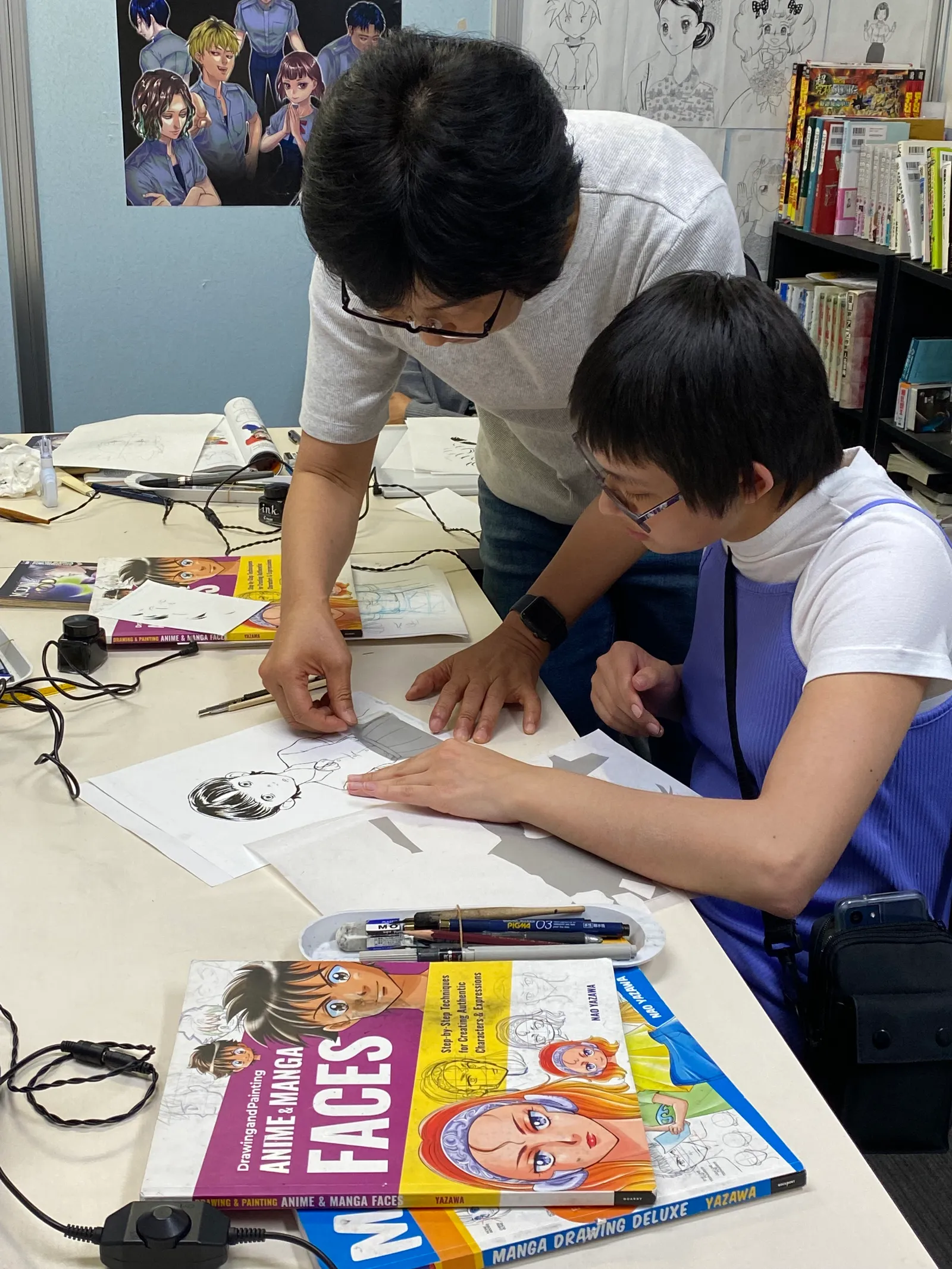
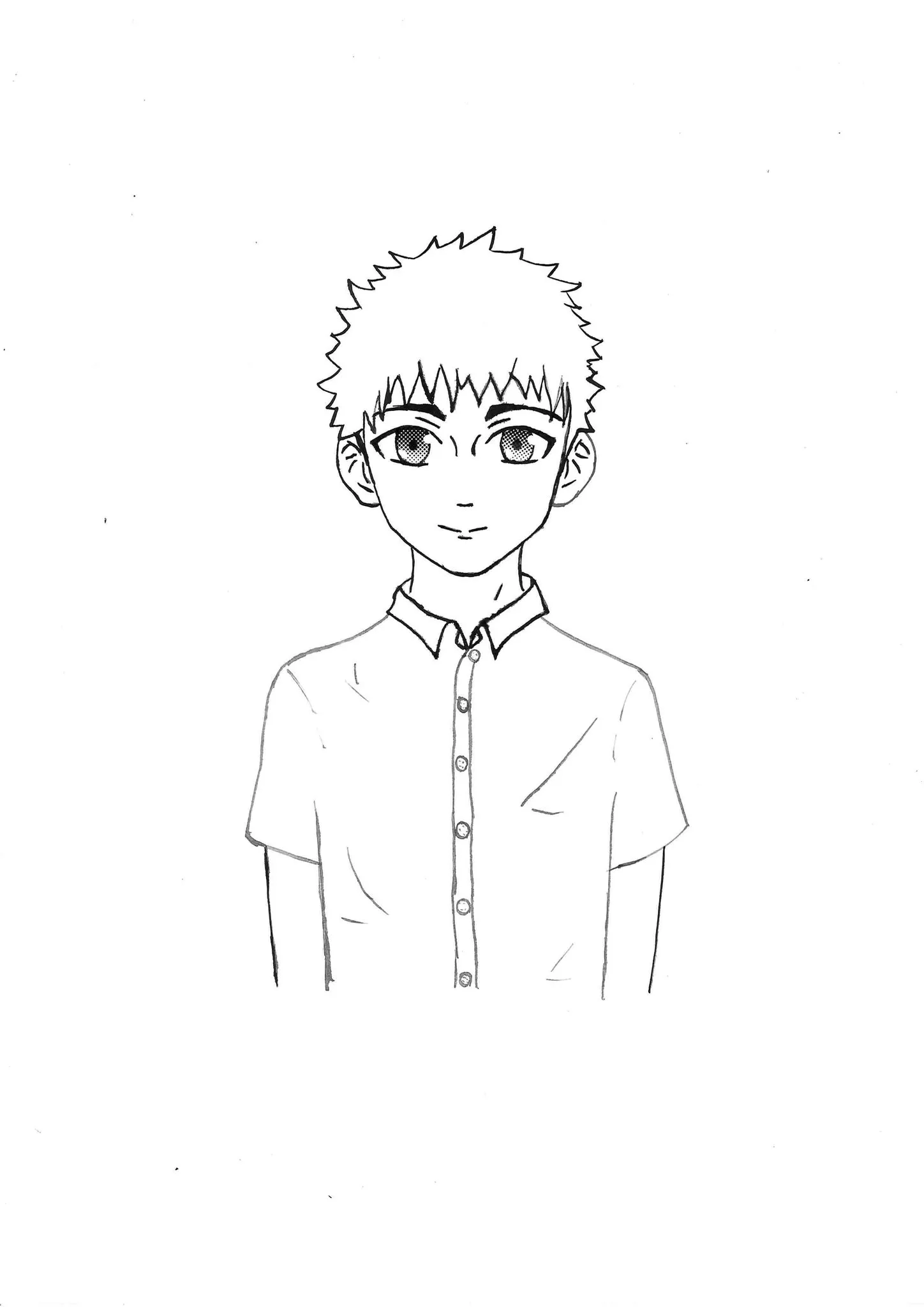
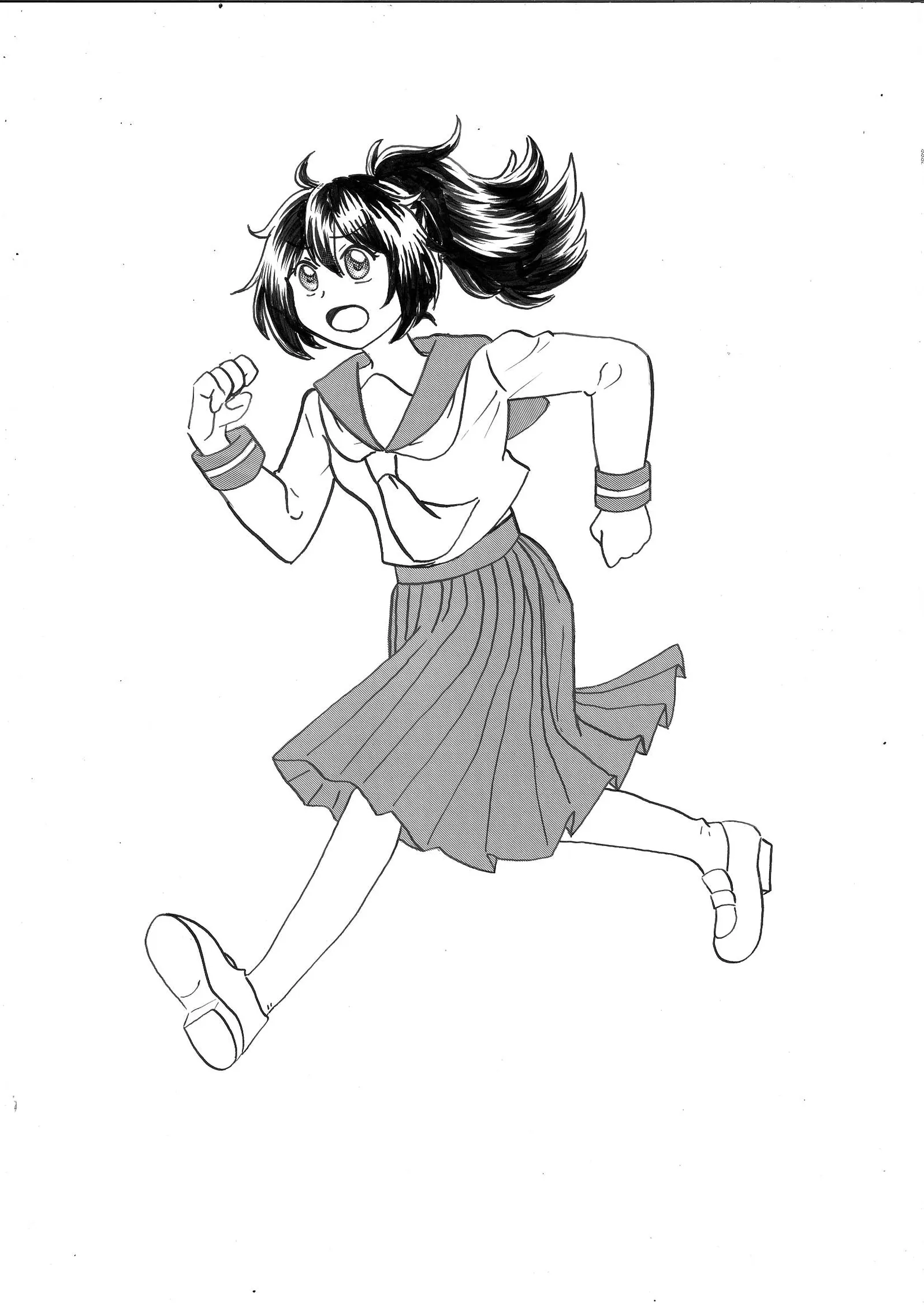
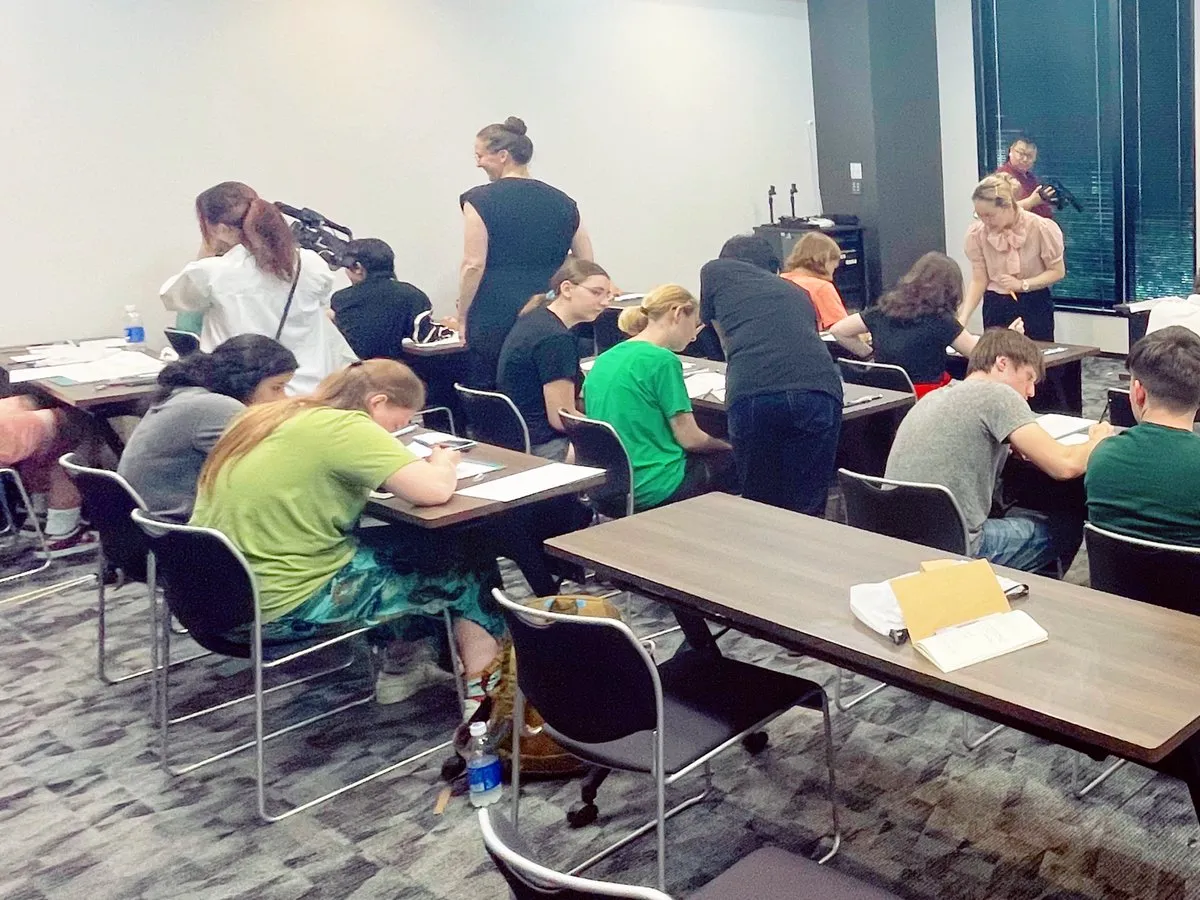
During the lesson, you'll draw things like faces, hairstyles and the shape of a figure. Even if some parts don't go as planned, your instructor can watch your hand as you work and help you along.
Being able to ask questions on the spot, about things like the placement of the eyes or the outline of a face, is one of the real benefits of learning in person. Try out the advice you get and see how your drawing changes.
Next, Draw Lines with a Dip Pen and Ink
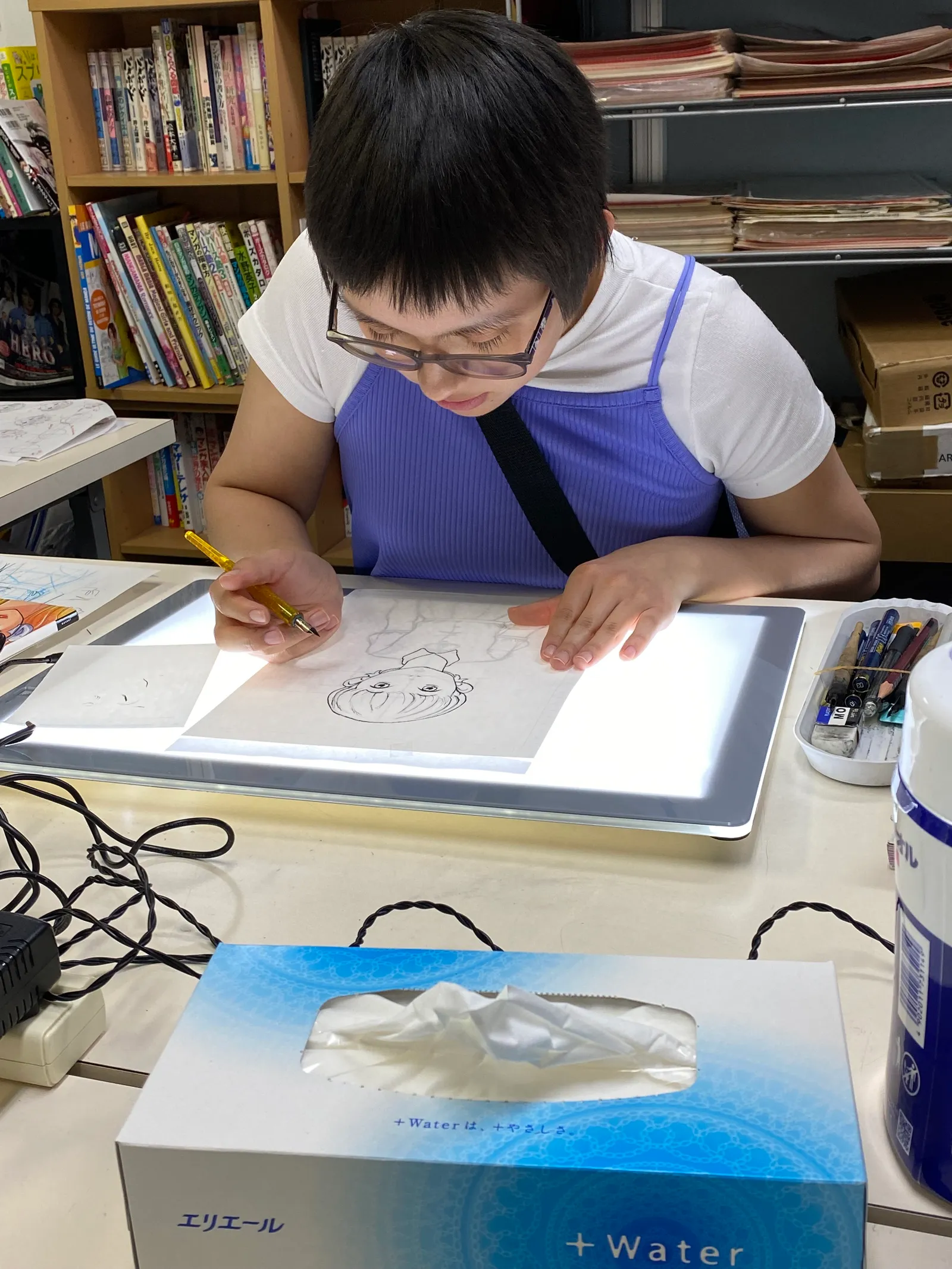
Dip the pen in ink and draw your lines on the paper. You'll get hands-on with a drawing feel that's quite different from the pencils and ballpoint pens you're used to.
The character of a line changes depending on what you're drawing, whether it's fine strands of hair, the eyes, or the outline of a face or clothing. Learn how to hold the pen and draw lines, and build up your drawing little by little.
Add Tones and Finish Your Artwork
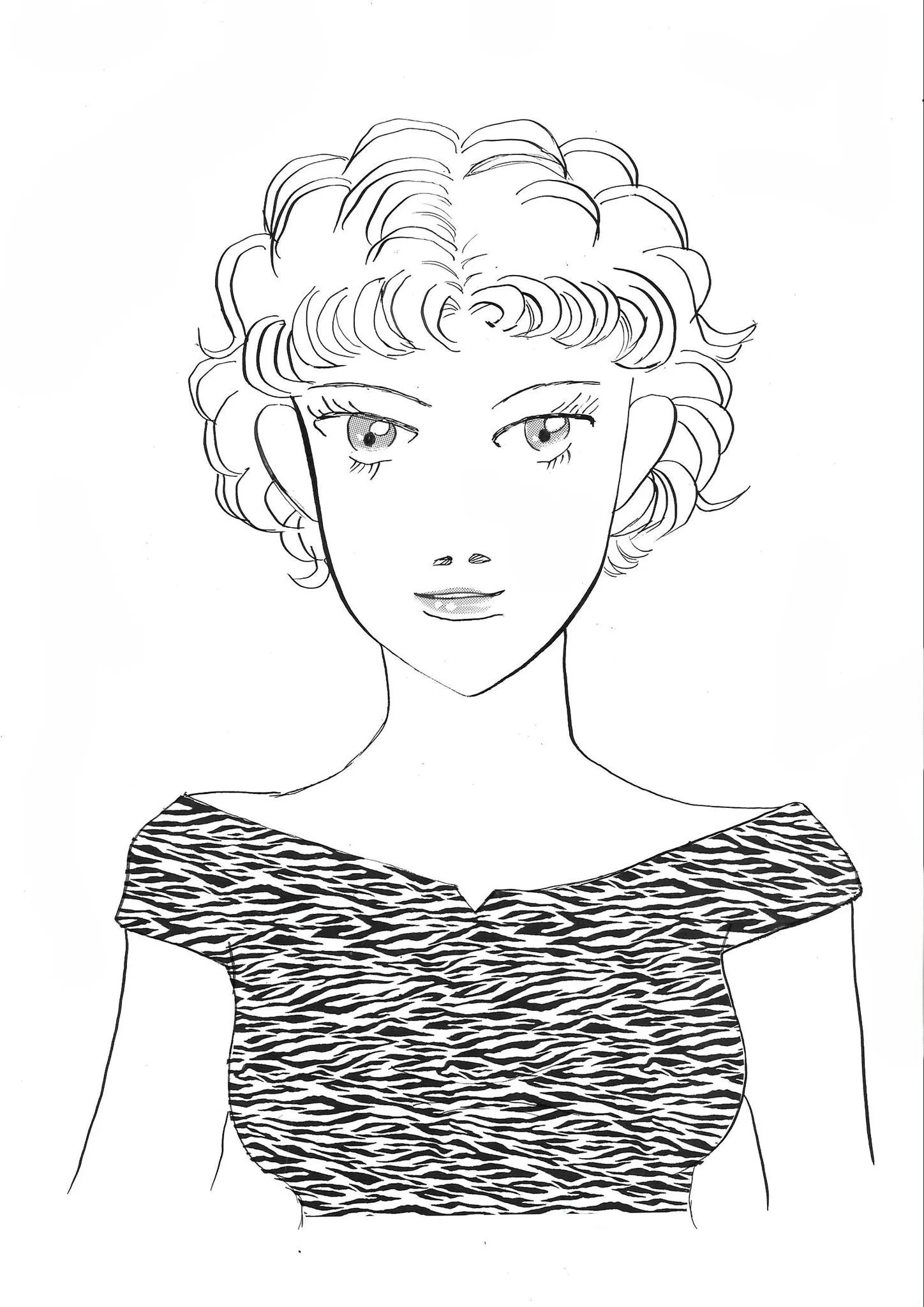
For the finishing touches, you'll also use materials such as screen tones. Adding shading and patterns gives your drawing a very different look from line art alone.
Manga techniques are used even in small details, such as the solid black areas of hair, patterns on clothing and the expression of the eyes. If you spot an effect you like, ask your instructor how it's done.
Finally, Take Your Artwork Home as a Souvenir
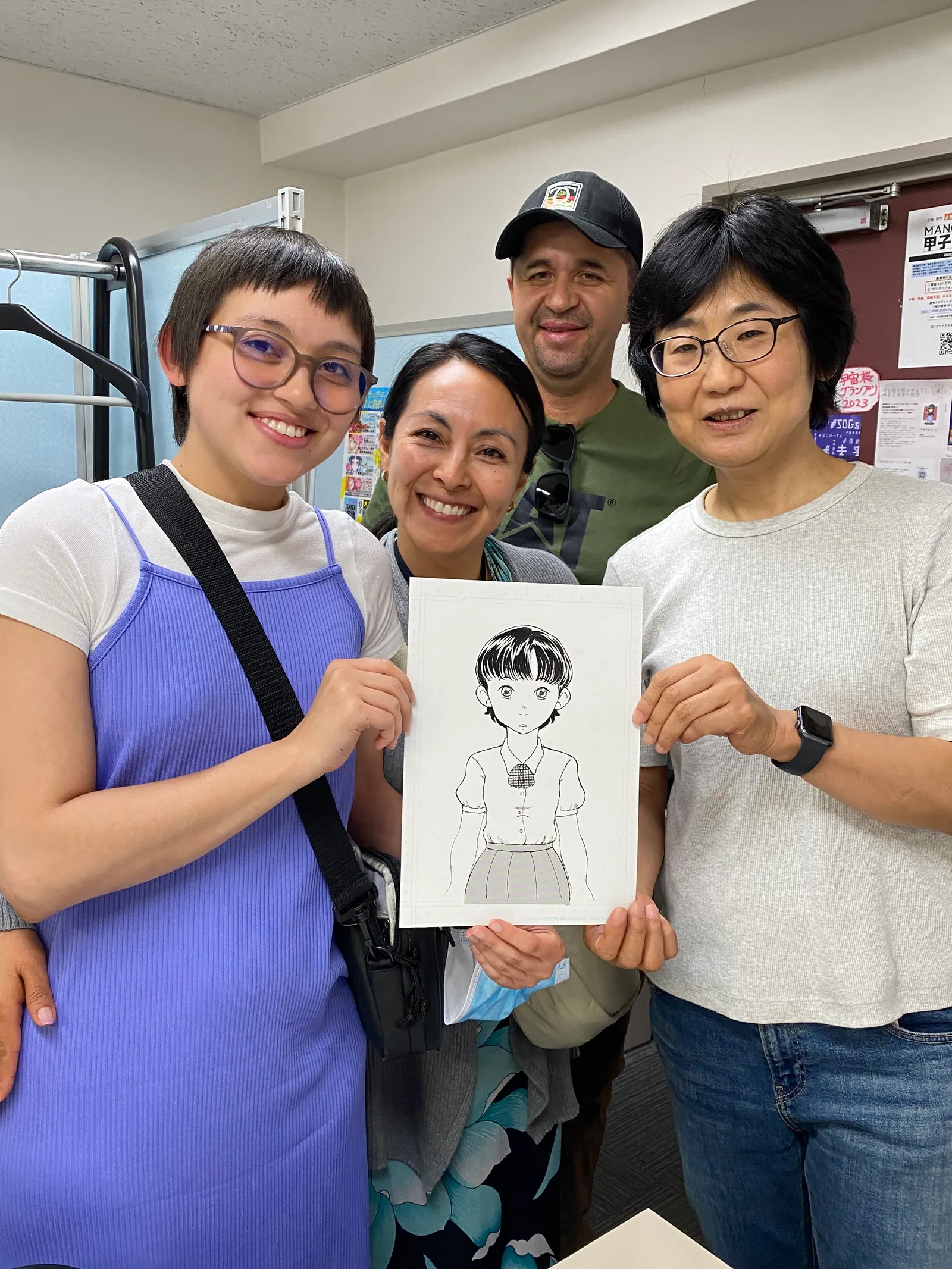
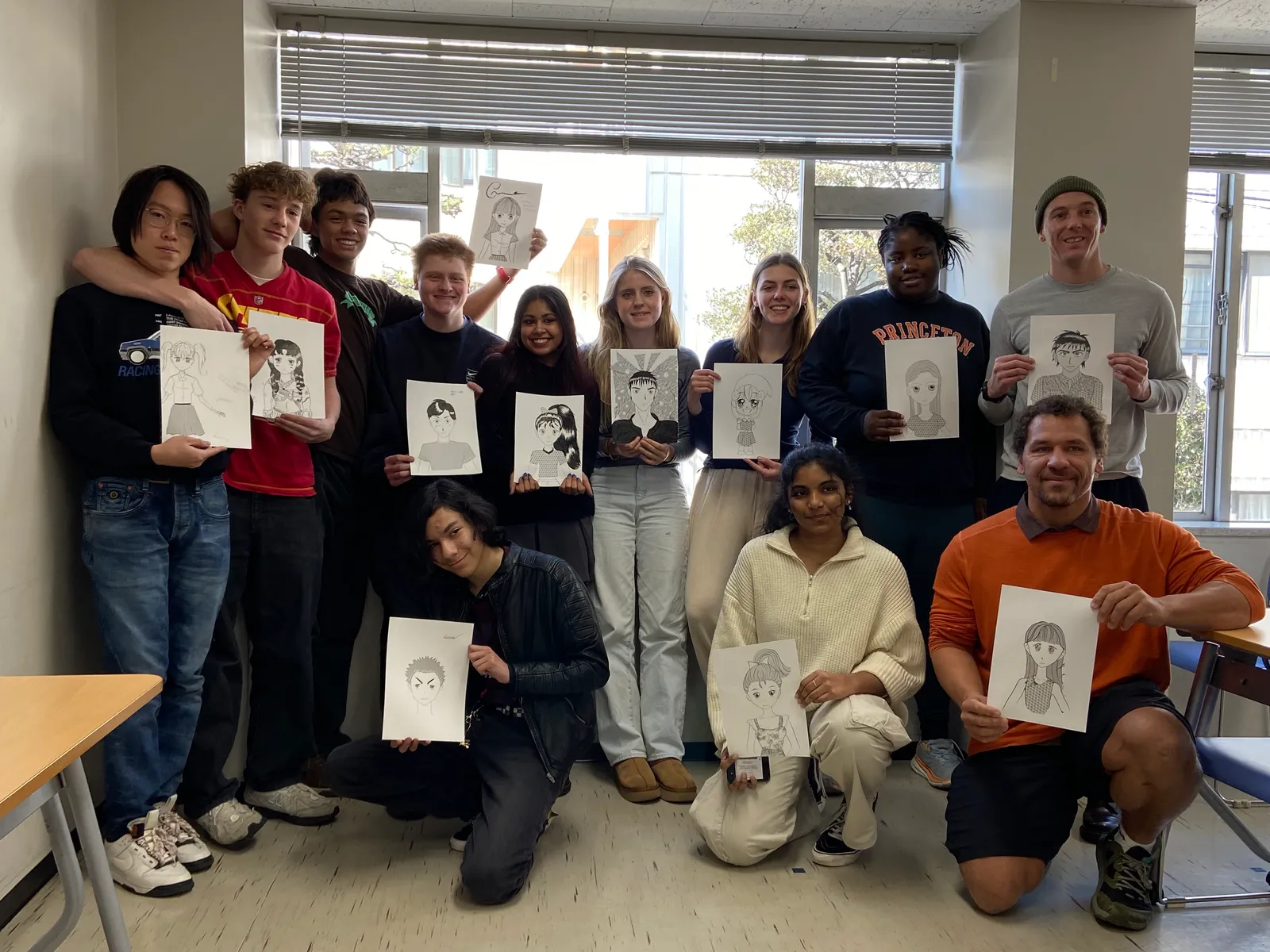
You can take the artwork you draw in the lesson home with you. Compare the first lines you drew with the parts you finished under guidance, and you'll be reminded of everything you tried in class.
If you join with family or friends, show each other your work. Even with the same materials, everyone's faces and lines turn out differently.
It's a souvenir of your trip to Japan that you made yourself, and one you can look back on long after you get home.
Frequently Asked Questions
■ Can I join if I've never drawn manga before? Yes. Instruction is adapted to your level, from beginners to experienced artists. When you book, it helps to mention your drawing experience and what you'd like to learn.
■ Do I need to bring my own materials? The materials for the lesson are provided. You'll use dip pens, ink, screen tones, manga manuscript paper and more.
■ How long does it take? Can I take my artwork home? It takes about two hours. You can take home the artwork you create in the lesson.
■ What languages are lessons available in? Klook lists plans in English, Chinese, Taiwanese Mandarin and French. Please check which languages are available for your preferred date.
■ Where is the venue? It's Manga School Nakano, on the 2nd floor of the Nangoku Building, 2-7-13 Arai, Nakano City, Tokyo. It's about a 10-minute walk from the North Exit of Nakano Station, and you'll meet at the venue.
Things to Check Before You Book
- A plan that matches your preferred date, time and language
- Access to the venue and the meeting time
- The minimum age for children and any requirements for being accompanied by a parent or guardian
- What you'll create and the cancellation policy
Prices, hours and plan details may change. Please check the latest information before booking.
Summary
What tools and techniques go into the manga art you love? At a classroom in Nakano, you can find out by learning from a professional manga artist, using dip pens and screen tones.
The piece you draw over about two hours goes home with you as a souvenir. Each time you look at it, you'll likely remember what you learned in the classroom and what it felt like to draw.
Whether you're a manga fan or just want to pick up a pen again after a long time, add some time to draw your own manga to your Tokyo itinerary.
You can see details and make a reservation at Nakano Manga School Manga Drawing Lesson.

Cultural Experiences in Tokyo
Manga School Nakano | Manga Drawing Experience with a Professional Mangaka
Check the booking page for the latest schedules, prices, and plan details.