75 Minutes Whisking Matcha in a 150-Year-Old Kyoto Townhouse | Tea Ceremony Workshop
Spend 75 minutes whisking premium matcha reserved for tea masters, inside JURAKU, a 150-year-old former silk merchant's townhouse in Kyoto. Enjoy a seasonal plant-based wagashi sweet and experience authentic tea ceremony seated comfortably at a table and chair.
Published:
Content verified by the operatorPhotos courtesy of 生田グローバル株式会社
This page contains affiliate links.
Prices and ratings are as of 2026.09.25. Please check the booking page for the latest details.
BEFORE YOU BOOK
4 Things to Know Before Booking
- 01Explore a 150-year-old Kyoto townhouse and its courtyard garden, touching the history of everyday life still preserved in Kyoto
- 02Watch an experienced instructor's tea-making up close, then whisk your own bowl in that very same spot
- 03Slowly savor a seasonal wagashi sweet alongside premium matcha reserved for tea masters
- 04Enjoy authentic tea ceremony while seated comfortably — no need to kneel in seiza — with the courtyard garden in view
BEST FOR
Who This Experience Is Best For
- 01
Those trying tea ceremony for the first time
No experience is needed — your instructor will explain the meaning behind each gesture in detail. The matcha and utensils used are all fully authentic.
- 02
Those who want to enjoy Japanese culture without sitting in seiza
Since the ceremony is held at a table with chairs, there's no need to kneel on tatami. You can focus on the movements without worrying about your legs.
- 03
Those who want to experience a Kyoto townhouse itself
Explore the courtyard garden and tatami rooms of this 150-year-old former silk merchant's home, and learn about its history as the birthplace of Kobayashi Taichiro.
When to Compare Other Options
This experience is ideal for anyone who wants to actually whisk matcha themselves, using authentic tea utensils, in a historic townhouse setting.
Step Through the Noren Curtain into a Kyoto Silk Merchant's House
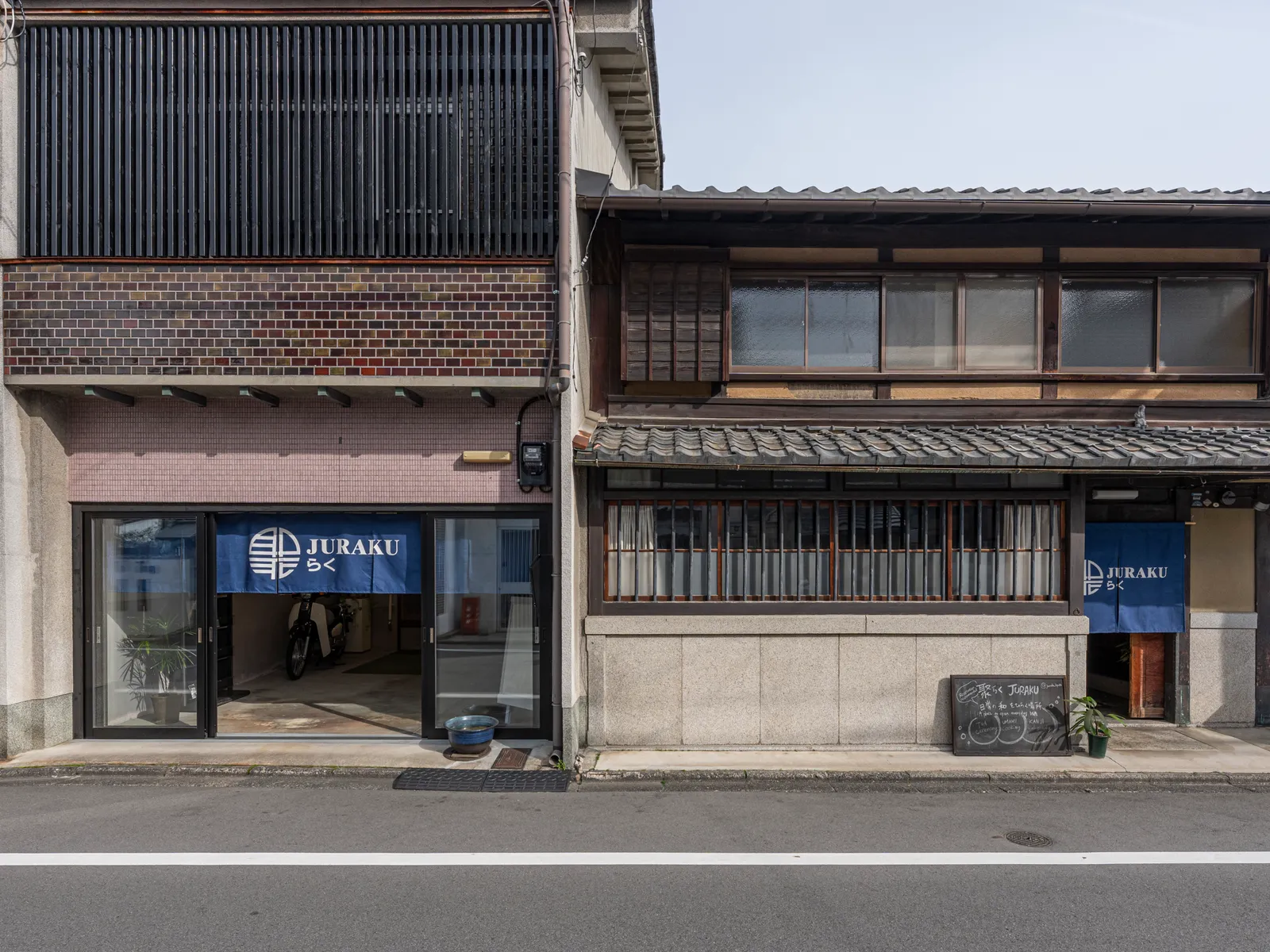
This experience takes place in "JURAKU," a 150-year-old former silk merchant's townhouse standing along a street in Kyoto city. Look for the indigo-blue noren curtain and blackboard sign marking the entrance — the surroundings are not a tourist facility, but an everyday Kyoto streetscape.
This house was also the birthplace of Kobayashi Taichiro (1901–1963), a philosopher and art historian born into a Nishijin textile weaving family. Rather than a space built for the purpose of this experience, it's a genuine Kyoto townhouse shaped by the layered life of a real person — and that quietly deepens the sense of the tea you'll drink here.
Arrive at least 5 minutes before your reservation time, then head into the depths of the townhouse. The moment you step through the noren curtain, you leave the outside noise behind and enter another kind of time.
Open the Shoji Screens, and a Tsuboniwa Garden Appears
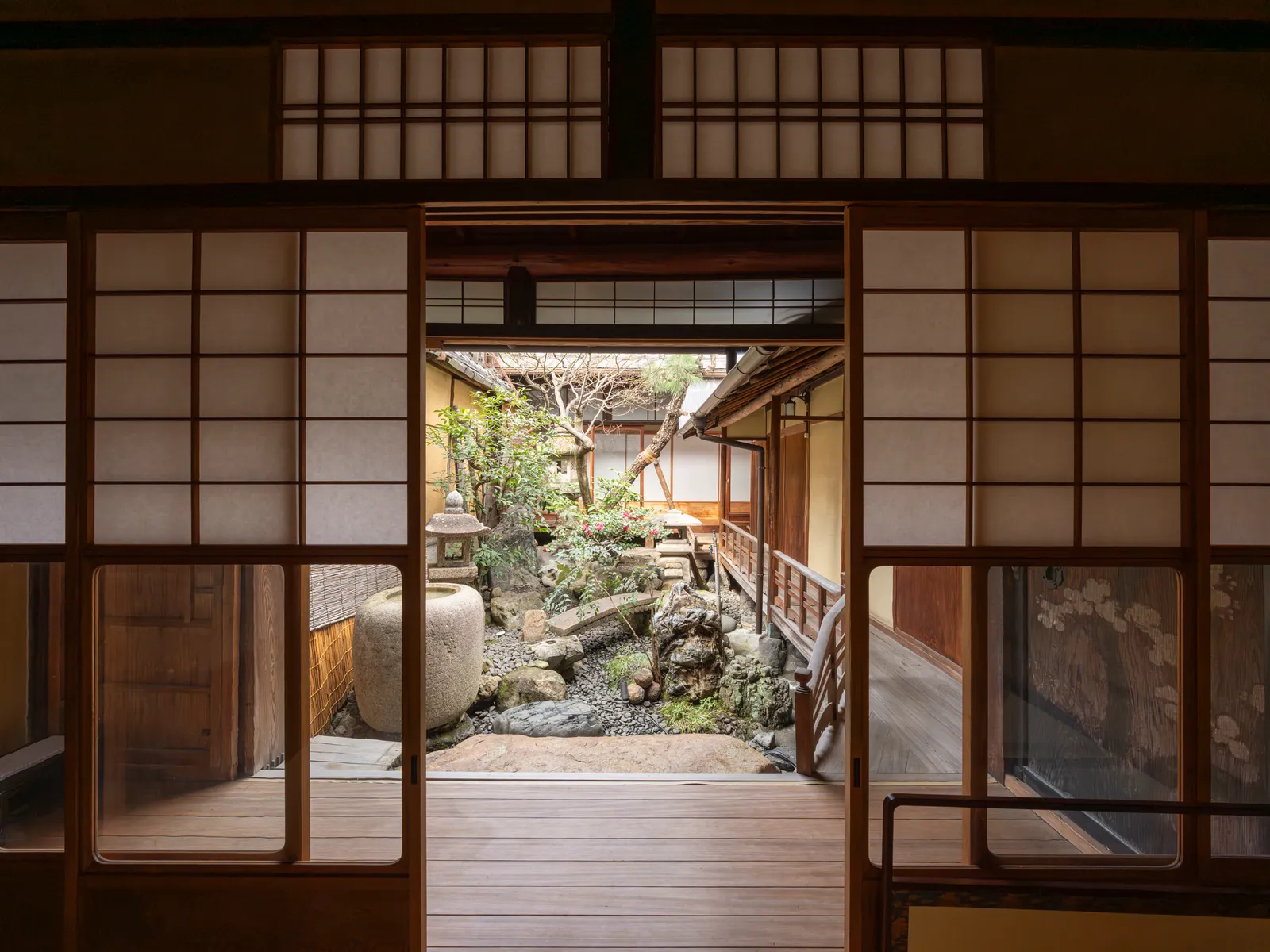
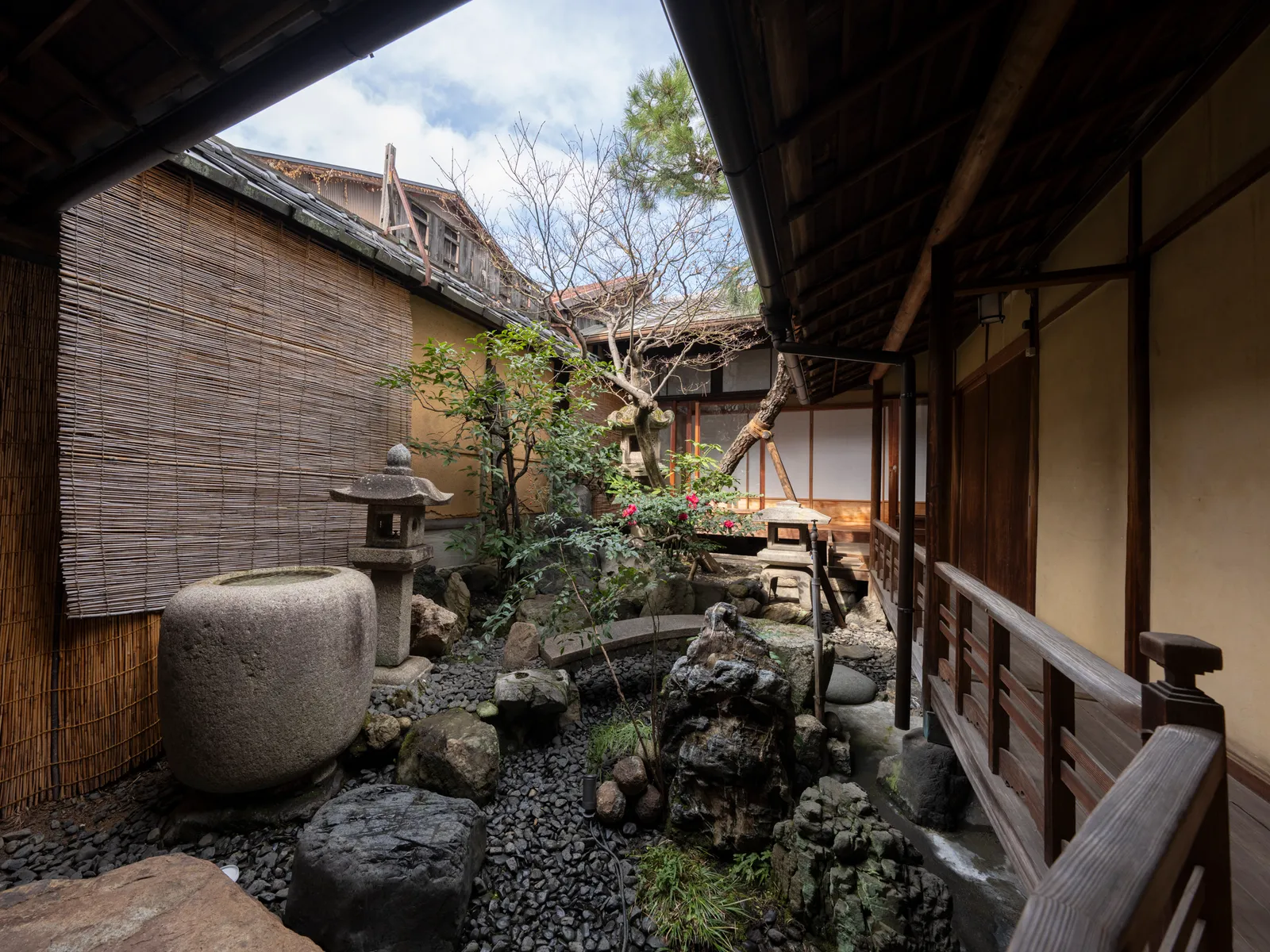
In the middle of the townhouse lies a tsuboniwa (courtyard garden), arranged with a stone lantern and a water basin. Slide open the shoji screens and lattice doors, and gravel, stone arrangements, pine and low shrubs fill your view, letting light and breeze pass all the way to the back of the building.
Looking up from the veranda, you'll see the sky framed between tiled roofs, softened by sudare blinds that filter the seasonal sunlight. Standing there, you can truly feel the distinctive layout of a narrow, deep Kyoto townhouse.
After taking in the courtyard, continue toward the back of the house, where the tea ceremony room awaits at the very rear. First, take a slow walk through the garden and building to settle into the townhouse atmosphere.
The Tea Room, Where "Ichi-go Ichi-e" Watches Over You
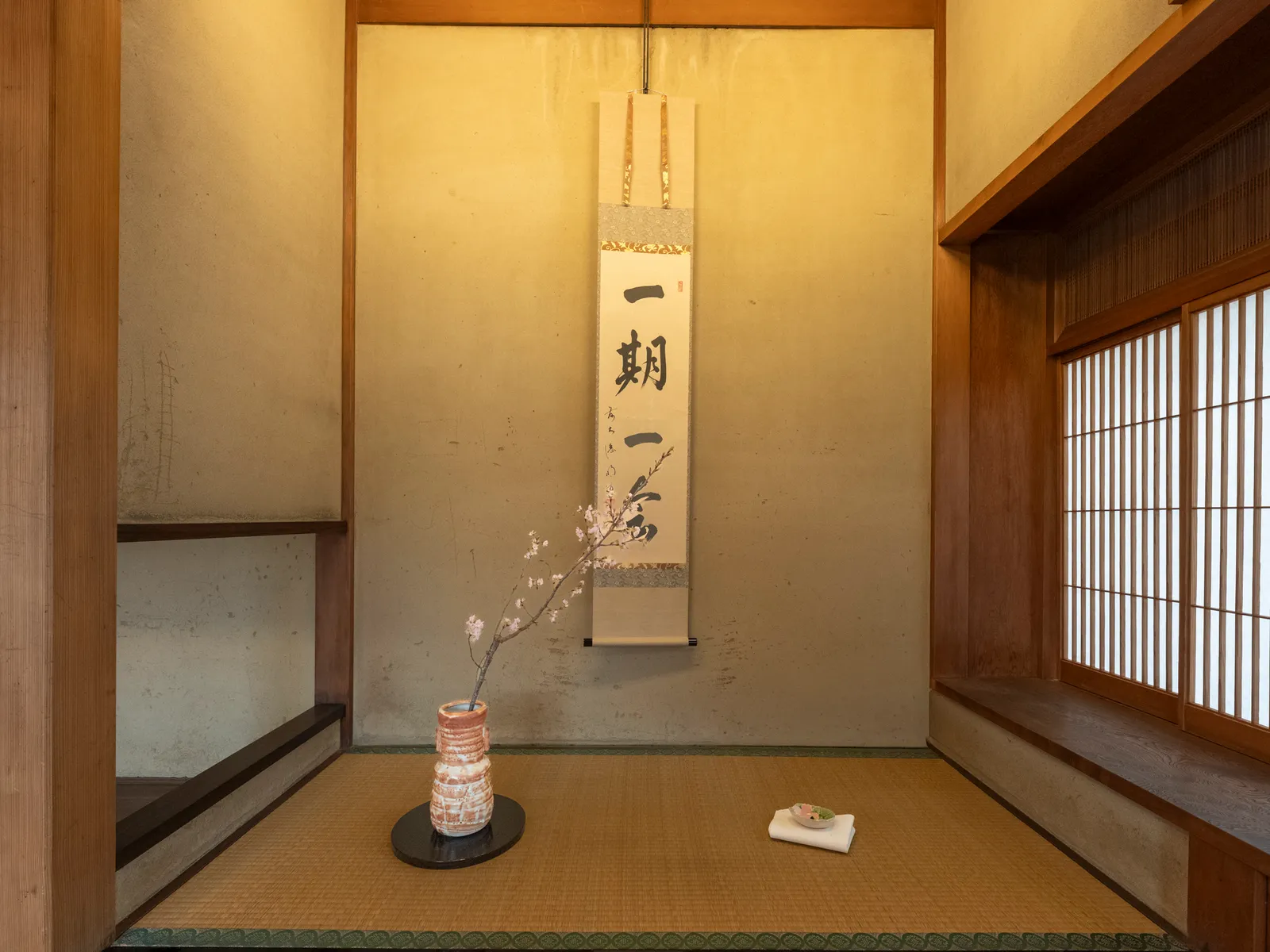
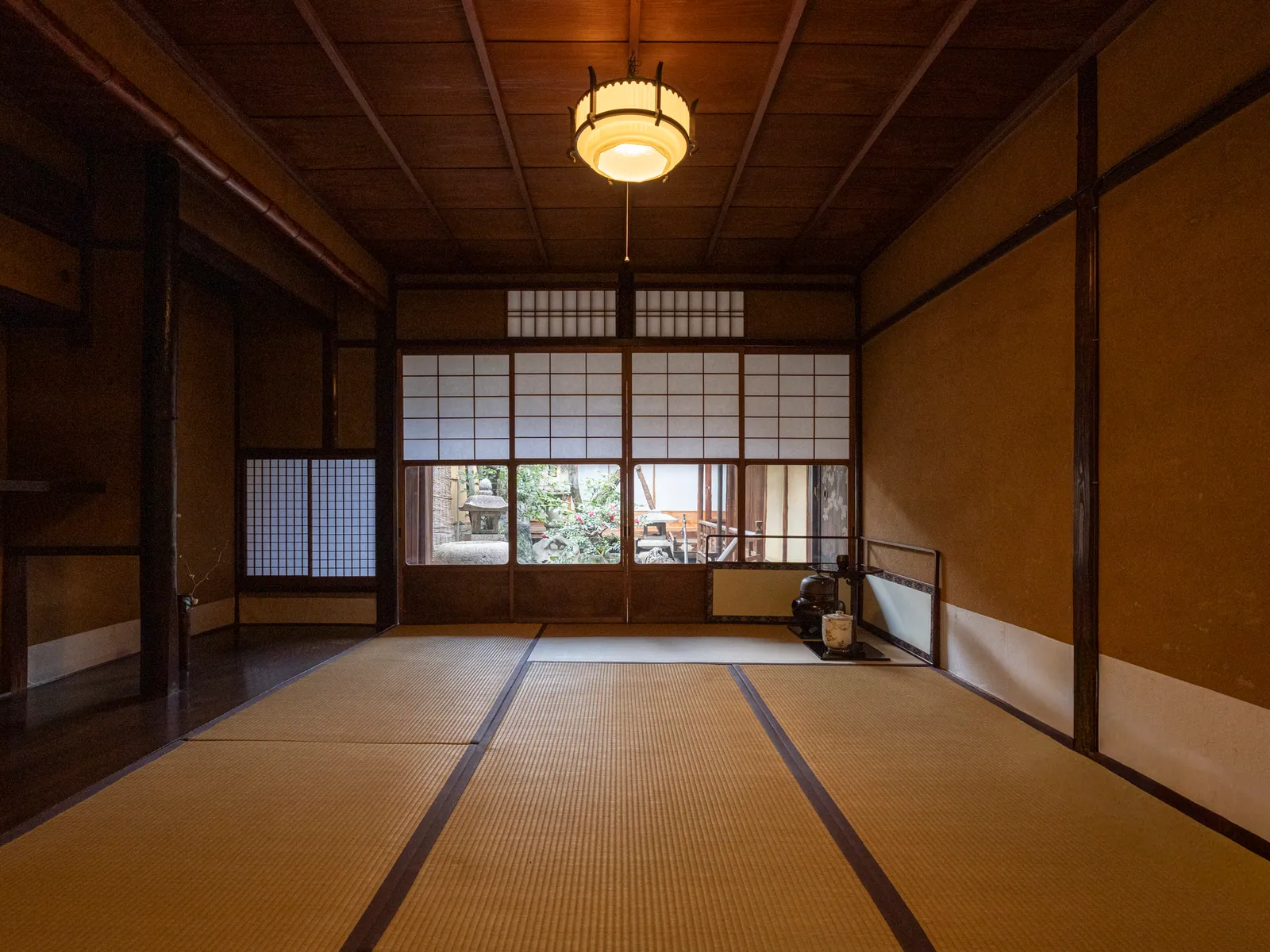
The tea ceremony takes place in the innermost tea room of the townhouse. In the tokonoma alcove hangs a scroll reading "ichi-go ichi-e" ("one encounter, one chance"), alongside a flower arrangement of seasonal blooms — a setting that embodies the spirit of tea ceremony.
You'll use authentic tea utensils, the same kind used in real tea ceremony practice. Watching your instructor's tea-making up close, you'll get to know each tool and gesture in turn.
One important thing to note: participants don't need to sit in the traditional seiza position on tatami. The ceremony is conducted at a table with chairs, so even those who find seiza difficult can focus on the movements without worrying about their legs.
Savoring a Seasonal Plant-Based Wagashi Sweet
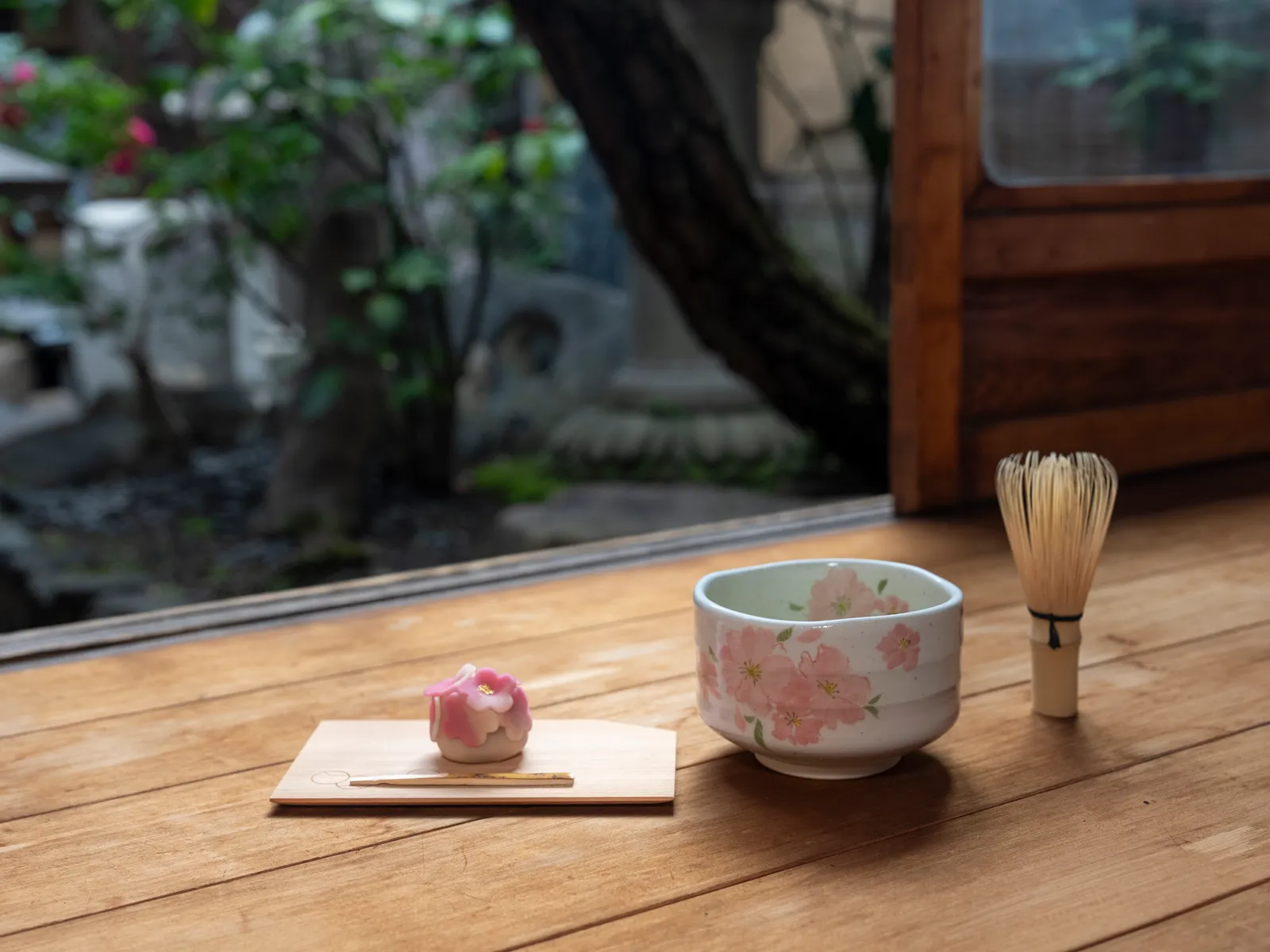
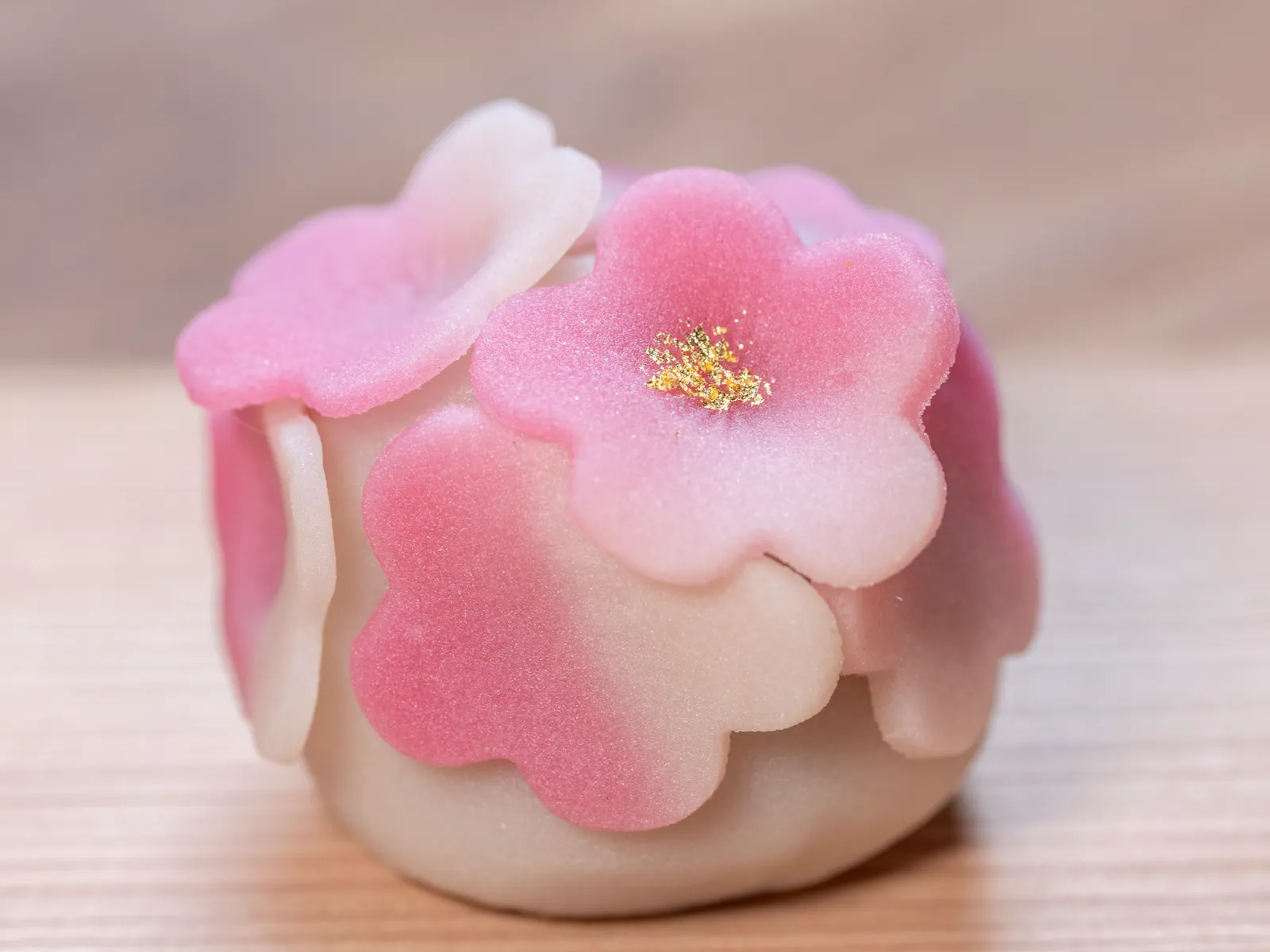
Before the matcha, you'll be served a seasonal plant-based wagashi sweet made by a Kyoto confectionery shop. On the day of our visit, it was a nerikiri sweet layered with petals shading from pale pink to white, topped with a touch of gold leaf at the center.
The sweet is served on an individual plate with a kuromoji pick, allowing you to savor the season in each bite. Since no animal-derived ingredients are used, it's a thoughtful choice for guests with dietary restrictions.
Tasting the sweetness first helps the flavor of the matcha that follows come through even more clearly. Once you've finished the sweet, it's finally your turn.
Now It's Your Turn: Whisking Matcha Right After Watching the Instructor
At the heart of this experience is the moment you whisk premium matcha — the kind reserved for tea masters — with your own hands. After watching your instructor prepare tea, you'll pick up a chasen whisk in the very same spot and make your own bowl of matcha.
Instructors here include those with up to 40 years of experience, as well as those holding teaching certification from the Urasenke school. You'll be guided through the meaning behind each gesture — the amount of hot water, how to move the whisk, how to handle the bowl.
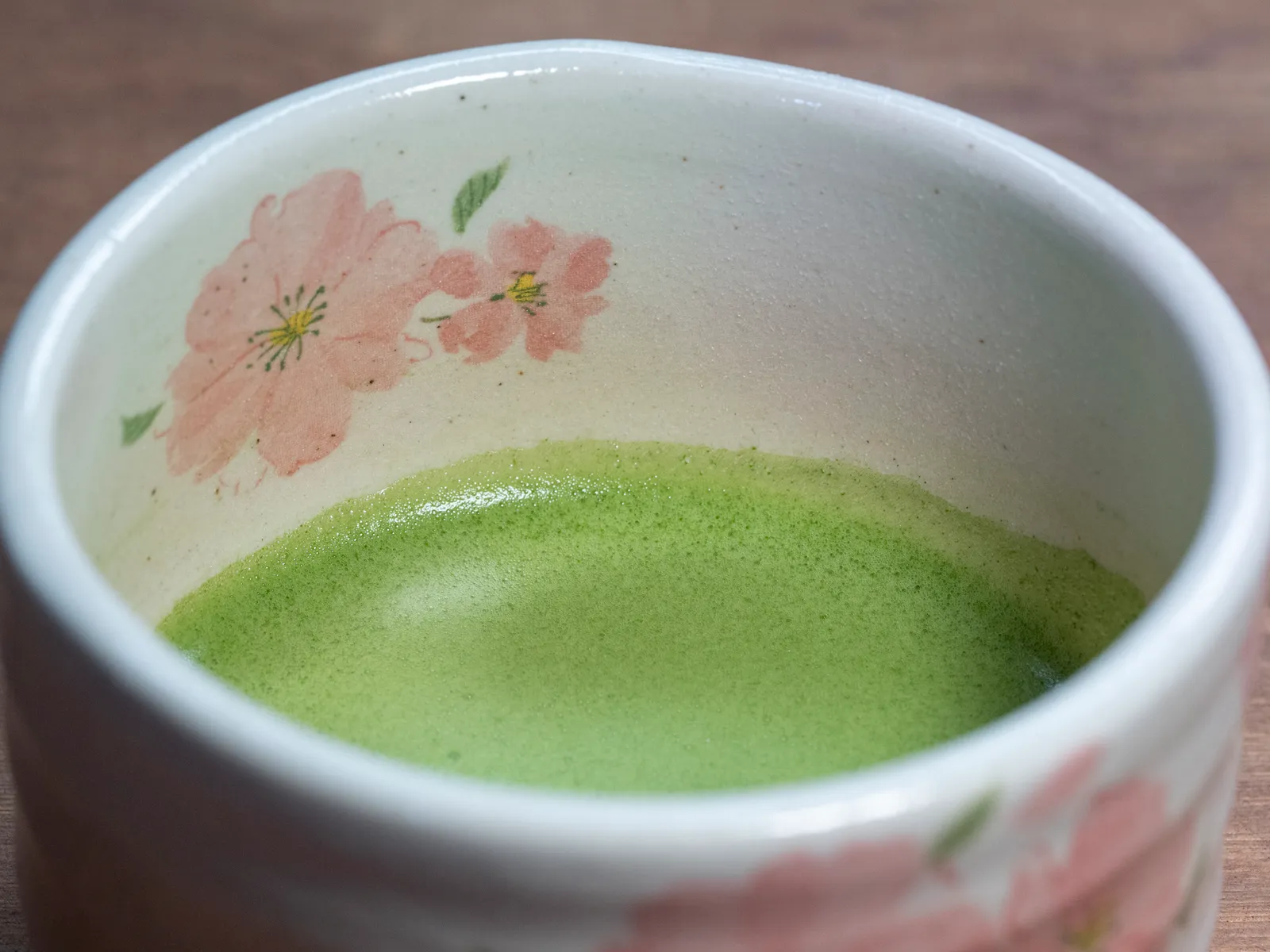
When fine bubbles rise and a vivid green spreads smoothly across the bowl, your tea is complete. Take your time enjoying the bowl you made with your own hands.
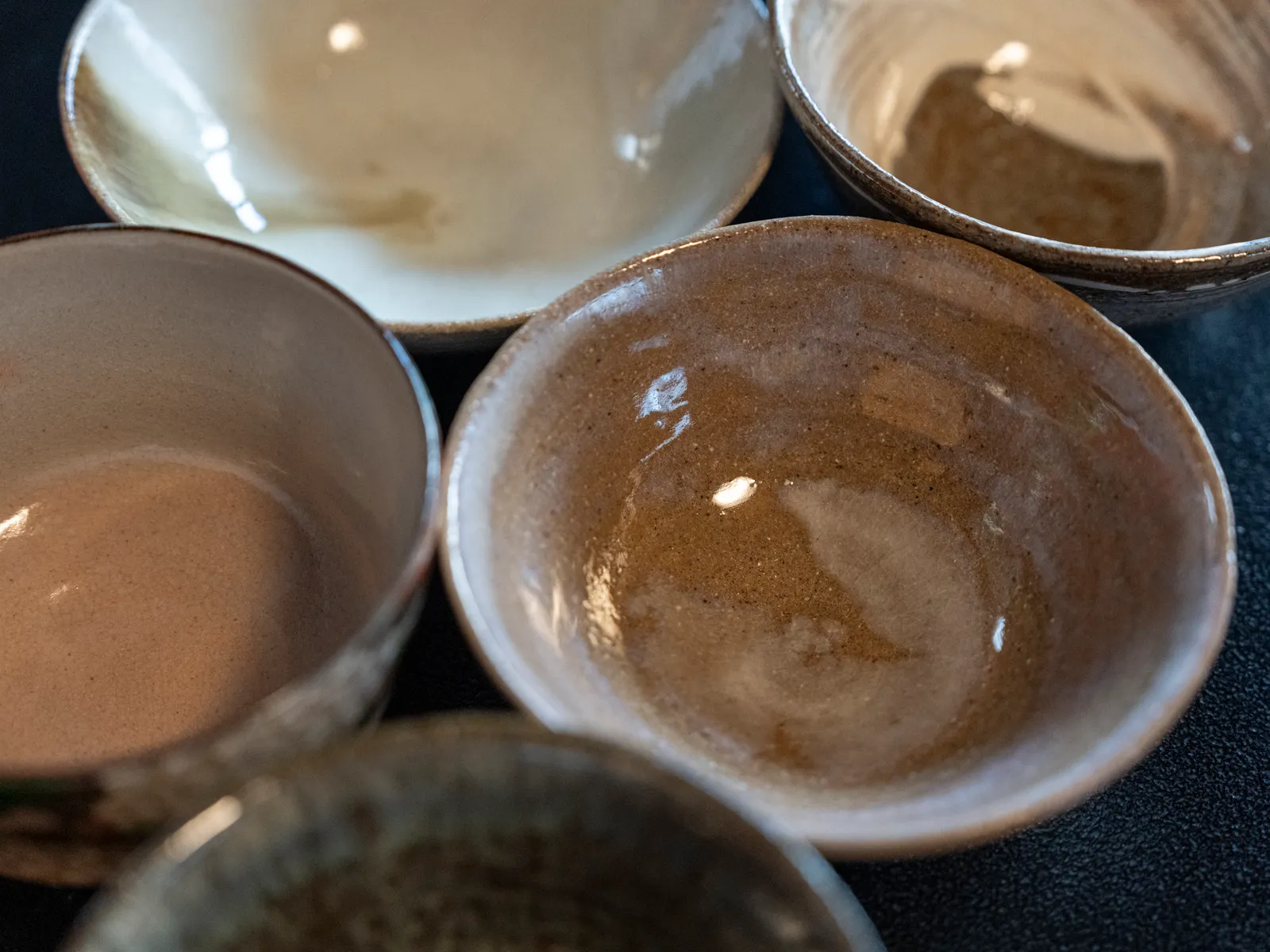
What You'll Take Home: A Trick for Finding Calm, and a Photo in the Townhouse
To close, you'll learn a simple technique for bringing the calm of tea ceremony into your everyday life. It requires no special tools, so it's something you can try at home — a souvenir that lasts well beyond your trip.
The experience ends with a commemorative photo, taken against the backdrop of the atmospheric tea room and courtyard garden. Guests often say this photo, captured in the townhouse's light and setting, is a highlight of the day.
The experience runs about 75 minutes (timing may vary slightly depending on group size) — an easy length to fit into a day of exploring Kyoto.
Frequently Asked Questions
■ How long does the experience last? About 75 minutes. The timing may vary slightly depending on the number of participants.
■ Can I join if I've never done tea ceremony before? Yes. No experience is required. Your instructor will guide you clearly through the tools and gestures.
■ Is there a dress code or anything I need to bring? No special items are required. Comfortable, everyday clothing is fine.
■ Can children take part? Yes, there's no age limit. However, for children who may find it hard to sit for a long period, a private plan is recommended.
■ Do children aged 0–5 need a reservation? Children aged 0–5 join free of charge, but without their own seat, matcha, or wagashi sweet — they participate on a guardian's lap. If you'd like a dedicated seat for your child, you'll need to book at the child rate.
■ Can I still join if I'm late? Please arrive at least 5 minutes before your reservation time. If you're more than 10 minutes late, you won't be able to join.
What to Check Before You Book
- The experience lasts about 75 minutes (may vary slightly depending on group size)
- The meeting point is "JURAKU"
- This is a group experience conducted in English
- Arrive at least 5 minutes before your reserved time; arrivals more than 10 minutes late cannot join
- No need to sit in seiza, as tables and chairs are used
- If traveling with young children and want a more relaxed pace, consider a private plan
- Check the latest pricing, availability, and cancellation/change policies before booking
Children aged 0–5 participate on a guardian's lap, without their own seat, tea, or sweet. If you'd like a seat prepared for them, a booking at the child rate is required. Pricing, schedules, and plan details may change, so please check the latest information before booking.
In Summary
This roughly 75-minute experience takes place in JURAKU, a 150-year-old townhouse still standing in Kyoto, offering a genuine encounter with tea ceremony. After exploring the courtyard garden and tatami rooms, you'll savor a seasonal plant-based wagashi sweet and watch closely as an experienced instructor prepares tea.
Then it's your turn to pick up the chasen whisk. Guided by your instructor through each gesture, you'll whisk a bowl of premium matcha — the kind reserved for tea masters — with your own hands, and enjoy it right there on the spot. Since the ceremony uses a table and chairs, it's easy to join even if you're not used to sitting in seiza or have never tried tea ceremony before.
The townhouse is also the birthplace of philosopher and art historian Kobayashi Taichiro. Rather than simply viewing an old Kyoto building from the outside, you'll spend time within its space, taste a seasonal sweet, and whisk your own matcha. It's a wonderful choice for anyone who wants to experience the history of a townhouse and the spirit of tea ceremony together.
Check this page for the latest availability and pricing.

Cultural Experiences in Kyoto
Matcha Making & Tea Ceremony Workshop in a 150-Year-Old Machiya, Kyoto
Check the booking page for the latest schedules, prices, and plan details.